Coffee-to-Water Ratio Chart: How Much Coffee Per Cup for Every Brew Method
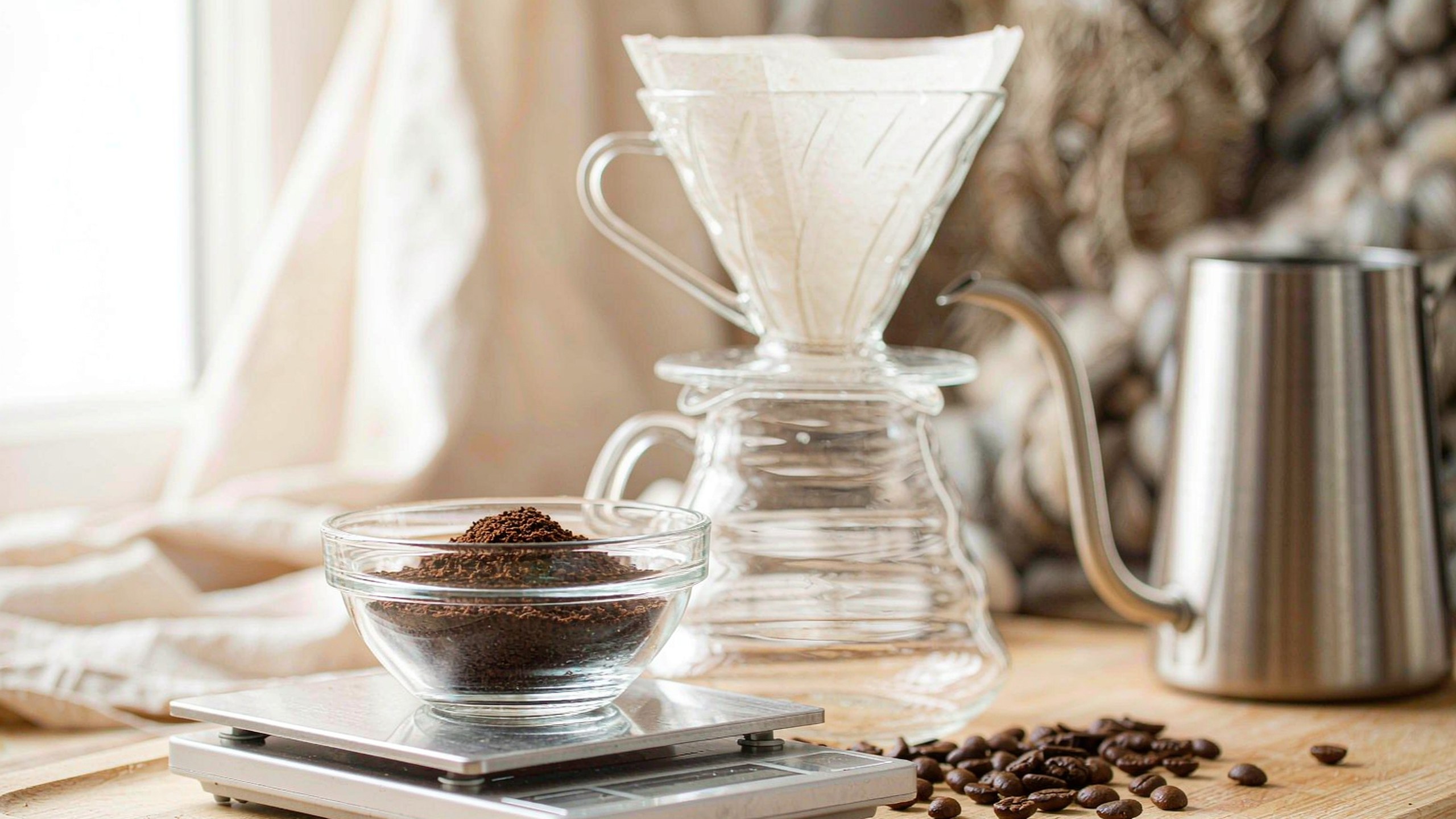
The golden coffee-to-water ratio is 1:16 to 1:17 — one gram of coffee for every 16 to 17 grams of water, which works out at roughly 60 grams of coffee per litre. For a standard 8 oz (240 ml) cup that means about 15 grams of coffee. Every other method has its own number: espresso is 1:2, French press 1:14 to 1:16, cold brew concentrate 1:8.
Ratio is the easiest variable in brewing to control and the one that fixes the most bad coffee, because unlike grind or technique it needs no judgement — only a scale. This guide covers what the ratio means, the numbers for every method you are likely to brew, how to scale to any batch size, and the distinction that explains why changing the ratio works when adjusting the grind does not.
What a Coffee-to-Water Ratio Actually Means
A ratio of 1:16 means one part coffee to sixteen parts water by weight. Fifteen grams of coffee brewed with 240 grams of water is 1:16. Because 1 millilitre of water weighs approximately 1 gram at brewing temperature, you can weigh coffee and water on the same scale.
The numbering runs opposite to intuition at first: a lower second number means more coffee and a stronger cup. So 1:14 is stronger than 1:18. Write it as coffee first, water second, and it stops being confusing.
Two things are worth knowing before you use any chart. First, weigh rather than scoop — a tablespoon of light roast weighs meaningfully more than a tablespoon of dark roast, because roasting drives off moisture and expands the bean, and a scoop of whole beans varies with how they settle in the spoon. The swing between a light and a dark scoop can reach 75%. Second, treat every number in this guide as a starting point. Ratio sets strength; grind sets balance. You are aiming for a cup you like, not a laboratory standard.
The Golden Ratio, and Where It Comes From
The ratio most often quoted for filter coffee is 1:16 to 1:17, and it is the range the specialty coffee industry is built around. It produces a clean, balanced cup that flatters most beans and most roast levels, which is exactly what a default should do.
But it is a default, not a law. A 1:16 pour-over and a 1:16 French press taste quite different, because immersion and percolation extract differently. Roast level matters too: dark roasts are more soluble, so they often taste better slightly weaker than the golden ratio, while a lightly roasted single origin usually rewards a stronger dose.
Coffee-to-Water Ratio Chart by Brew Method
Start in the middle of the range for your method, then move one variable at a time.
| Method | Ratio (coffee : water) | Example | Notes |
|---|---|---|---|
| Espresso | 1:2 | 18 g in → 36 g out | Measured by weight in the cup, not by volume |
| Ristretto | 1:1 to 1:1.5 | 18 g → 18–27 g | Short, syrupy, less extracted |
| Lungo | 1:3 | 18 g → 54 g | Longer pour, lighter and more extracted |
| Moka pot | 1:7 to 1:10 | 20 g → 140–200 g | Fill the basket level, fill water to the valve, do not tamp |
| Pour-over (cone or flat bed) | 1:15 to 1:17 | 15 g → 225–255 g | The classic clean filter ratio |
| Drip machine | 1:16 to 1:18 | 60 g → 1 litre | Most machines run best here on a medium grind |
| French press | 1:14 to 1:16 | 30 g → 420–480 g | Full immersion extracts more, so a slightly tighter ratio suits it |
| Cold brew (concentrate) | 1:4 to 1:8 | 100 g → 400–800 g | Steep 12–24 h, then dilute to serve |
| Cold brew (ready to drink) | 1:12 to 1:15 | 50 g → 600–750 g | Serve over ice as it is |
Each of these has its own technique alongside the number. For the pour-over method specifically, see our pour-over guide; for immersion, the French press guide; for the stovetop route, the moka pot guide; and the slow, cold route is covered in the cold brew concentrate guide.
Espresso is the one method where the ratio describes something different. It measures the dry dose against the liquid yield in the cup, not the total water pushed through the coffee, which is why a shot is judged by weight on a scale rather than by volume in the glass. Serving size matters as much as the number — see our espresso cup size guide for why a 1:2 shot belongs in a small, thick-walled cup.
How Much Coffee Per Cup (Quick Scaling Table)
If you are brewing filter coffee at the golden ratio of 1:16 and do not want to do arithmetic, this table covers the common batch sizes.
| Water | Coffee at 1:16 | Makes roughly |
|---|---|---|
| 250 g (1 large mug) | 16 g | 1 cup |
| 350 g | 22 g | 1 generous mug |
| 500 g | 31 g | 2 cups |
| 750 g | 47 g | 3 cups |
| 1,000 g (1 litre) | 62 g | 4 cups |
| 1,500 g | 94 g | 6 cups |
Rounding to the nearest gram is fine. Nobody can taste four tenths of a gram in a litre, and chasing precision you cannot perceive is a fast route to not enjoying the process.
Strength vs. Extraction: The Distinction That Fixes Bad Coffee
This is where most ratio advice goes wrong, and understanding it explains almost every disappointing cup.
Strength is concentration — how much dissolved coffee is in the water. The ratio controls this directly. Extraction is how much flavour you pulled out of each ground. Grind size, water temperature and contact time control that.
The two are independent. A cup can be strong and under-extracted (intense but sour, because you used plenty of coffee but did not extract it properly) or weak and over-extracted (thin but harsh and bitter). Most people who describe coffee as bitter assume they used too much coffee, when the real problem is usually that they ground too fine or steeped too long.
Change the ratio first, the grind second. If your coffee tastes weak or sour, add coffee or use more water. If it tastes bitter or harsh, use less coffee or brew longer with a coarser grind. Move one variable at a time, or you will never know which change did the work.
Cold Brew Ratio: Concentrate vs Ready to Drink
Cold brew is the one method where the ratio is really two ratios, because most cold brew is made as a concentrate and diluted later. Brew the concentrate between 1:4 and 1:8 — 1:8 is the common middle ground, around 100 g of coffee to 800 g of cold water — then dilute one part concentrate with one to three parts water or milk at serving time to land near a normal 1:15 cup.
If you would rather skip the dilution step, brew ready-to-drink cold brew at 1:12 to 1:15 and serve it straight over ice. Cold water extracts far more slowly than hot, so the steep runs twelve to twenty-four hours in the refrigerator and the result is a smoother, less acidic cup with none of the bitterness a hot brew picks up past four minutes. Freeze any leftover brew into coffee ice cubes so the ice does not dilute the ratio as it melts.
Adjusting the Coffee-to-Water Ratio Up and Down
| Ratio | Strength | Best for |
|---|---|---|
| 1:14 | Strong | Bold mugs, coffee served with milk |
| 1:15 | Medium-strong | A rich black cup |
| 1:16 | Balanced | The golden ratio — most pour-overs |
| 1:17 | Mild | Clean, delicate, tea-like cups |
| 1:18 | Light | Large batches and lightly roasted beans |
Grind interacts with all of this. A finer grind extracts faster, so it pairs with a weaker ratio — around 1:17. A coarser grind extracts more slowly, so it wants a stronger ratio closer to 1:15. When you buy new beans, keep the ratio steady for the first cup so you can taste what the bean itself is doing before you start changing variables.
Frequently Asked Questions
What is the golden ratio for coffee?
1:16 to 1:17 — roughly 1 gram of coffee per 16 to 17 grams of water, or about 60 grams of coffee per litre. It produces a balanced filter cup and is a sensible starting point you then adjust to taste.
How much coffee should I use for one cup?
About 15 grams for a 240 ml (8 oz) cup at 1:16. For a larger 350 ml mug, around 22 grams. If you prefer a stronger cup, move to 1:14 and use about 17 grams for the same mug.
Why weigh coffee instead of using a scoop?
Because a scoop is not a measurement. Beans vary in size and density, and light and dark roasts of the same bean weigh differently. A kitchen scale with 0.1 g resolution removes the largest single source of inconsistency in home brewing.
Is 1:15 or 1:17 better?
Neither is universally better. 1:15 gives a stronger, fuller-bodied cup; 1:17 a lighter, cleaner, more tea-like one. Start at 1:16 and move one gram of water at a time until it tastes right for your beans.
Does the ratio change for cold brew?
Yes, dramatically. Cold brew is usually made as a concentrate at 1:4 to 1:8 and diluted to serve, because cold water extracts far more slowly and you need a stronger starting point. Ready-to-drink cold brew is brewed around 1:12 to 1:15 instead. Serve it over ice made from coffee rather than water if you want the ratio to survive the glass — see our coffee ice cubes guide.
Final Thoughts
Fix the ratio and most of the guesswork leaves home coffee. Weigh both the coffee and the water, start at 1:16 for anything filter-based and 1:2 for espresso, and adjust in single steps. It takes one extra piece of equipment and about ten seconds of attention per brew, and it is the difference between a cup that is good by accident and one that is good every morning.
The other half of consistency is being able to see what you are doing. A clear brewing vessel shows the water level, the bloom and the colour of the finished brew, all of which tell you more than a timer does. Our picks:

40oz Glass Teapot with Infuser
The wide infuser basket and clear body give an unobstructed view of the bloom and the falling water level, which is exactly the feedback you need when dialling a ratio in by eye.
Buy Now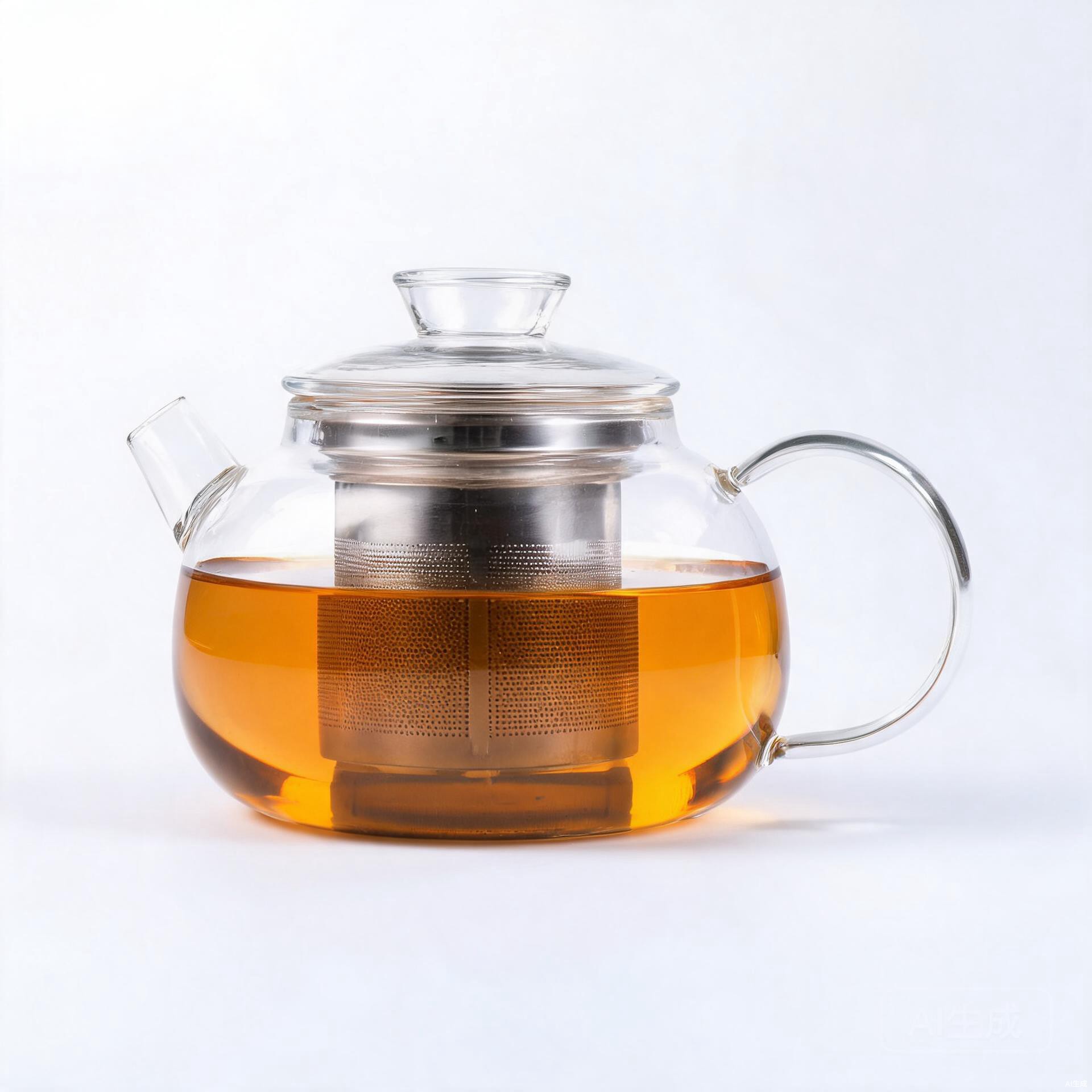
MESNEY 61oz Large Glass Teapot
1.8L makes a 1:16 batch big enough for four or five cups in one pour, without re-weighing between rounds.
Buy Now
17oz Double Walled Glass Mug
A marked 17oz serving makes the final ratio obvious at a glance — useful for checking that what you poured actually matches what you planned.
Buy NowAs an Amazon Associate, MESNEY earns from qualifying purchases. Prices and availability are subject to change.