Moka Pot Coffee: The Complete Guide to Rich Stovetop Espresso at Home
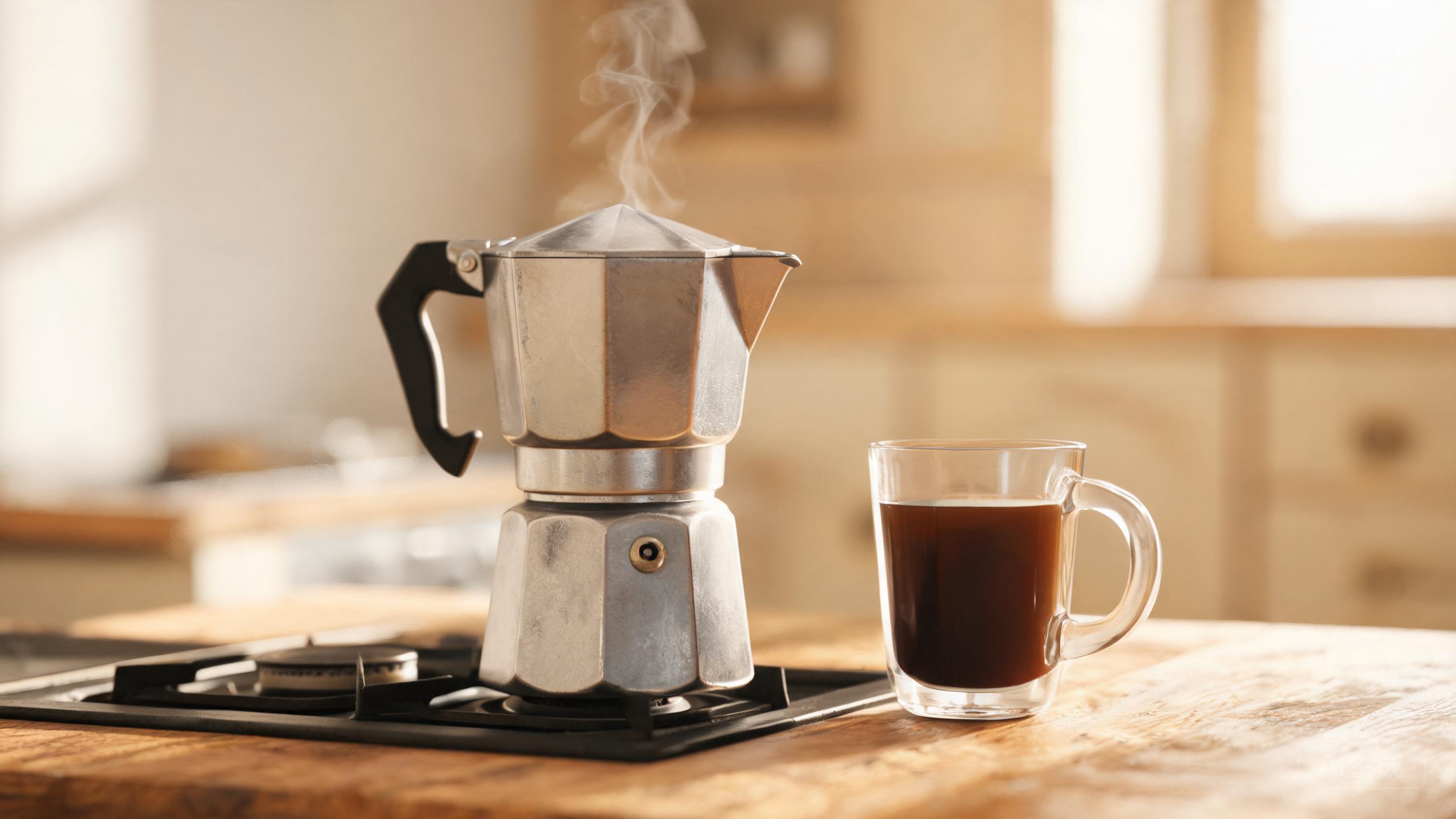
The moka pot is the world's most beloved stovetop coffee maker: a small, three-chambered metal pot that brews a rich, concentrated cup with zero electricity — and it's having a genuine renaissance. Google searches for moka pots have climbed steadily for years, peaking every holiday season as home brewers rediscover the machine invented in Italy in 1933.
This guide covers how the moka pot actually works, the exact grind and heat for a sweet, full-bodied brew, step-by-step instructions, the mistakes that make it bitter (and how to fix them), moka pot versus espresso machine and french press, and the glass cups that let you see — and taste — the golden crema.
What Is a Moka Pot?
A moka pot is a stovetop coffee maker made of three chambers stacked on top of each other: a bottom boiler for water, a funnel-shaped filter basket for ground coffee, and a top collector for the finished brew. As the water heats, steam pressure pushes it up through the coffee bed and into the top chamber — the classic "percolation under pressure" method.
- Pressure: about 1.5 bar — roughly a tenth of a modern espresso machine, but enough to extract a dense, syrupy cup.
- Output: a 3-cup pot makes about 2 oz of concentrated coffee per cup; a 6-cup pot about 4 oz per cup.
- Best beans: medium to dark roasts — the moka pot's high extraction amplifies sweetness in dark roasts and can turn light, acidic roasts harsh.
- Best grind: medium-fine, like table salt. Finer than drip, coarser than espresso.
It's not quite espresso and not quite drip — it sits in between, closer to a strong, concentrated Americano base. If you've ever had a proper Italian café coffee, you've had moka pot coffee: it's how most of Italy brews at home.
How to Brew Moka Pot Coffee (Step by Step)
Classic Moka Pot Brew (6-cup pot)
- 18–20 g medium-fine ground coffee (about 1.5 tablespoons per cup)
- Water — enough to fill the boiler to just below the safety valve
- A stovetop (any heat source except induction unless your pot is induction-safe)
Method: Fill the bottom chamber with water up to the safety valve line (don't go above it). Drop in the filter basket and fill it with coffee — mound it slightly, then level it off with a finger. Do not tamp. Screw the top chamber on hand-tight. Place on medium-low heat. Listen: in 4–6 minutes the coffee will start to rise into the top chamber. When it begins to gurgle and spit, pull the pot off the heat immediately — that gurgle is steam, and every extra second adds bitterness. Pour and serve.
The single biggest upgrade: start with hot water from a kettle. Cold water spends longer on the burner, and the extra contact time scorches the coffee bed. Hot water in the boiler = faster brew = sweeter cup. And pour straight away — moka coffee keeps "cooking" in the collector if you leave it on the heat.
The Right Grind Size (and Why Tamping Is Wrong)
Grind is where most home moka pots go wrong. Too fine and the water struggles through — the brew turns muddy and bitter. Too coarse and you get weak, sour coffee.
| Grind | Look | Result |
|---|---|---|
| Too fine (espresso powder) | Like flour | Choked extraction — bitter, slow, muddy |
| Correct (medium-fine) | Like table salt | Smooth, rich, sweet, full-bodied |
| Too coarse (drip) | Like sand | Weak, sour, thin |
And never tamp: the moka pot needs the coffee bed loose so water flows through evenly. A gentle level with your finger is all it takes. Tamping creates channels where water rushes through, under-extracting some coffee and over-extracting the rest.
5 Common Moka Pot Mistakes (and Fixes)
- "It's bitter." You brewed too long, too hot, or the grind is too fine. Fix: hot water start, medium-low heat, pull it off at the first gurgle, slightly coarser grind.
- "It's weak." Usually too coarse a grind or not enough coffee. Fix: fill the basket to the rim, level it, and grind a notch finer.
- "It spits and splatters." Heat too high. Fix: keep it at medium-low — patience is the whole game.
- "It tastes metallic." Old coffee oils trapped in the metal, or coffee left sitting in the pot. Fix: rinse the pot after every use (soap only occasionally — moka pots are seasoned by coffee oils) and never run a second pot through old grounds.
- "Nothing comes out." Coffee too finely ground, too tightly packed, or the pot not screwed together properly. Fix: loosen the grind, don't tamp, check the gasket is seated.
Moka Pot vs Espresso Machine vs French Press
| Moka Pot | Espresso Machine | French Press | |
|---|---|---|---|
| Pressure | ~1.5 bar | 9 bar | None (steeped) |
| Body | Rich, syrupy | Dense, crema-topped | Heavy, full-leaf |
| Price | Budget-friendly | Expensive | Budget-friendly |
| Time | 4–6 minutes | 30 seconds | 4 minutes |
| Best for | Concentrated base at home | True espresso drinks | Clean, rounded cups |
If you're choosing one: the moka pot is the cheapest way to get genuinely concentrated, espresso-style coffee at home — no machine, no electricity, just a stove. It's the perfect bridge between a french press and a real espresso machine, and the base it produces makes excellent lattes and Americanos.
3 Easy Moka Pot Drinks
- Moka Americano: the classic — one part moka coffee to two parts hot water. Sip it in a glass mug so you can see the amber-brown clarity.
- Moka Latte: 2 oz moka coffee, 6–8 oz steamed or frothed milk, a little sweetness. Moka coffee's boldness stands up to milk beautifully — richer than a drip-based latte.
- Moka Tonic: a glass of tonic water and ice, a shot of hot moka coffee poured over — the trendy café drink you can make in 60 seconds. The bubbles and the coffee make a gorgeous layered glass.
Why Glass Is the Right Home for Moka Coffee
Moka coffee is dark, glossy, and topped with a thin layer of golden crema — a drink that's 50% about what you see. A double-wall glass mug shows off that deep amber body (and keeps it hot), while the small, intense serving size of moka coffee is exactly what double-wall espresso cups were made for. For the latte crowd, brew a big pot and pour into a glass teapot or straight into your favorite mug.

17oz Double Walled Glass Coffee Mug
Built for the moka moment: brew a 6-cup pot, pour a moka Americano or latte into this 17oz double-wall mug, and watch the crema ride the glass. The insulated wall keeps it warm through a long slow sip.
Buy Now
Double Wall Espresso Cups Set of 4, 6.7oz
Moka coffee is served in small, intense portions — four 6.7oz double-wall cups are the authentic Italian way to drink it, holding the crema and the heat.
Buy on Amazon
40oz Glass Teapot with Infuser
Froth your milk for a moka latte in a jar, or steep tea for a coffee-and-tea spread — the 40oz borosilicate pot keeps a batch warm on the table and shows every layer.
Buy NowFrequently Asked Questions
What grind size for a moka pot?
Medium-fine — about the texture of table salt. Finer than drip coffee, coarser than espresso powder.
Why is my moka pot coffee bitter?
Almost always one of three things: heat too high, left on the stove past the gurgle, or grind too fine. Start with hot water, medium-low heat, and pull it off at the first gurgle.
Is moka pot coffee the same as espresso?
Not quite — the moka pot runs at about 1.5 bar versus espresso's 9 bar, so the coffee is strong and concentrated but without the thick crema of true espresso. It's the closest thing most homes get without a machine.
How much coffee does a moka pot use?
About 1.5 tablespoons of ground coffee per cup of pot capacity — roughly 3 grams of coffee per ounce of water.
Can you make a latte with a moka pot?
Yes — moka coffee is a fantastic latte base. Brew a 6-cup pot, add frothed or steamed milk, and you have a rich, café-style latte with zero special equipment.
Do you tamp coffee in a moka pot?
No. Fill the basket to the rim and level it with a finger — tamping chokes the extraction and makes the brew bitter.
The Bottom Line
The moka pot is proof that great coffee doesn't need a machine with a power cord: hot water, medium-fine grind, low heat, and off the stove at the first gurgle. Master those four moves and you'll be brewing the rich, syrupy cups that Italy has drunk for ninety years.
Serve it the way it deserves — in a MESNEY double-wall glass mug or a set of double-wall espresso cups that show off the crema and hold the heat, and pour your milk-based versions in a borosilicate glass teapot that keeps the whole table warm.
As an Amazon Associate, MESNEY earns from qualifying purchases. Prices and availability are subject to change.