Star Anise Tea: The Complete Guide to the Warming Winter Spice

Star anise tea is the warming winter infusion made from the eight-pointed spice pod that gives chai and five-spice their distinctive licorice-sweet depth — a beautifully simple cup that costs one whole star and five minutes. It is caffeine-free, intensely aromatic, and one of the most visually striking things you can steep.
This guide covers what star anise tea actually is, its traditional cold-season and digestive uses, how to brew whole stars so the flavor develops properly, the blends worth making, and the one important safety note about this spice that most tea guides skip.
What Is Star Anise Tea?
Star anise tea is an infusion of the dried fruit of Illicium verum, an evergreen tree native to southern China and Vietnam. Despite the name, it is unrelated to anise seed — the resemblance is purely in the flavor, driven by the same aromatic compound, anethole, which is what gives both their sweet licorice character.
The spice is sold as a whole star: eight woody carpels radiating from a center, each containing a single shiny seed. It is one of the signature flavors of Chinese five-spice, of Vietnamese pho, and of masala chai — and steeped on its own, it makes a clean, warming, faintly sweet cup with a long aromatic finish.
Star Anise Tea: Traditional Uses
- A classic cold-season warming spice. Star anise appears in traditional Chinese practice as a warming herb, and it is the spice most associated with the cold months — the same role cinnamon and clove play in European tradition.
- Traditionally used for digestion. Anethole is a carminative compound, which is the technical term for a substance that helps relieve gas and bloating. Star anise has been used after rich meals for exactly this reason for centuries.
- The source of shikimic acid. Star anise is the commercial source of shikimic acid, the starting material for a well-known antiviral drug — a genuine pharmaceutical connection that is often mentioned, though it does not mean the tea itself treats viruses.
- Caffeine-free and naturally sweet. Anethole reads as sweet on the palate without any sugar, making star anise a satisfying evening cup for people cutting down on sweetened drinks.
- A digestive aid in chai. This is the spice's most familiar everyday role — one of the aromatic foundations of masala chai, where it works alongside cardamom and clove.
One safety note worth knowing: true star anise (Illicium verum) is safe in culinary amounts, but it has a toxic lookalike — Japanese star anise (Illicium anisatum) — which contains a neurotoxin and must never be consumed. Buy from a reputable spice seller rather than foraging, and if a "star anise" looks smaller, more irregular, and lacks the clean eight-point star with visible seeds, do not brew it. Separately, keep star anise tea to normal culinary amounts — one or two stars per pot — as very large doses of anethole are not advisable.
How to Make Star Anise Tea
Classic Star Anise Tea (2 cups)
- 1–2 whole star anise pods
- 2 cups (480 ml) water
- Optional: a cinnamon stick, a few cloves, honey
Method:
- Break or lightly crush one star so the seeds are exposed — this dramatically speeds up extraction. Keep the second star whole for a gentler cup.
- Combine with the water in a pot, bring to a boil, then reduce and simmer 8–10 minutes. Star anise is a woody spice, not a leaf: it needs a simmer, not a steep.
- Take off the heat and let it stand, covered, for 2–3 minutes more to keep the aromatic oils in the pot rather than the air.
- Strain into a glass teapot or mug, and sweeten with honey only if you want it — anethole already reads as sweet on its own.
Star Anise Chai (2 cups)
- 2 whole star anise
- 4 green cardamom pods, crushed
- 1 cinnamon stick, 3 cloves, 3 slices fresh ginger
- 2 cups (480 ml) water, 2 teaspoons black tea
- ½ cup milk, 1–2 teaspoons honey or sugar
Method: simmer all the whole spices in the water for 10 minutes, add the black tea and steep 4 minutes, then pour in the milk and warm through without boiling. Sweeten and strain. Star anise is the backbone of the masala chai spice blend, and this is the most familiar way to drink it.
Iced Star Anise Tea (4 cups)
- 4 whole star anise, simmered in 4 cups water for 10 minutes
- Honey to taste, juice of ½ orange or lemon
- Ice
Method: simmer, sweeten while warm, then chill completely. Add the citrus and pour over ice. Iced star anise is surprisingly refreshing — the licorice note reads differently cold, closer to a herbal soda than a spice tea.
Reuse the stars: steeped star anise pods still carry plenty of flavor. Drop a spent star into a pot of black tea, a mug of hot apple cider, or a simmering pot of mulled juice — it is a free second use and a very good habit.
Star Anise Tea Blends Worth Making
- Star anise and cinnamon: the essential winter pairing — sweet, warm, and the base of most spiced holiday drinks.
- Star anise and ginger: warming on both counts, and the most traditional cold-season combination.
- Star anise, cardamom, and clove: the chai spice trinity, complete and aromatic.
- Star anise and orange peel: bright and citrusy, excellent iced or in a mulled juice.
- Star anise with black tea and milk: a simplified chai — one star, one tea bag, one splash of milk.
Why Glass Suits Star Anise Tea
Star anise is one of the best-looking things you can put in a teapot — whole eight-pointed stars drifting and slowly softening as they release their oils — and that visual is entirely lost in an opaque vessel. A borosilicate glass teapot also lets you judge when the infusion has gone far enough: the liquor moves from pale gold to a deep amber-brown, and past that point anethole starts to dominate. And because star anise's aroma persists, the non-porous glass means it will not flavor the next tea you brew.

40oz Glass Teapot with Infuser
Made for whole spices: the deep basket holds whole star anise, cinnamon sticks, and cardamom through a full simmer, and stovetop-safe borosilicate handles the heat. The stars stay visible in the glass as the liquor darkens to amber.
Buy Now
17oz Double Walled Glass Coffee Mug
Star anise tea is caffeine-free and made for the evening — the double wall holds the warm amber cup without heating your hands.
Buy Now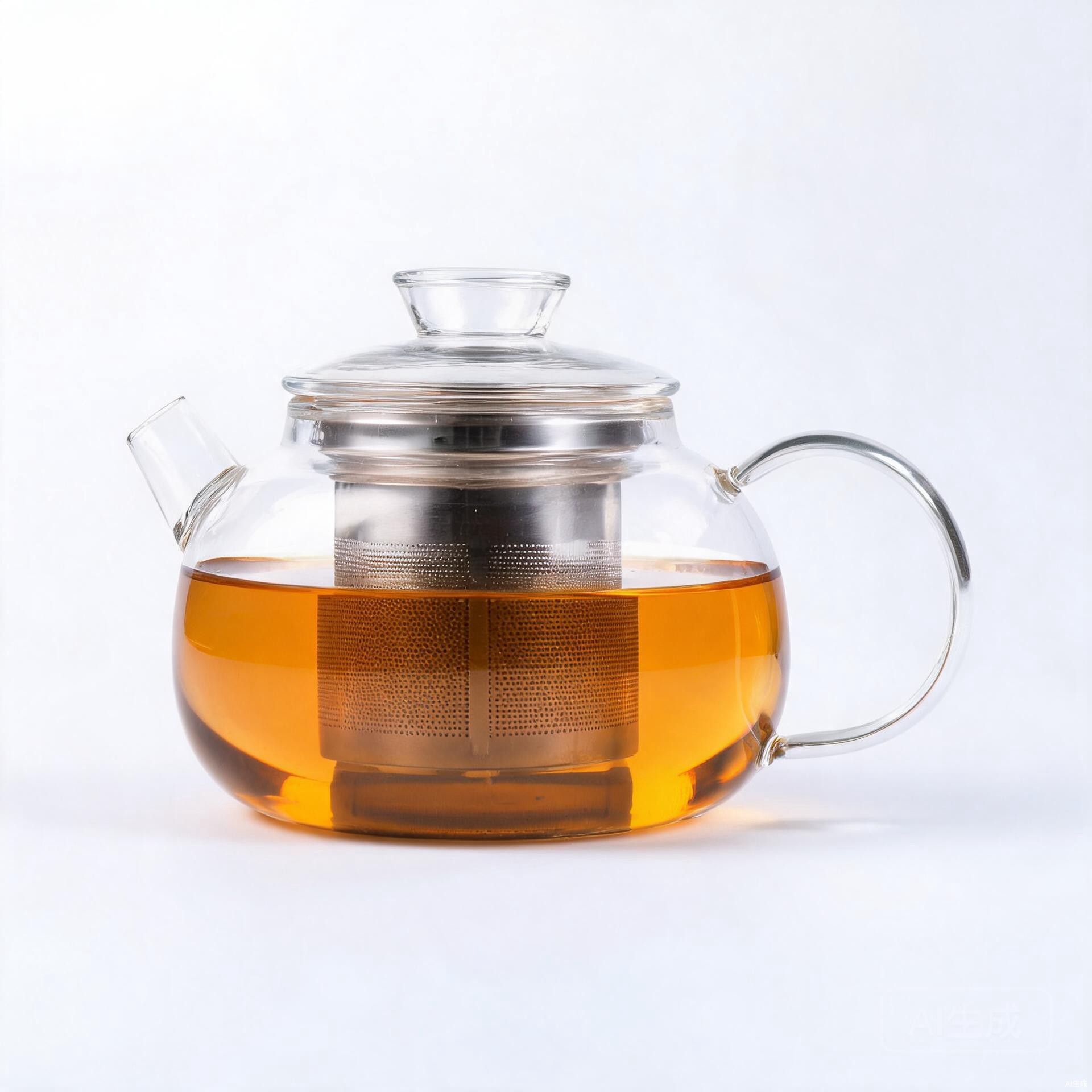
MESNEY 61oz Large Glass Teapot with Infuser
1.8L for a full masala chai spice pot — enough star anise, cardamom, and cinnamon to serve a crowd on a cold afternoon.
Buy NowFrequently Asked Questions
Does star anise tea have caffeine?
No — star anise is a pure spice infusion with no caffeine. It is a good evening drink. Chai blends that include black tea do contain caffeine, so check the recipe.
What does star anise tea taste like?
Sweet and strongly licorice-like, warm and slightly woody, with a long aromatic finish. It is much sweeter-tasting than it is in fact sweet, which makes it satisfying without sugar.
How many star anise should I use per cup?
Half to one whole star per cup, simmered rather than steeped. Two stars in a two-cup pot is a good working ratio. Star anise is potent, so more is not better.
Is star anise the same as anise seed?
No — they are unrelated plants that happen to share a flavor compound, anethole. Star anise is a woody, eight-pointed pod from an evergreen tree; anise seed is a small seed from an annual herb. They are broadly interchangeable in flavor, though star anise is stronger.
Does star anise tea help with a cold?
It is a traditional warming spice used through cold seasons, and a warm, aromatic cup is genuinely soothing when you are unwell. It is comfort rather than treatment — persistent symptoms need a doctor.
Can you drink star anise tea every day?
In normal culinary amounts — a star or two per pot — it is an ordinary spiced tea and is drunk regularly. Very concentrated or very large doses of anethole are not advisable, and pregnant women should keep to culinary amounts.
Can I reuse star anise pods after brewing?
Yes. A spent pod still carries noticeable flavor and can be dropped into black tea, apple cider, or a simmering pot of juice for a second use.
The Bottom Line
Star anise tea is the simplest warming drink in the spice rack: one star, two cups of water, a ten-minute simmer, and a cup that tastes like the whole winter season. It is caffeine-free, needs no sugar, and looks spectacular steeping in glass.
Brew it in a MESNEY borosilicate glass teapot — the eight-pointed stars stay in view as they soften, the liquor darkens to amber where you can see it, and the non-porous glass keeps that powerful aroma out of your next pot.
As an Amazon Associate, MESNEY earns from qualifying purchases. Prices and availability are subject to change.