Iced Strawberry Matcha Latte: The Complete Guide to the Layered Café Favorite
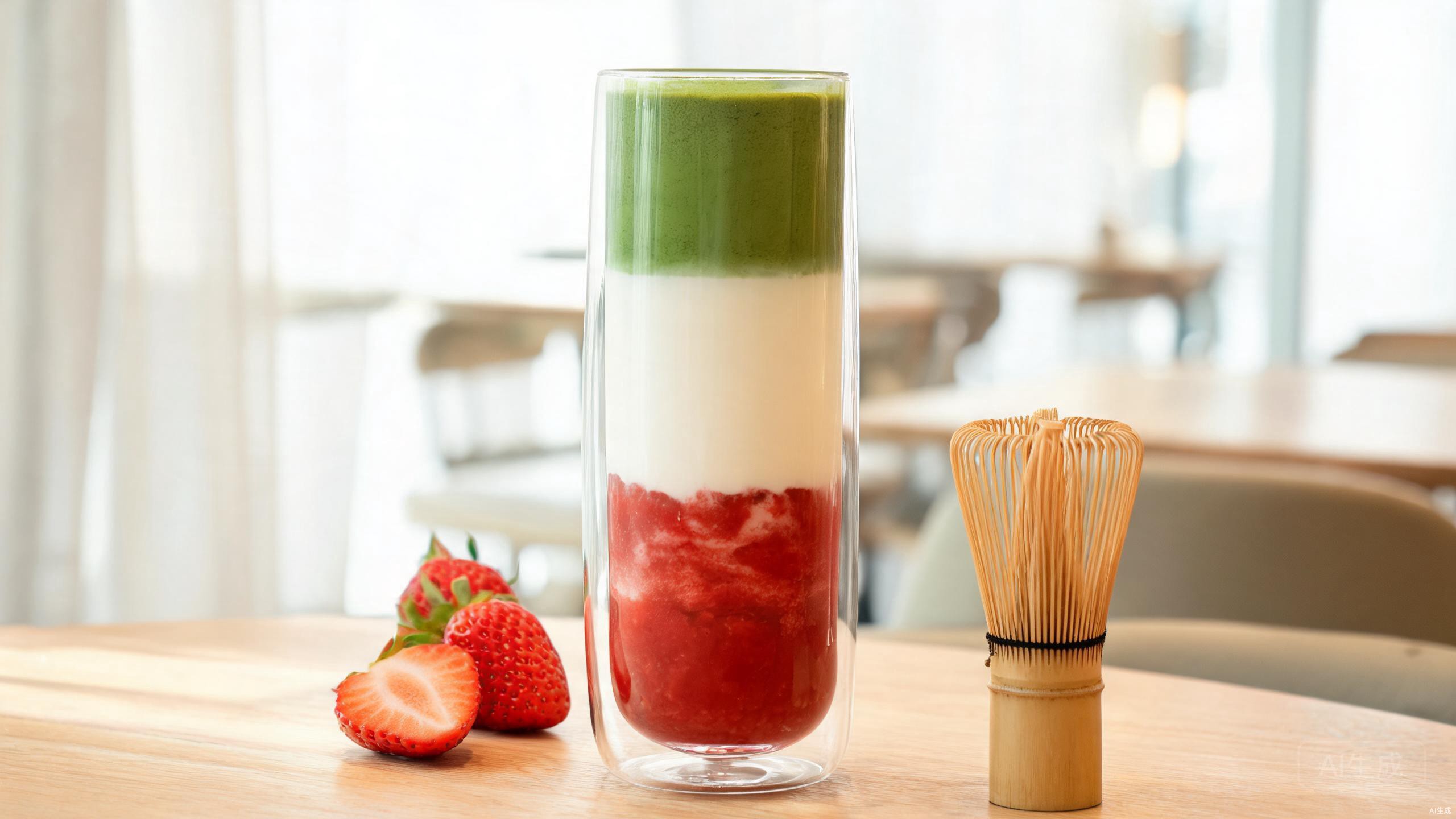
The iced strawberry matcha latte is the most photogenic drink in the café world right now — and it's far easier to make at home than it looks. Three perfect layers — ruby strawberry, creamy white milk, and vivid green matcha — stacked in a clear glass. Cafés charge $6 to $8 for it. With fresh strawberries and a few grams of matcha, you can build a better one at home for a fraction of the price.
In this complete guide, we'll cover what makes this drink special, the density science that keeps the layers separate, a fresh strawberry puree recipe that beats any syrup, how to whisk matcha properly (no clumps, no bitterness), the step-by-step layering technique, five flavor variations, a matcha grade buying guide, troubleshooting for every common failure, and the glassware that shows off your work. Let's layer.
What Is an Iced Strawberry Matcha Latte?
An iced strawberry matcha latte is a three-layer cold drink: sweetened strawberry puree on the bottom, chilled milk in the middle, and freshly whisked matcha floated on top. It's a modern café creation that marries two beloved flavors — the bright, fruity sweetness of strawberries and the smooth, grassy depth of green tea.
The combination works because of contrast. Strawberry brings acid and berry sweetness; matcha brings earthy umami and gentle bitterness; milk bridges the two with creamy richness. Sip it unmixed through the layers and you taste each element in sequence. Stir it together and you get a blush-pink, fruit-forward matcha latte. Two drinks in one glass.
It's also a study in visual appeal. The drink only works in clear glass — the entire experience is watching the three bands of color stack and slowly swirl. That's why it dominates café social feeds, and why your choice of glass matters as much as your choice of tea.
The Science of the Layers
Understanding why the layers stack turns you from recipe-follower into someone who can fix any layer failure. It comes down to density — how heavy each liquid is for its volume:
- Strawberry puree (densest — sinks to the bottom). Fruit puree is loaded with sugar and dissolved solids, making it the heaviest component. Sugar content is what keeps it anchored at the base.
- Milk (middle density). Milk floats on the puree because it's thinner and less sugary — but it sinks under the matcha when poured correctly over ice.
- Matcha (lightest — floats on top). Freshly whisked matcha is mostly water with suspended tea particles and, crucially, a cap of fine foam. Poured gently over ice, it rests on the milk layer.
The ice is the secret scaffolding. A glass packed with ice gives each pour something to land on, breaking the fall of the liquid so it settles gently instead of punching through the layer below. Every failed layer in home attempts traces back to either too little ice or pouring too fast.
Fresh Strawberry Puree: The Foundation
Store-bought strawberry syrup works in a pinch, but fresh puree tastes brighter, looks more vivid, and lets you control the sweetness. It takes ten minutes and keeps in the fridge for four days.
Fresh Strawberry Puree
Time: 10 minutes | Yield: about 1 cup (enough for 4-5 lattes)
Ingredients
- 1 pound fresh strawberries (about 450g), hulled and halved — frozen works too, no need to thaw
- 3 tablespoons sugar (adjust to berry sweetness)
- 1 teaspoon lemon juice (brightens flavor and preserves color)
- 2 tablespoons water
Instructions
- Combine everything in a small saucepan over medium heat.
- Simmer 6-8 minutes, stirring occasionally, until the berries collapse and the liquid thickens slightly.
- Mash or blend. For a rustic puree with small fruit pieces, mash with a fork. For a smooth café-style base, blitz with a blender.
- Cool completely before building the drink — warm puree will melt the ice and destroy your layers. Refrigerate in a sealed jar.
Whisking Matcha Properly (No Clumps, No Bitterness)
The matcha layer fails in two predictable ways: gritty clumps or harsh bitterness. Both are technique problems, not tea problems.
The Two-Step Whisk
- Sift first. Matcha is electrostatically charged and clumps in the tin. Push 1-2 teaspoons through a fine mesh strainer into your bowl or cup. This 10-second step eliminates 90% of clumping.
- Make a paste. Add 1 tablespoon of warm water (about 175°F / 80°C — never boiling, which scorches the tea and releases bitterness). Whisk to a smooth, glossy paste with no dry pockets.
- Add the rest of the water (about 2-3 oz total) and whisk briskly in a rapid W or M motion — not circles — for 15-20 seconds until a fine foam covers the surface. A bamboo whisk is traditional, but a small metal whisk or milk frother works well.
The Complete Iced Strawberry Matcha Latte Recipe
Iced Strawberry Matcha Latte (Café-Style, Three Layers)
Time: 5 minutes (with puree ready) | Difficulty: Easy | Yield: 1 tall glass (about 16 oz)
Ingredients
- 3 tablespoons fresh strawberry puree (from the recipe above)
- 1 cup ice cubes
- 3/4 cup cold milk (whole milk, oat milk, or your favorite)
- 1 1/2 teaspoons matcha (about 3g), sifted
- 2-3 oz water at 175°F or room temperature
- Optional: 1-2 teaspoons simple syrup or honey in the milk if your berries are tart
Instructions
- Add the strawberry puree to the bottom of a tall clear glass — a 17oz double wall glass shows the layers best.
- Fill the glass with ice, all the way to the top. The ice should sit above the puree line.
- Pour the cold milk slowly over the ice. Aim for an ice cube, not the liquid surface, so the milk settles gently onto the puree without mixing. Fill to about three-quarters full.
- Whisk the matcha: sift into a bowl, make a paste with 1 tablespoon of water, add the rest, and whisk to a fine foam.
- Float the matcha on top. Pour it slowly over the back of a spoon resting on an ice cube at the surface. The green layer should spread across the top of the milk.
- Serve immediately, unmixed, with a straw. Admire the layers first — then stir and enjoy.
5 Variations to Keep It Interesting
- Strawberry Matcha with Cold Foam: Top the matcha layer with a cap of lightly whipped cream or vanilla cold foam. Adds a dessert-like richness and a fourth visual layer.
- Mixed Berry Matcha Latte: Swap half the strawberries for raspberries or blueberries in the puree. Deeper color, more complex berry flavor.
- Coconut Strawberry Matcha: Use coconut milk as the middle layer and add a teaspoon of coconut cream to the puree. Tropical, dairy-free, and extra creamy.
- Sparkling Strawberry Matcha: Replace half the milk with sparkling water for a lighter, fizzy version. The carbonation lightens the middle layer and sharpens the strawberry.
- Hot Strawberry Matcha Latte (Winter Version): Warm the puree, steam the milk, and layer in a pre-warmed glass mug. The layers are softer hot, but the flavor is just as striking.
Matcha Grades: What to Buy
Matcha quality directly controls both the color and flavor of your top layer. Here's how the grades compare:
| Property | Ceremonial Grade | Premium / Latte Grade | Culinary Grade |
|---|---|---|---|
| Color | Vivid electric green | Bright green | Dull olive-green |
| Flavor | Sweet, smooth, umami-rich | Balanced, mild grassiness | Bitter, astringent |
| Best use | Drinking straight (usucha) | Lattes and daily drinking | Baking and smoothies |
| Price (per oz) | $25-40+ | $15-25 | $8-15 |
| For this drink? | Beautiful but wasteful | Best choice | Acceptable, less vibrant |
Our recommendation: premium/latte grade. The milk and strawberry will mask the subtle elegance that justifies ceremonial grade prices, but culinary grade's bitterness and muddy color will show. Premium grade hits the sweet spot — bright green layers and clean flavor at a reasonable price. Whatever you buy, choose matcha in an opaque, airtight tin and refrigerate it after opening; light and air are what turn green matcha brown.
Troubleshooting Common Problems
My layers are mixing together
Causes: Pouring too fast, too little ice, or a puree that's too thin. Fix: Pack the glass with ice to the brim, pour each layer over a spoon back or an ice cube in a slow thin stream, and thicken your puree with a longer simmer or extra sugar. Also check that your puree is fully chilled — warm puree melts ice and collapses the structure.
My matcha is bitter
Causes: Water too hot, too much powder, or low-grade matcha. Fix: Drop water temperature to 160-175°F, use 1 1/2 teaspoons per serving (not heaping), and upgrade from culinary to premium grade. A tiny pinch of salt in the matcha also softens perceived bitterness.
My matcha is gritty or clumpy
Causes: Skipping the sift, or adding all the water at once. Fix: Always sift, always make the paste first with a small amount of water, then dilute. If clumps survive, pour the whisked matcha through a fine strainer into the glass — the foam survives the trip.
My strawberry layer tastes flat
Causes: Out-of-season berries or not enough acid. Fix: Add another teaspoon of lemon juice, a pinch of salt, or a splash of the puree with a few drops of vanilla extract. Frozen berries picked at peak ripeness often outperform pale winter "fresh" ones.
Serving Strawberry Matcha: The MESNEY Difference
This drink exists to be seen. Three vivid layers demand a flawless clear window — and double wall glass adds a floating, weightless quality that makes the colors look suspended in air. Here's what we recommend:

17oz Double Walled Glass Coffee Mug (1pc)
Why it's the strawberry matcha glass: The 17oz size fits a full café-style build — 3 tablespoons of puree, a tower of ice, 3/4 cup of milk, and a generous matcha cap — without crowding. The double wall makes the pink-white-green layers appear to float, keeps the drink cold while you photograph it, and the borosilicate glass is crystal clear with no green or blue tint to distort your colors. This is the glass the drink was designed for.
Buy Now
17oz Double Walled Glass Coffee Mugs (Set of 2)
Layered drinks are made for sharing — build two at once and compare your pour technique side by side. The set of two is the practical choice for couples and the smart choice for your per-glass budget.
Buy Now
6.7oz Double Wall Cups (Set of 2)
The ideal matcha whisking vessel if you don't own a traditional bowl: 6.7oz gives the whisk room to move, the clear glass lets you check for clumps against the light, and the double wall keeps hot water from burning your fingers while you work the foam.
Buy NowFrequently Asked Questions
Can I use store-bought strawberry syrup instead of fresh puree?
Yes — 1 to 2 tablespoons of strawberry syrup or even strawberry jam thinned with a little warm water will work. The flavor is sweeter and less bright than fresh puree, and the color leans more candy-pink than ruby. For the best shortcut, look for syrups with real fruit high on the ingredient list.
What milk works best for the layers?
Whole milk gives the cleanest white band and the creamiest flavor. Oat milk is the best dairy-free option — it's naturally sweet and slightly thick, which helps it sit neatly on the puree. Almond milk works but is thinner and mixes more easily; coconut milk (beverage style) layers well and adds tropical flavor.
How much caffeine is in a strawberry matcha latte?
Roughly 40-70mg per serving from 1 1/2 teaspoons of matcha — about half a cup of coffee. Because you consume the whole tea leaf, matcha's caffeine releases alongside L-theanine, which many people experience as calmer, longer-lasting alertness without coffee's jittery edge.
Can I make it ahead for guests?
Prep the components, assemble to order. Puree keeps 4 days refrigerated; milk is always ready; matcha must be whisked fresh (it loses foam and separates within minutes). Set up a little assembly line — puree in glasses, ice bucket, milk, then whisk matcha two servings at a time — and each drink takes under a minute.
Why did my matcha turn brownish-green?
Oxidation. Matcha degrades fast when exposed to air, light, or heat. Buy small tins, seal tightly, refrigerate after opening, and use within 1-2 months. If your matcha was dull olive from day one, it's a grade or freshness issue, not your technique.
Is a bamboo whisk necessary?
Helpful but not required. A bamboo whisk (chasen) creates the finest, most stable foam because its many thin tines break up clumps efficiently. A small metal whisk or handheld milk frother gets you 85% of the way there — just remember to sift first, since those tools are less forgiving of clumps.
The Bottom Line
The iced strawberry matcha latte earns its viral status honestly: it tastes as good as it photographs, and once you understand the density logic — thick sweet puree, packed ice, slow pours, freshly whisked matcha — the three-layer build takes less time than a café line.
Make a jar of fresh strawberry puree on Sunday, keep your premium matcha in the fridge, and you're ninety seconds away from a drink that would cost $7 across town. Build it in a MESNEY double wall glass and the layers don't just stack — they float.
Puree, ice, milk, matcha. Pour slow, sip slower. Your home café just added its most colorful item to the menu.
As an Amazon Associate, MESNEY earns from qualifying purchases. Prices and availability are subject to change.