Turmeric Tea: The Complete Guide to the Golden Root

Turmeric tea is the golden, earthy brew made from the root that gives curry its color — one of the most-searched wellness teas in America, and one of the easiest to make badly. Done right, it is warm, peppery, and genuinely pleasant; done wrong, it is a bitter, chalky cup that people abandon after one attempt.
This guide covers what turmeric tea actually is, what the research does and does not support, the one ingredient almost everyone forgets (it changes everything), how to brew it from fresh root or ground powder, the recipes worth making, and the glassware that shows off that remarkable color.
What Is Turmeric Tea?
Turmeric tea is an infusion made from the rhizome of Curcuma longa, the bright orange root sold fresh in the produce aisle or as a vivid yellow powder in the spice rack. It has no caffeine and a distinctly earthy, slightly bitter, peppery flavor. In traditional Indian and Ayurvedic practice it has been used for centuries, both as a culinary spice and as a warming drink — most famously in the milk-based preparation now sold in the West as golden milk.
The plant compound behind most of the modern interest is curcumin, the pigment responsible for turmeric's color. It is one of the most studied natural compounds in the world — and also one of the most poorly absorbed, which is the single most important practical fact about drinking turmeric.
Turmeric Tea Benefits: What the Evidence Supports
- Curcumin is a genuine antioxidant and anti-inflammatory compound. This is well established in laboratory research and is turmeric's most-studied property.
- Absorption is the catch. Curcumin on its own is poorly absorbed by the body. Piperine — the compound in black pepper — has been shown to increase its absorption dramatically, which is why every traditional recipe pairs the two and why a pinch of black pepper belongs in every cup.
- Fat helps too. Curcumin is fat-soluble, so a splash of milk or a teaspoon of coconut oil in the cup measurably improves how much your body can use.
- Traditionally used for joint comfort and digestion. Ayurvedic practice associates turmeric with both, and it remains a standard warming drink during cold and damp seasons.
- Caffeine-free and warming. A golden cup in the evening replaces coffee without any stimulant, and the ginger most recipes include adds a second warming herb.
Cautions: culinary amounts of turmeric are considered safe, but concentrated supplements are a different matter. Turmeric can act as a mild blood thinner, may interfere with some medications, and is traditionally avoided in large doses during pregnancy. High doses can cause stomach upset, and turmeric can worsen gallbladder problems. If you take blood thinners or have any liver or gallbladder condition, talk to a clinician before drinking it daily.
Fresh Root vs Ground Powder
| Fresh Turmeric Root | Ground Turmeric | |
|---|---|---|
| Flavor | Bright, gingery, mildly bitter | Earthy, deeper, more bitter |
| Amount per cup | 1 inch of root, sliced or grated | ½ to 1 teaspoon |
| Brew method | Simmer 10 minutes | Whisk into hot water, then strain |
| Texture | Clean, no sediment | Gritty unless strained well |
| Best for | The best-tasting cup | Convenience and everyday habit |
Fresh root makes a noticeably better drink for one simple reason: no sediment. Ground turmeric settles into a fine silt that coats the mouth unless you strain it through something genuinely fine, and even then the texture is coarser.
How to Make Turmeric Tea
Golden Turmeric Ginger Tea (2 cups) — the master recipe
- 1 inch fresh turmeric root, thinly sliced (or 1 teaspoon ground turmeric)
- 1 inch fresh ginger, thinly sliced
- 2 cups (480 ml) water
- 1 generous pinch freshly ground black pepper
- 1 teaspoon honey or maple syrup, and a squeeze of lemon
- Optional: ¼ cup milk or oat milk, or ½ teaspoon coconut oil
Method:
- Simmer the turmeric and ginger in the water for 10 minutes. Turmeric is a root, not a leaf — it needs heat and time, and steeping it like a tea bag will produce colored water with almost no flavor.
- Add the black pepper and stir. This is not optional garnish; it is the step that makes the drink worth making.
- Take the pot off the heat, strain into a glass teapot or mug, and stir in honey and lemon.
- For the golden latte version, add the warm milk now and whisk briefly for a light froth.
Quick Ground Turmeric Tea (1 cup)
- ½ teaspoon ground turmeric
- 1 cup (240 ml) hot water, just off the boil
- A pinch of black pepper, honey, and lemon
Method: whisk the turmeric into a small amount of the hot water first to make a smooth paste — this prevents lumps — then add the rest of the water. Steep 5 minutes, strain through a fine mesh or paper filter, and finish with honey, lemon, and black pepper.
Iced Golden Turmeric Tea (2 cups)
- 2 cups turmeric-ginger tea, brewed double strength and cooled
- 1 cup ice, juice of ½ lemon
- Optional: ¼ cup coconut milk, 1 teaspoon honey
Method: brew double strength, sweeten while warm, then chill completely. Pour over ice with the lemon and a swirl of coconut milk. The coconut version tastes like a golden iced latte and is the most refreshing way to drink turmeric in warm weather.
The two rules almost everyone breaks: black pepper and fat. A pinch of pepper can increase curcumin absorption many times over, and a little milk or oil gives the compound something to dissolve into. Skip both and you are mostly drinking yellow water.
Turmeric Tea Combinations Worth Making
- Turmeric and ginger: the foundation recipe — warming, digestive, and the best all-round cup.
- Turmeric and cinnamon: adds sweetness without sugar and turns the drink noticeably more comforting in cold weather.
- Turmeric and black pepper: the absorption pairing, and the reason traditional recipes treat them as one ingredient.
- Turmeric and lemon: bright, sharper, and the version that works best iced.
- Turmeric and cardamom with milk: the golden latte in its most aromatic form, closer to the traditional Indian preparation.
Why Glass Suits Turmeric Tea
Turmeric is the most staining spice in the kitchen, and that fact alone makes the choice of vessel matter. A borosilicate glass teapot does not absorb curcumin the way plastic and unglazed ceramic do, so it will not carry a yellow tint — or a turmeric flavor — into every drink you make afterward. Glass also lets you watch the color develop as the root simmers, which happens to be the easiest way to judge when the tea is ready: the liquor moves from pale gold to deep amber. And with the golden latte, the layered look is half the appeal.

40oz Glass Teapot with Infuser
Made for turmeric: the infuser basket holds sliced turmeric and ginger through a proper 10-minute simmer, then lifts them out cleanly so nothing settles in the cup. Non-porous borosilicate means the curcumin never stains the glass or flavors your next pot.
Buy Now
17oz Double Walled Glass Coffee Mug
The golden latte deserves to be seen — the double wall shows the layered gold-and-cream and keeps it warm without any risk of turmeric staining your hand.
Buy Now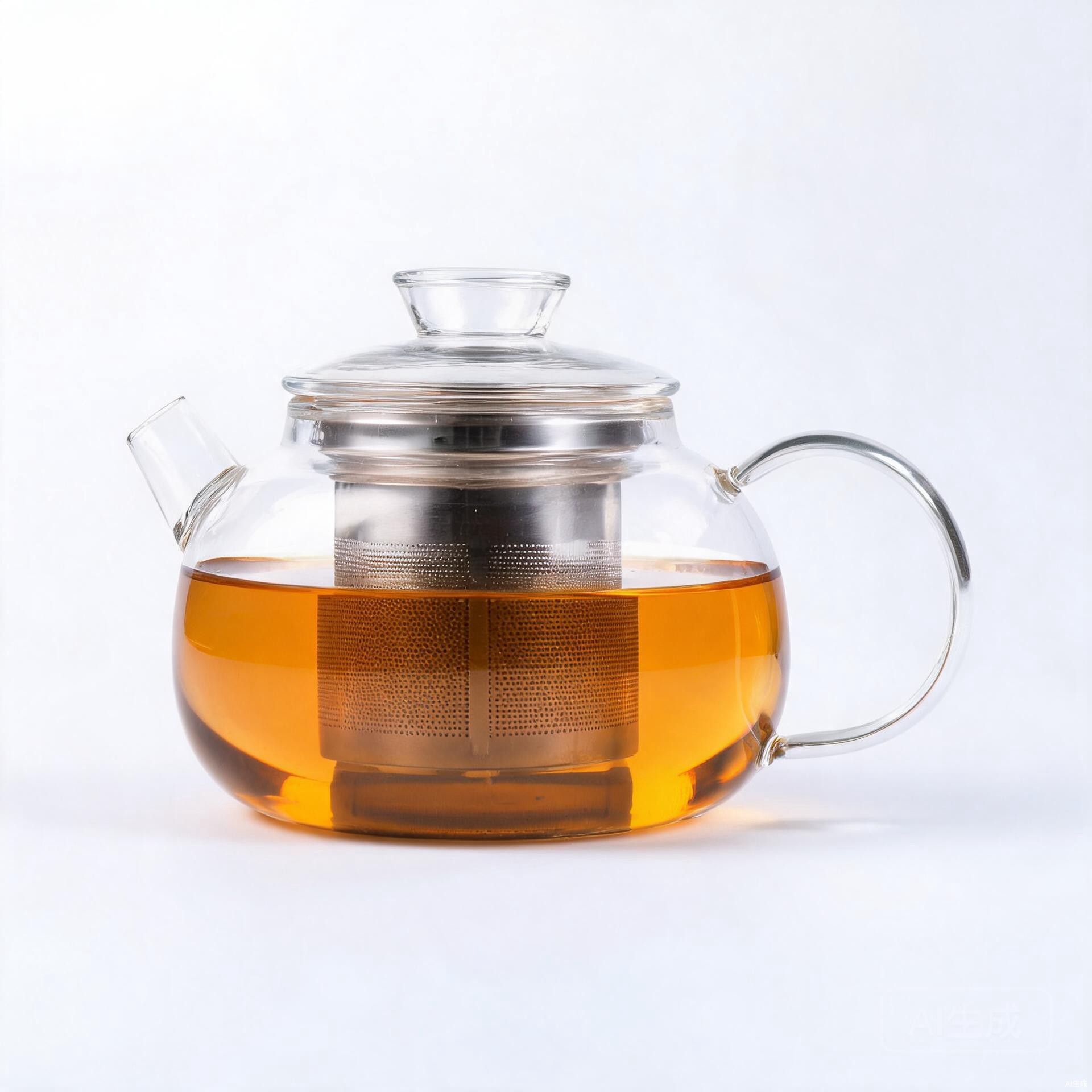
MESNEY 61oz Large Glass Teapot with Infuser
1.8L lets you simmer a week's worth of turmeric-ginger base at once and keep it in glass, ready to warm with milk or serve iced.
Buy NowFrequently Asked Questions
Does turmeric tea have caffeine?
No — turmeric is a root and contains no caffeine whatsoever. Turmeric tea is a good evening drink, and it is often chosen by people reducing coffee for exactly that reason.
Why do you add black pepper to turmeric tea?
Because curcumin is poorly absorbed on its own, and piperine from black pepper has been shown to increase its absorption dramatically. Traditional recipes have paired the two for centuries; it takes only a pinch.
What does turmeric tea taste like?
Earthy and lightly bitter, with a warm peppery finish — closer to a spice infusion than a herbal tea. Honey, lemon, ginger, and milk all soften it considerably, which is why nearly every recipe includes at least one of them.
Fresh turmeric or ground turmeric — which is better?
Fresh root makes a cleaner, brighter cup with no gritty sediment. Ground turmeric is faster and works perfectly well if you whisk it into a paste first and strain through a fine filter.
Can I drink turmeric tea every day?
Culinary amounts — one to two cups made with a small amount of root or powder — are widely drunk daily. Concentrated supplements are a different matter, and anyone on blood thinners or with gallbladder issues should check with a doctor first.
Does turmeric tea stain glass?
Borosilicate glass does not absorb curcumin the way plastic and unglazed ceramic do, so a normal wash removes any trace. It is one of the better materials for turmeric for precisely this reason.
Is turmeric tea the same as golden milk?
Golden milk is turmeric tea with milk, fat, and usually black pepper — a richer, creamier version of the same drink. Both start from the same turmeric-and-ginger base.
The Bottom Line
Turmeric tea rewards doing two things right: simmering the root rather than steeping it, and adding both black pepper and a little fat. Do that and the cup is warm, earthy, and genuinely enjoyable — a caffeine-free evening drink with a thousand-year history behind it. Skip those steps and you will wonder why anyone drinks it at all.
Brew it in a MESNEY borosilicate glass teapot — the golden color develops in full view, the infuser lifts the roots clean, and the non-porous glass means turmeric never leaves a stain or a flavor behind.
As an Amazon Associate, MESNEY earns from qualifying purchases. Prices and availability are subject to change.