When it comes to choosing kitchenware, safety should be your top priority. The materials that come into contact with your food and beverages can have a significant impact on your health. Among all the options available, borosilicate glass stands out as the safest, most reliable choice. But what exactly makes it so special, and why should you choose it over alternatives like plastic, stainless steel, or even ordinary glass?
What is Borosilicate Glass?
Borosilicate glass is a type of glass that contains boron trioxide as a key ingredient. This addition fundamentally changes the properties of the glass, giving it a remarkably low coefficient of thermal expansion. In simple terms, this means the glass expands and contracts very little when exposed to temperature changes, making it highly resistant to thermal shock.
Borosilicate glass was originally developed by German glassmaker Otto Schott in the late 19th century and quickly became the material of choice for laboratory equipment. The same properties that make it ideal for scientific applications, where extreme temperature and chemical resistance are essential, make it perfect for kitchenware.
Thermal Shock Resistance: The Key Advantage
Thermal shock occurs when a material experiences a rapid temperature change, causing different parts of the material to expand or contract at different rates. This stress can cause ordinary glass to crack or shatter. Borosilicate glass, with its low thermal expansion coefficient, can withstand temperature differentials of up to 330°F (165°C) without breaking.
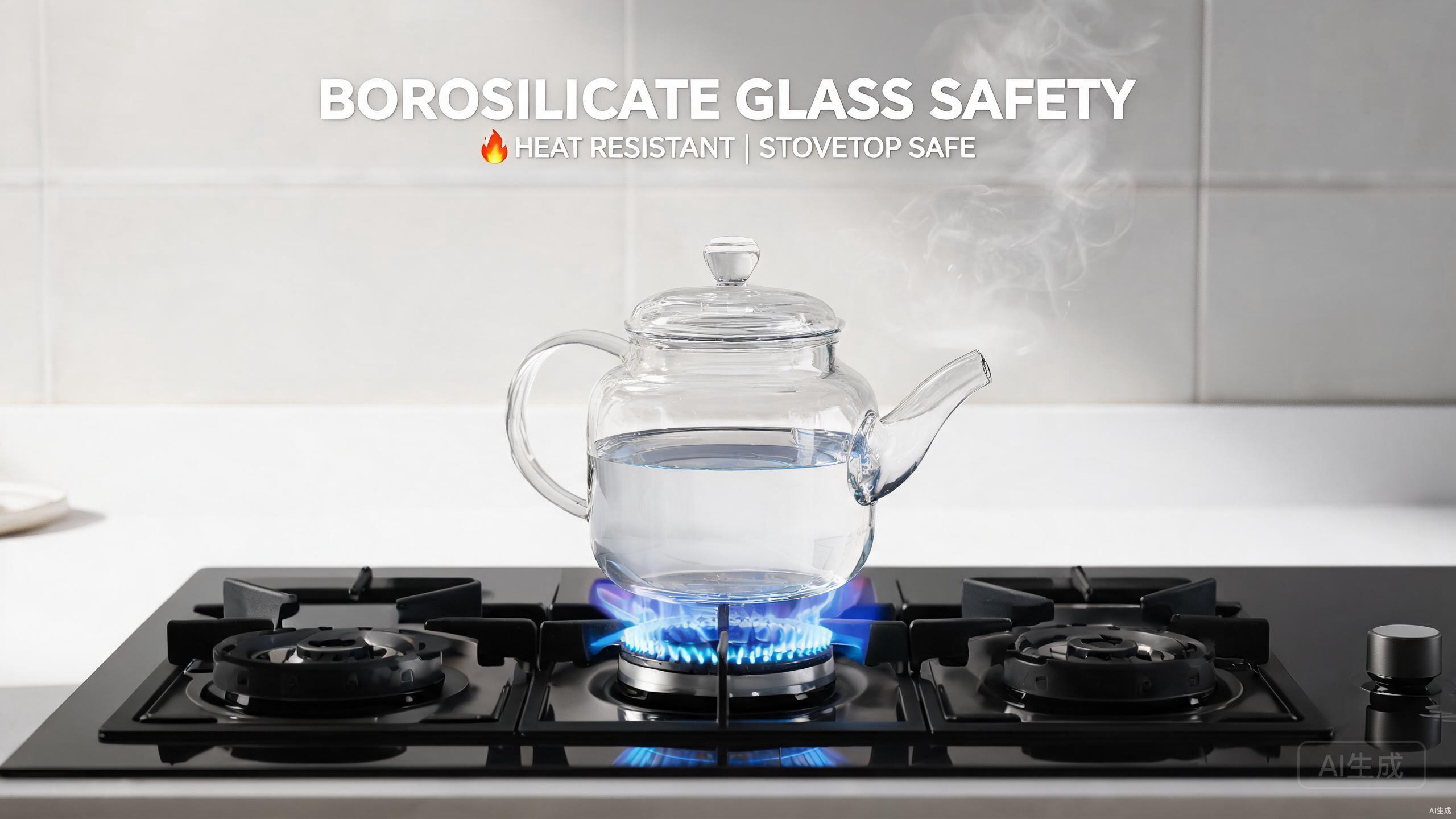
In practical terms, this means you can take a borosilicate glass teapot from the refrigerator, pour boiling water into it, and it will not crack. You can place it directly on a stovetop flame to heat your tea. This level of thermal resistance is simply not possible with ordinary soda-lime glass or tempered glass.
The MESNEY Teapot with Infuser and Lid is made from this exact type of borosilicate glass, making it safe for direct stovetop use and resistant to thermal shock.
Chemical Safety: Nothing Leaches Into Your Food
One of the most compelling safety advantages of borosilicate glass is its chemical inertness. Unlike plastic containers, which can leach harmful chemicals like BPA, phthalates, and microplastics into your food and beverages, borosilicate glass will never release any substances into what you consume.
This is particularly important when dealing with hot beverages. Heat accelerates the leaching process in plastic containers, meaning that hot coffee or tea in a plastic cup could be absorbing more chemicals than you realize. With borosilicate glass, there is zero risk of chemical contamination, regardless of the temperature.
Lead-Free and Food-Safe
Quality borosilicate glass is completely lead-free and meets FDA food safety standards. It will not absorb flavors, odors, or stains from food, ensuring that your beverages taste exactly as they should. Your morning coffee will never carry a hint of yesterday's tea.
Durability That Lasts
While borosilicate glass may look delicate, it is actually incredibly durable. Its resistance to thermal shock means it is less likely to crack under everyday kitchen conditions. It is also harder and more scratch-resistant than ordinary glass, meaning it will maintain its clarity and appearance over years of use.
Borosilicate glass is the only kitchen material that combines the purity of glass with the thermal resilience of metal and the chemical safety of ceramic, all in one elegant package.
Borosilicate Glass vs. Other Kitchen Materials
Borosilicate Glass vs. Plastic
Plastic containers can leach chemicals, absorb stains and odors, degrade over time, and are not environmentally friendly. Borosilicate glass is chemically inert, non-porous, and infinitely recyclable.
Borosilicate Glass vs. Stainless Steel
While stainless steel is durable, it is not transparent, meaning you cannot see the contents or brewing process. Some people also report a metallic taste with certain beverages in steel containers. Borosilicate glass offers full transparency and zero flavor transfer.
Borosilicate Glass vs. Ordinary Glass
Ordinary soda-lime glass cannot withstand rapid temperature changes and will crack if exposed to thermal shock. It is also more prone to scratching and breaking. Borosilicate glass is significantly more resistant to both thermal and mechanical stress.

Choosing Safe Borosilicate Glassware
When shopping for borosilicate glassware, look for products that explicitly state they are made from borosilicate glass. Not all glass products are created equal, and many are made from cheaper soda-lime glass that does not offer the same safety benefits. All MESNEY glassware is crafted from genuine borosilicate glass, ensuring you get the full safety benefits.
The MESNEY 40oz Glass Teapot and our 17oz Double Walled Glass Coffee Mug are both made from premium borosilicate glass, providing you with the safest possible material for your daily tea and coffee rituals.
Choose Safety. Choose MESNEY.
All MESNEY glassware is crafted from premium borosilicate glass for maximum safety and durability.
Shop Safe Glassware