Cacao Tea (Chocolate Tea): A Complete Guide to Cacao Husk Tea and Benefits
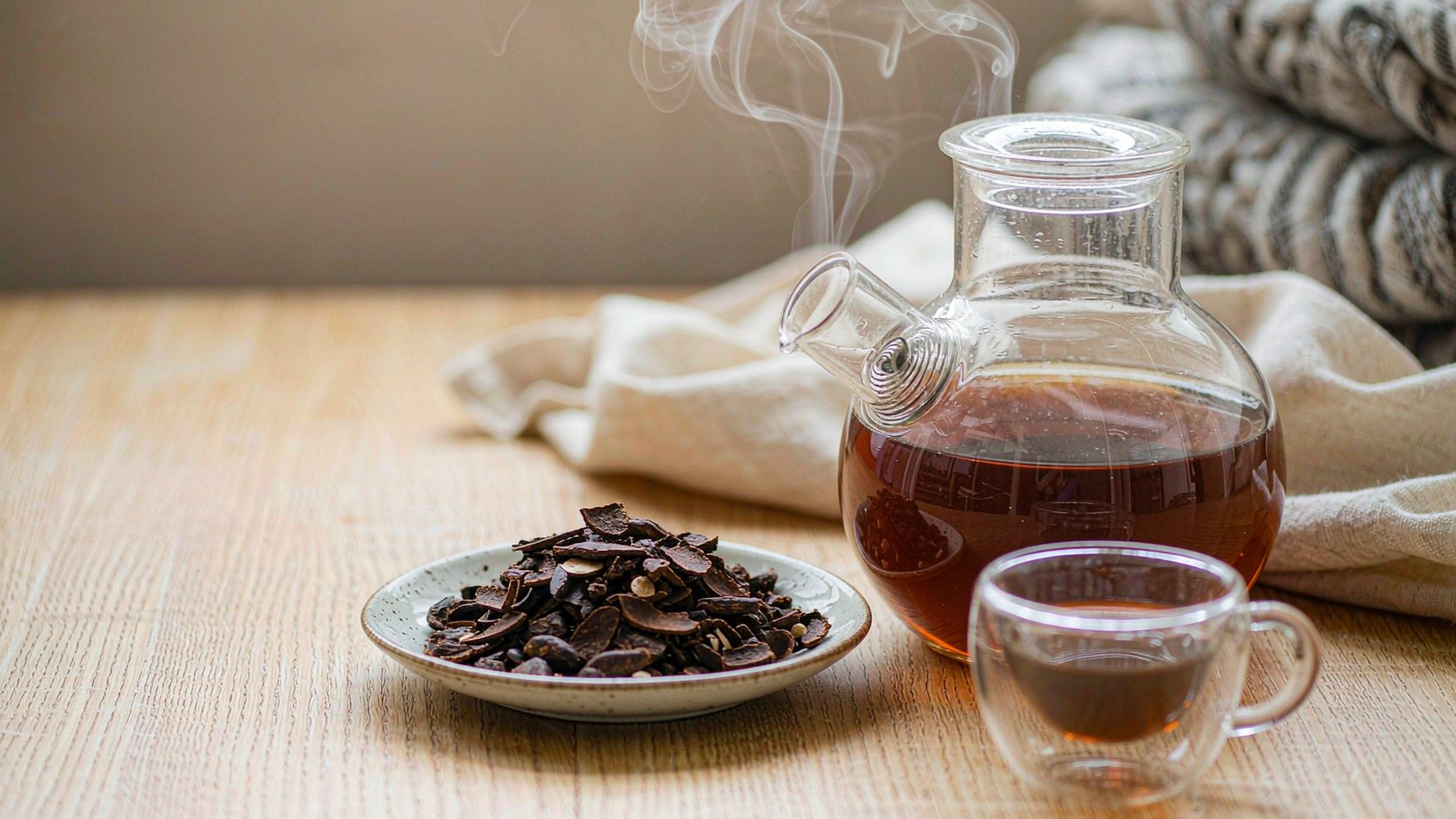
Cacao tea is a light, chocolate-scented infusion made from the husks — the papery outer shells — of roasted cacao beans. It tastes of dark chocolate and toasted nuts, carries only trace caffeine, and is brewed like a herbal tea rather than made like hot chocolate. It is a completely different drink from the sweet, milky cocoa most people picture.
This guide covers what cacao husk tea actually is, how it differs from hot chocolate, how to brew it hot or as a latte, and what theobromine does.
What Cacao Tea Actually Is
Chocolate begins as a fruit. Inside the pod sits a white pulp and the seeds that become cacao beans. After harvest the beans are fermented, dried and roasted, and then the shells are cracked away from the inner nib. Those shells are what cacao tea is made from.
Because it is an infusion of plant material with no leaves from the tea plant, cacao tea is a tisane, like chamomile or rooibos — not a true tea. It has been brewed in West Africa and the Caribbean for generations, and in parts of Latin America cacao husks were boiled as an everyday morning drink long before coffee arrived.
What makes it worth trying is what it is not: no milk, no sugar, no cocoa butter. You get the aroma and toasted depth of dark chocolate in a cup that is thin, clean and almost calorie-free.
Cacao Tea vs. Hot Chocolate
People expecting hot chocolate are usually surprised, so it is worth being clear about the difference before you brew.
| Cacao tea | Hot chocolate | |
|---|---|---|
| Made from | Cacao husks and shells, strained out | Cocoa powder or melted chocolate, stirred in |
| Base | Water | Milk or water, usually with sugar |
| Texture | Thin, tea-like, translucent | Thick, opaque, creamy |
| Sweetness | None unless you add it | Sweet by default |
| Fat and calories | Essentially none — around 2–5 calories a cup | Often 200–400 calories per mug |
| Caffeine | Trace amounts only | Depends on the cocoa and the serving |
| Drink it when | Any time, including the evening | Usually a treat or dessert |
If you want the rich, sweet, dessert-style drink, our hot chocolate guide covers that. Cacao tea is the other thing entirely: a light, aromatic infusion for people who like the taste of dark chocolate but not the weight of a mug of milk and sugar.
What Cacao Tea Tastes Like
The flavour is dark chocolate without the sweetness — cocoa, toasted nut, a faint woody creaminess and a slightly bright finish. Some find a hint of dried fruit; others describe something close to a mild, unsweetened coffee. The aroma surprises most first-time drinkers, because it is unmistakably chocolatey while the liquid is pale and thin.
It is more forgiving than true tea. Cacao husks have no tannin problem the way green tea does, so a long steep makes the cup richer rather than bitter, and the drink will not turn harsh if you leave it a minute or two past your timer.
How to Brew Cacao Tea
Husks are dense and woody, so they want a full boil and a longer steep than tea leaves. If you are used to a two-minute green tea, this will feel slow — that is normal and it is what gives the drink its depth.
Plain Cacao Husk Tea (1 cup)
- 1–2 heaped tablespoons cacao husks (about 8–12 g)
- 8–10 oz (240–300 ml) water at a full boil, 212°F (100°C)
- Optional: a cinnamon stick, a scrape of vanilla, or a teaspoon of honey
Method:
- Bring fresh water to a rolling boil — cacao husks need full heat, unlike delicate tea leaves.
- Add the husks to a glass teapot with an infuser, a French press, or a mug with a large strainer basket. A fine mesh is not required; the pieces are coarse.
- Pour the boiling water over them and start your timer.
- Steep 5–8 minutes for a lighter cup, or up to 10 minutes for a richer, more robust one. Taste as you go — the flavour builds steadily, and only past about ten minutes does it begin to turn slightly drying.
- Strain and drink as it is, or sweeten lightly. A cinnamon stick in the pot echoes the natural spiced note beautifully.
Cacao Chocolate Latte (the creamy version)
- 2 tablespoons cacao husks
- 6 oz (180 ml) boiling water
- 4 oz (120 ml) hot milk of your choice
- Optional: 1 teaspoon honey or maple syrup, a pinch of cinnamon
Method: steep the husks in the boiling water for 7 minutes, strain into a mug, then top with hot milk and sweeten to taste. It lands somewhere between a lightly sweetened hot chocolate and a tea — richer than the plain brew without the weight of a full cocoa drink. This is the version to serve to someone who says they do not like tea.
Iced cacao tea works unusually well. Steep at double strength, cool to room temperature, then chill — and unlike black tea, it does not turn cloudy or bitter in the refrigerator. Serve over ice with a splash of milk, or use it as the base for a chocolate cold brew. For the general technique, see our cold brew tea guide.
Cacao husks also blend beautifully. Try them with a rooibos base for a naturally sweet, honeyed depth — see our rooibos guide — or with warming spices in the style of a golden milk latte, covered in our turmeric latte guide.
Cacao Tea Benefits: What It Offers and What It Does Not
Cacao tea is not a supplement, but the husks are not nutritionally empty either. Steeping the shell gives a gentle infusion of the same flavonoid antioxidants found in dark chocolate, with negligible caffeine and the softer theobromine lift described below — a low-calorie, sugar-free drink with real chocolate flavour and no jitters, and a workable stand-in for a late-afternoon hot chocolate or a third coffee.
Be plain about the limits: the antioxidants in a steeped husk are a fraction of what cacao nibs give you, and no tea treats anything. Husks want full-boiling water and a long steep; our tea steeping chart lists the target.
Theobromine: The Gentle Stimulant in Cacao
Cacao's dominant stimulant is not caffeine but theobromine, a related compound that behaves differently. Where caffeine tends to arrive quickly and sharply, theobromine is described as a softer, longer-lasting lift, and it is the reason a cup of cacao tea feels warming and steady rather than jolting.
It also lingers. Theobromine has a notably longer half-life in the body than caffeine, which is worth knowing if you are sensitive. The practical consequence: even though cacao husk tea is very low in caffeine, drinking it late in the evening can still interfere with sleep for some people. If you are sensitive, treat it as an afternoon drink rather than a bedtime one.
Keep cacao out of reach of pets. Theobromine is toxic to dogs and cats and they metabolise it far more slowly than people do. Cacao husks, shells, nibs and used brewing grounds should all go in a closed bin, never into a pet bowl or a compost heap a dog can reach.
Does Cacao Tea Have Caffeine?
Cacao tea contains only trace amounts of caffeine, because nearly all of the caffeine in a cacao bean is in the inner nib rather than the outer shell you brew. In practice, a cup made from husks is closer to a herbal infusion than to coffee.
It is not, strictly speaking, a zero-caffeine drink — cacao products generally carry small amounts — so if you are avoiding methylxanthines entirely, a pure herbal infusion such as peppermint or chamomile remains the safest choice. For most people, cacao husk tea is comfortably an evening-adjacent drink that happens to taste of chocolate.
Buying and Storing Cacao Husks
- Look at the form. Husks and shells are the lightest, most tea-like brewing material. Nibs are crushed and far more bitter, best simmered rather than steeped. Cocoa powder is a different product entirely and will not strain out.
- Buy a small quantity first. Flavour varies a lot with origin and roast, from bright and fruity to deep and toasty. A small bag tells you which you prefer before you commit.
- Check that nothing is added. Good husk tea has one ingredient. Sweetened or flavoured versions hide sugar and additives that change the drink entirely.
- Store airtight, dark and dry. The roasted aromatics fade with light and air. A sealed tin in a cupboard keeps them for months; an open bag next to the kettle does not.
- You can reuse the husks once. A second infusion with a longer steep gives a gentler, still pleasantly chocolatey cup — worth doing before the grounds go in the bin.
Frequently Asked Questions
Is cacao tea the same as hot chocolate?
No. Cacao tea is a thin, unsweetened infusion brewed from cacao husks and strained, closer to a herbal tea. Hot chocolate is made by stirring cocoa powder or melted chocolate into milk, usually with sugar, and is thick and sweet.
Does cacao tea have caffeine?
Only trace amounts. Nearly all of the caffeine in a cacao bean sits in the inner nib, not the outer shell used for tea. Its main stimulant is theobromine, which is gentler but longer-lasting.
How long should I steep cacao husks?
Five to eight minutes in fully boiling water for a light, aromatic cup, or up to ten minutes for a richer one. Unlike green tea, husks do not turn bitter quickly, so a long steep is safe — but past ten minutes the cup can start to taste drying.
What does cacao tea taste like?
Dark chocolate without the sweetness, with toasted nut and a faint woody creaminess. The aroma is strongly chocolatey while the drink itself is pale and light-bodied. It is much closer to a mild unsweetened coffee or a rich herbal tea than to a dessert drink.
Can I drink cacao tea before bed?
Many people do, because the caffeine content is negligible. But theobromine stays in the body for a long time, so if you are sensitive to stimulants it is better as an afternoon drink. If you want a genuinely sleep-friendly evening cup, a herbal infusion is the safer choice.
Is cacao tea safe for pets?
No — keep it well away from dogs and cats. Theobromine is toxic to them and they clear it far more slowly than humans. Discard used husks in a closed bin.
Final Thoughts
Cacao tea is one of the more rewarding finds in the tea cupboard: the aroma of dark chocolate without the sugar, the milk or the caffeine load, and a brewing method so forgiving that it is hard to get wrong. Steep two tablespoons of husks in fully boiling water for seven minutes, taste it plain before you sweeten it, and try the latte version when you want something richer.
Because the husks are coarse and the colour develops slowly over those long minutes, glass is the natural home for this drink — you can watch the brew deepen and know exactly when to stop. Our picks:

40oz Glass Teapot with Infuser
A seven-minute steep is easy to judge when you can see the colour deepen through the glass, and the roomy infuser gives the coarse husks space to release their flavour without packing down.
Buy Now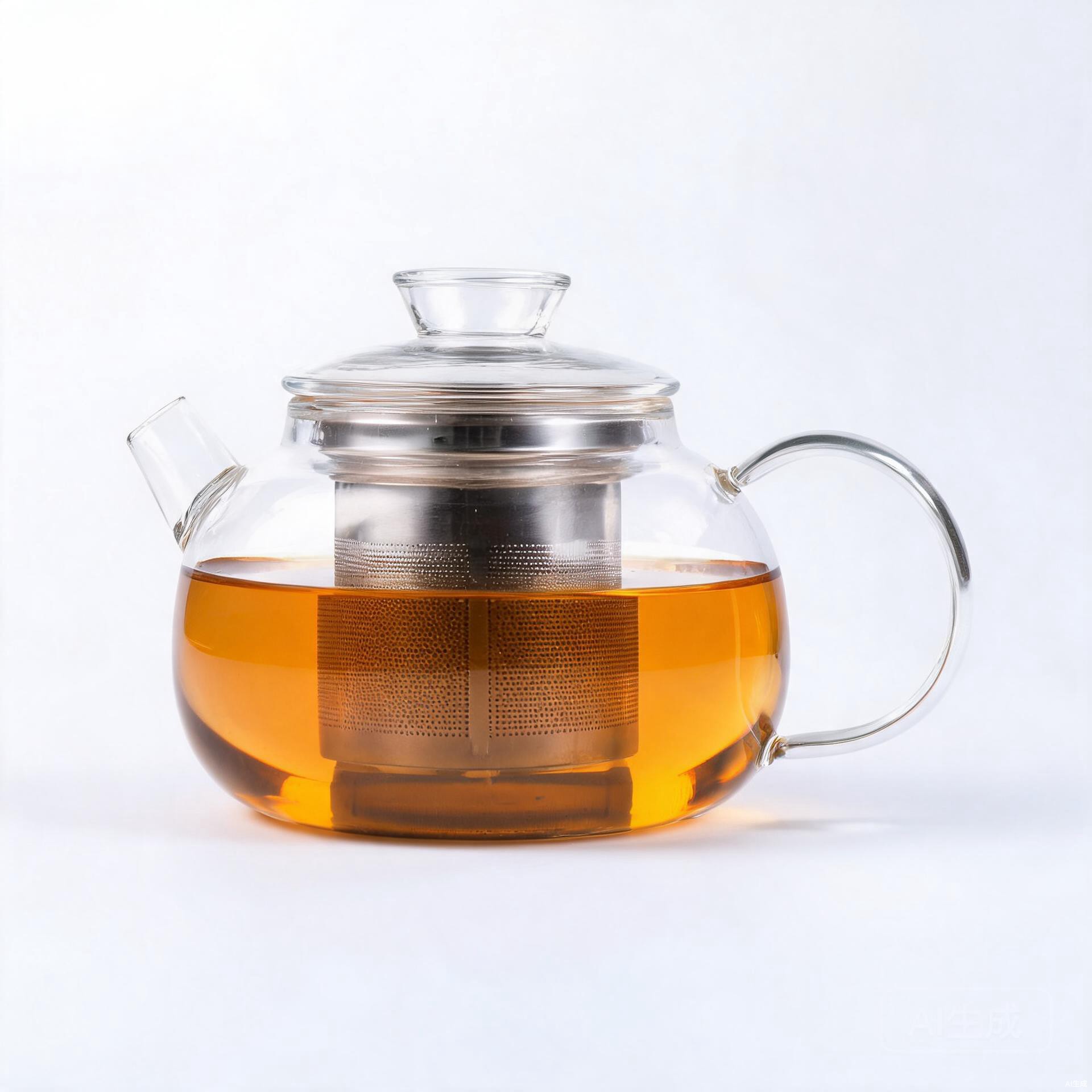
MESNEY 61oz Large Glass Teapot
1.8L brews a full pot of cacao husk tea in one go, or a large batch of iced chocolate tea for the fridge.
Buy Now
17oz Double Walled Glass Mug
The clear double wall shows off the deep brown of a well-steeped husk tea and keeps it warm through a slow evening cup.
Buy NowAs an Amazon Associate, MESNEY earns from qualifying purchases. Prices and availability are subject to change.