Darjeeling Tea: A Complete Guide to Brewing the Himalayan Classic

Darjeeling tea is the delicate, floral black tea grown on the steep Himalayan foothills of West Bengal, India — the lightest and most aromatic of the classic black teas, and the one most often described as the finest in the world. Where Assam is bold and malty, Darjeeling is bright, musky, and almost wine-like.
This guide explains what makes Darjeeling different, what "first flush" and "second flush" actually mean, how to brew it without flattening its aroma, how much caffeine it contains, and how to tell a genuine single-estate Darjeeling from a bag of flavored dust.
What Is Darjeeling Tea?
Darjeeling tea comes from around the town of Darjeeling in the Himalayan foothills, at elevations between roughly 2,000 and 7,000 feet. The high altitude, cool misty air, and slow leaf growth produce a tea with far more aromatic complexity and far less tannin than teas grown at sea level.
It is a black tea — fully oxidized — but a gentle one. The liquor is usually pale gold to light amber rather than deep copper, and the flavor runs toward white flowers, green apple, and a distinctive musky note that the trade calls muscatel. Because the leaves grow slowly in the cold, they accumulate the aromatic compounds that give Darjeeling its characteristic perfume. Only a comparatively small area in the world produces it, which is why true Darjeeling is priced well above ordinary black tea.
The Flushes: Why Darjeeling Changes Through the Year
Darjeeling is picked in several distinct seasons, and each one tastes like a different tea. This is the single most important thing to understand before you buy.
| Flush | When | Character | Best for |
|---|---|---|---|
| First flush | Late March – April | Very light, floral, greenish, astringent | Drinking plain, no milk |
| Second flush | May – June | Fuller, fruity, classic muscatel | The archetypal Darjeeling cup |
| Monsoon flush | July – September | Dark, strong, less aromatic | Everyday brewing, blends |
| Autumn flush | October – November | Round, smooth, lightly fruity | An easy, mellow cup |
If you are new to Darjeeling, start with a second flush. It is the most complete expression of the style — fruity, muscatel, and substantial enough to feel like a real black tea, while still delicate enough to drink without milk.
What Darjeeling Tea Tastes Like
Think of it as the opposite of a breakfast tea. A good second-flush Darjeeling opens with a floral, almost grape-like aroma, then lands light and bright on the tongue with a gentle astringency and a long, clean finish. The muscatel note — somewhere between white grape, ripe stone fruit, and a faint green muscat wine — is the signature.
Because the flavour is delicate, Darjeeling is best drunk plain, or with at most a thin slice of lemon. Milk tends to smother exactly the aromas you paid for. If you want a tea that welcomes milk, Assam is the better choice.
Darjeeling Tea Benefits
Darjeeling is a true black tea and carries the same general properties as other black teas — it is not a medicine, and the notes below describe ordinary characteristics of the drink.
| Property | Why it matters day to day |
|---|---|
| Polyphenols | Black tea contains theaflavins and thearubigins, formed during oxidation. |
| Moderate caffeine | Slightly lower and gentler than Assam, so it suits an afternoon cup. |
| Lighter body | Easier on an empty stomach than a heavy breakfast tea. |
| Zero calories | Nothing added, nothing counted. |
| Low tannin for a black tea | Less astringency means it stays smooth even if you lose track of the timer. |
How to Brew Darjeeling Tea
Darjeeling is the black tea most often ruined by boiling water. Its aromatics are volatile, and water at a rolling boil scorches them into a flat, bitter cup. Treat it more like a green tea than like a breakfast blend.
Classic Hot Darjeeling (one 10oz cup)
- 1 teaspoon (about 2g) loose-leaf Darjeeling
- 10 oz (300 ml) water at 185–195°F (85–90°C)
- Nothing else — Darjeeling is best unadorned
Method:
- Boil the kettle, then let it rest for a minute or two. If you have no thermometer, this is the simplest way to land in the right range.
- Warm a glass teapot with a little hot water and discard it.
- Add the leaves and pour the cooled water over them. First-flush leaf needs only 2–3 minutes; second flush and autumn flush take 3–4 minutes.
- Watch the liquor through the glass — the color should move from pale gold to amber, never to a dark, cloudy brown.
- Lift out the infuser as soon as the time is up. Darjeeling turns astringent quickly once it is done.
If it tastes bitter: your water was too hot or your steep ran long — not a fault in the leaf. Drop the water temperature by about 10°F and shorten the steep by a minute. Delicate teas respond to small adjustments more than bold ones do.
Iced and Cold-Brewed Darjeeling
Because Darjeeling is so aromatic, it makes an unusually elegant iced tea — the floral notes survive chilling far better than a heavy breakfast blend does.
Cold-Brew Darjeeling (1 liter)
- 2 tablespoons (about 8g) loose-leaf Darjeeling
- 1 liter (4 cups) cold filtered water
- Optional: a thin slice of lemon, or a few fresh mint leaves
Method: combine the leaves and cold water in a glass pitcher or teapot, cover, and refrigerate 8–12 hours. Strain and serve over ice. Cold extraction pulls almost no bitterness, so the muscatel aroma comes through cleanly. For a faster version, brew hot at half strength, cool to room temperature, then chill. See our cold brew tea guide for the full method.
Darjeeling Tea Caffeine
An 8oz cup of Darjeeling contains roughly 30–50mg of caffeine — generally a little less than Assam, partly because it is brewed at a lower temperature. A first-flush Darjeeling picked early in the season tends to have slightly more caffeine in the leaf, while a late-season autumn flush has a little less. A second infusion yields noticeably less again.
Darjeeling vs. Assam vs. Ceylon
These three single-origin black teas cover the full range from light to bold. Choosing between them is mostly a question of the cup you want.
| Darjeeling | Assam | Ceylon | |
|---|---|---|---|
| Flavor | Floral, muscatel, wine-like | Malty, bold, bready | Bright, citrusy, crisp |
| Body | Light and clean | Full and thick | Medium |
| Liquor color | Pale gold to amber | Deep copper | Bright amber to red |
| Brew temperature | 185–195°F | 200–212°F | 195–205°F |
| Milk | Not recommended | Excellent | Good |
| Best for | A quiet afternoon cup | Breakfast and chai | Iced tea and iced lattes |
For the bold end of the spectrum, read our Assam tea guide; for the bright, citrusy middle, the Ceylon tea guide. If you are building a black tea shelf, all three together cover almost every mood.
How to Buy Real Darjeeling Tea
Darjeeling is one of the most imitated teas in the world — far more is sold under the name than the region actually produces. A few simple checks will keep you out of trouble.
- Look for a flush and, ideally, an estate. "Second flush, Singell estate" tells you a great deal; "Darjeeling blend" tells you almost nothing.
- Be wary of the word "blend." A Darjeeling blend may legally contain tea from outside the region.
- Buy whole leaf. Broken grades taste flatter and lose the muscatel aroma that makes Darjeeling worth the price. See our loose leaf setup guide.
- Expect a pale liquor. If a "Darjeeling" brews jet black, it is probably not Darjeeling.
Price is a signal here. Real single-estate Darjeeling is a small, high-altitude, hand-picked crop. If a large tin costs about the same as a supermarket breakfast blend, there is very little Darjeeling in it.
Why Darjeeling Belongs in Glass
Darjeeling is the clearest case for a glass teapot on the whole tea shelf. The liquor should stay pale gold to amber; the moment it darkens toward brown, it is over-steeped. In a clear borosilicate pot you can watch that color shift in real time and lift the leaves at exactly the right second — something no opaque ceramic pot allows. Glass also holds no aroma from previous brews, which matters when the whole point of the tea is its perfume.
Frequently Asked Questions
Is Darjeeling tea black or green?
It is a black tea — fully oxidized — but a very light one. First-flush Darjeeling can look almost green in the cup and tastes floral and astringent rather than dark and malty.
What is muscatel flavor in Darjeeling tea?
Muscatel is the trade term for Darjeeling's distinctive aroma, reminiscent of white grape, ripe stone fruit, and a faint muscat wine. It develops most clearly in the second flush and is the mark of a good Darjeeling.
Should you put milk in Darjeeling tea?
Generally no. Milk masks the floral, muscatel aromas that make Darjeeling distinctive. Drink it plain, or with at most a thin slice of lemon.
How much caffeine is in a cup of Darjeeling tea?
Roughly 30–50mg per 8oz cup, slightly less than Assam, and lower still on a second infusion.
Final Thoughts
Darjeeling rewards a gentler hand than any other black tea. Brew it at 185–195°F, keep the steep short, drink it plain, and the muscatel aroma runs from the first sip to the last. Buy a second flush from a named estate, store it away from light and heat, and treat it as the delicate thing it is.
And brew it in glass. When the whole pleasure of a tea is watching a pale gold liquor slowly take on color, a clear teapot is not decoration — it is the timer. These are the pieces we reach for:

40oz Glass Teapot with Infuser
The clearest view of a pale gold liquor darkening toward amber — pull the basket the moment it does. The infuser lifts out clean, so delicate first-flush leaves never sit in the pot and turn bitter.
Buy Now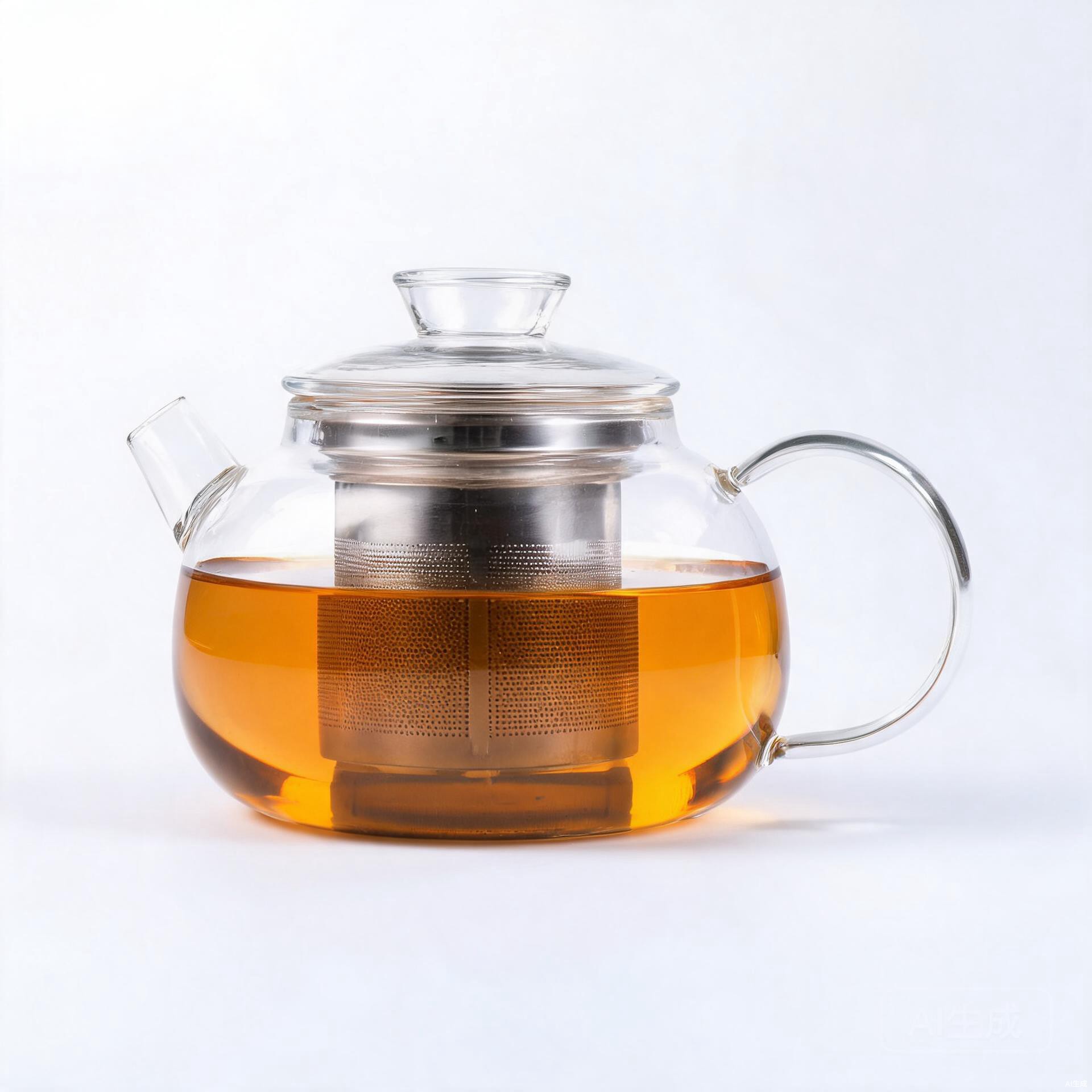
MESNEY 61oz Large Glass Teapot
1.8L serves a table of Darjeeling without re-brewing, and the wide glass body shows off the liquor color beautifully.
Buy Now
17oz Double Walled Glass Mug
A single generous cup that keeps a bright, clear liquor hot to the last sip without burning your hands.
Buy NowAs an Amazon Associate, MESNEY earns from qualifying purchases. Prices and availability are subject to change.