There is a quiet frustration in pouring a hot cup of coffee only to find it lukewarm before you finish the last sip, or in watching a glass of iced tea leave a ring of condensation on your desk. The insulated glass tumbler was designed to solve both problems at once. By sealing a layer of air between two walls of glass, this simple but ingenious design holds heat in, keeps cold out, and keeps your hands comfortable no matter what is inside.
This complete guide explains everything you need to know about double wall technology and how to choose the right double wall glass tumbler for your home. We will cover what an insulated glass tumbler is, the physics of how double wall glass works, heat retention and cold drink performance, the real-world benefits of insulated drinking glasses, how glass compares to stainless steel and plastic, and practical care advice. Whether you want a better insulated coffee mug for slow mornings or a set of double walled glasses for entertaining, you will find clear, evidence-based answers here.
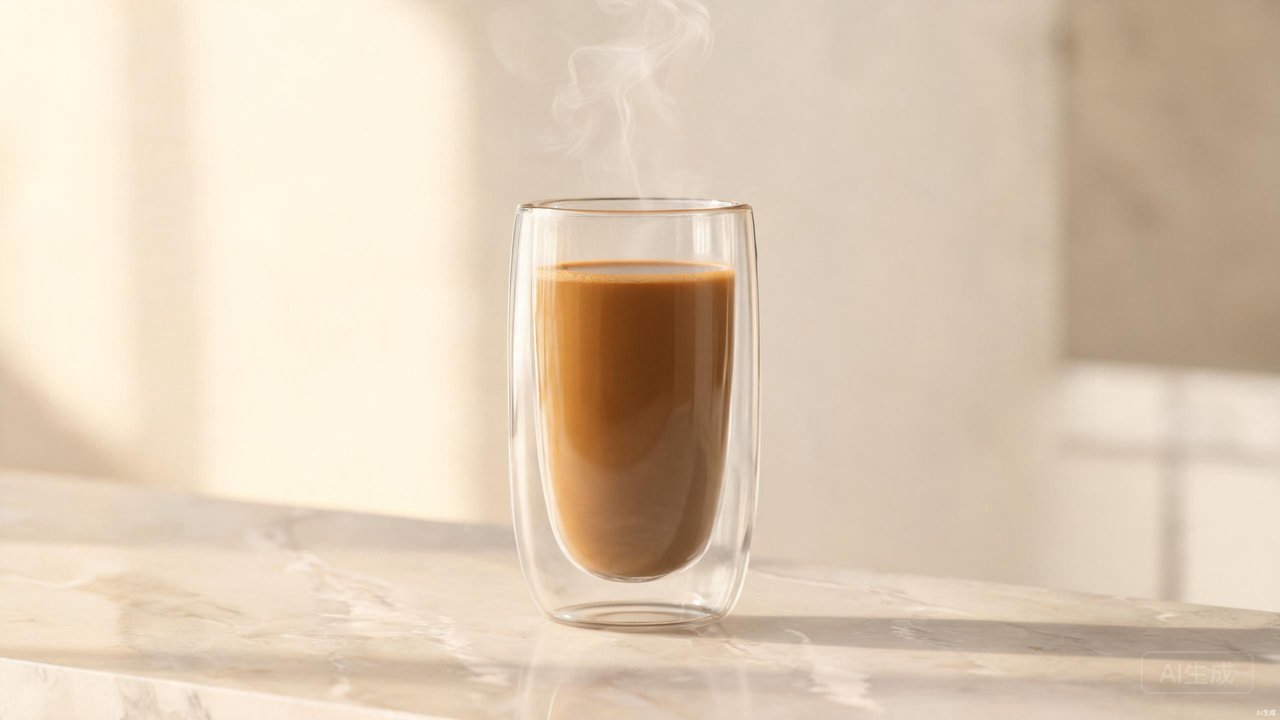
Double wall glass is not a gimmick. It is applied physics in your hand — an invisible air gap doing the work of a thermos, with the clarity of crystal.
1. What Is an Insulated Glass Tumbler?
An insulated glass tumbler is a drinking vessel built from two layers of glass rather than one. The inner layer holds your beverage, the outer layer is what you grip, and the narrow space between them is sealed with a pocket of air. That sealed air gap is the insulation. Because air is a poor conductor of heat, it slows the transfer of warmth between the drink and your hand, and between the drink and the room.
Nearly all quality insulated glass drinkware is made from borosilicate glass. Borosilicate contains boron trioxide, which gives it a far lower coefficient of thermal expansion than ordinary soda-lime glass. That means it can tolerate rapid temperature swings — roughly 330°F of sudden change — without cracking. This thermal shock resistance is essential in a double wall vessel, because one wall may be holding boiling coffee while the other sits at room temperature.
The term "tumbler" technically refers to a flat-bottomed, handle-free cup, but in everyday use an insulated glass tumbler can range from a small 6 ounce espresso cup to a 17 ounce coffee mug. What unites them is the double wall construction and the absence of a handle, which the insulation makes unnecessary.
It is worth distinguishing a true double wall glass tumbler from other insulated drinkware. A vacuum-insulated stainless steel tumbler also uses a double wall, but with the air evacuated to create a near-vacuum. Glass double wall vessels usually retain a small cushion of air rather than a hard vacuum, trading a little raw insulation performance for the transparency, flavor neutrality, and elegance that only glass can provide.
2. How Double Wall Technology Works
To understand why an insulated glass tumbler performs the way it does, it helps to look at the three ways heat moves. Heat always travels from warmer objects to cooler ones, and it does so through conduction, convection, and radiation. Double wall glass technology is engineered to limit all three.
Conduction: Slowing Heat Through Solids
Conduction is heat moving through direct contact between molecules. When you pour hot coffee into a single-walled glass, the glass conducts heat from the liquid to the outer surface, which warms your hand and the surrounding air. Glass is already a relatively poor conductor compared to metal, but a single wall still transfers heat quickly enough to cool a drink fast and burn your fingers. By separating the inner and outer walls with an air gap, double wall construction forces heat to cross a layer of air, which conducts heat roughly 25 times more slowly than glass. This is the primary insulating mechanism.
Convection: Stopping Air From Carrying Heat
Convection is heat carried by the movement of a fluid or gas. In a wide open space, warm air rises and circulates. Inside a double wall glass, the sealed air gap is narrow and still, so convective heat transfer is minimized. The air simply sits in place, acting as a stationary thermal barrier.
Radiation: A Minor Factor at Drink Temperatures
Radiation is heat emitted as infrared energy. At the relatively low temperatures of hot beverages, radiation is a minor contributor, and glass is naturally less emissive than bare metal. Premium vacuum flasks add a reflective coating to bounce radiation back, but for everyday drinkware this is a secondary concern.
The Sealed Air Gap
The result is that the sealed air gap inside a double wall glass behaves almost like a tiny, passive thermos. Hot drinks lose heat slowly because the air gap resists conduction and convection, and cold drinks gain heat slowly for the same reason. Together, this is why double walled glasses dramatically outperform single-walled glass and ceramic mugs at holding temperature, without any moving parts or electronics.
3. Benefits of Double Wall Glass
The popularity of insulated drinking glasses is not just about temperature. The double wall design delivers a cluster of practical benefits that make daily use noticeably better.
Temperature Without Compromise
The most obvious benefit is thermal performance. A double wall glass tumbler keeps hot drinks hot longer and cold drinks cold longer than a single-walled equivalent. A coffee that would cool to room temperature in 15 minutes in a standard mug can stay pleasantly warm for 45 minutes or more in a double wall glass.
No Condensation, No Rings
Cold drinks in single-walled glasses sweat. Condensation forms on the outside as warm room air hits the cold surface, leaving wet rings on tables and documents. Because the outer wall of a double wall glass stays near room temperature, condensation essentially does not form. You can set an iced tumbler on a wooden table without a coaster and leave no mark.
Comfortable to Hold
An insulated coffee mug built with double wall glass can be filled with near-boiling water and still be held comfortably by the outer wall. There is no need for a handle, a cardboard sleeve, or a folded napkin. The same applies to icy drinks: your hand never goes numb from gripping a freezing glass.
The Floating Beverage Effect
There is an undeniable visual charm to double wall glass. Because the inner chamber is suspended inside a transparent outer shell, a drink appears to float in midair. Layered beverages look especially striking: a latte reveals distinct tiers of espresso and milk, a macchiato shows its dark and light bands, and a fruit-infused water displays its colors suspended against the table. For anyone who appreciates presentation, this is a genuine pleasure.
Flavor Neutrality
Glass is chemically inert and non-porous. It does not absorb flavors, odors, or stains the way plastic and some ceramics can. A borosilicate insulated glass tumbler that held coffee this morning will taste perfectly clean with tea this afternoon after a rinse. This neutrality matters most for delicate drinks like specialty coffee and loose-leaf tea, where even trace residues can interfere with flavor.
For a broader look at the everyday advantages, see our guide on the benefits of double-walled glass mugs, which explores these points in greater depth.
4. Heat Retention Science: Why Your Coffee Stays Hot
The heat retention of an insulated glass tumbler is not magic, but the science behind it is genuinely elegant. When you pour a hot drink, the liquid starts at one temperature and the room is at another. The drink cools because heat flows out of it into the cooler surroundings. Double wall construction slows that flow in measurable, predictable ways.
The Temperature Curve
Heat loss follows a curve, not a straight line. The largest temperature drop happens in the first few minutes, while the drink is hottest and the temperature difference with the room is greatest. As the drink cools, the rate of loss slows. A double wall glass does not eliminate this curve, but it flattens it. The initial drop is gentler, and the drink spends far longer in the enjoyable drinking range — roughly 130°F to 160°F for coffee — before falling below it.
The Role of the Lid
One often-overlooked factor is evaporation. A significant portion of a hot drink's heat is lost through steam escaping the open top. A double wall glass with a lid captures this vapor and dramatically extends heat retention. Without a lid, an insulated coffee mug still outperforms single wall glass, but with a lid the difference becomes substantial. If maximum heat retention is your priority, choose a double wall tumbler designed to accept a silicone or bamboo lid.
Capacity and Surface Area
Physics dictates that smaller volumes lose heat faster than larger ones, because a small drink has a high surface-area-to-volume ratio. A 6 ounce espresso cools far more quickly than a 17 ounce mug of coffee, which is why a small double wall glass tumbler is so valuable for espresso: it is precisely where insulation matters most.
Borosilicate as the Foundation
None of this works unless the glass can survive the temperature difference between the inner and outer walls. A single-walled soda-lime glass that is hot on the inside and cool on the outside can crack under the stress. Borosilicate's low thermal expansion is what allows a double wall glass to maintain a steep temperature gradient across its two walls without failing. The material and the design are inseparable.
5. Cold Drink Performance: Iced Without the Sweat
The same insulation that holds heat in works in reverse for cold drinks, and for many people this is where a double wall glass tumbler earns its place. Iced coffee, cold brew, lemonade, iced tea, and sparkling water all benefit from insulation, and the absence of condensation is a daily quality-of-life improvement.
Slower Melting, Less Dilution
When you pour an iced drink into a single-walled glass, the warm room heats the glass, which heats the ice, melting it quickly and diluting the drink. A double wall glass shields the ice from room heat, so ice melts noticeably more slowly. The result is a drink that stays cold and full-flavored longer, rather than turning watery after ten minutes.
No Wet Hands, No Wet Tables
As mentioned earlier, condensation is almost entirely eliminated. Your hand stays dry, your glass does not slip, and you do not need a coaster on every surface. Insulated drinking glasses are especially welcome at a desk, on a wooden dining table, or anywhere paper and electronics live.
Visual Appeal of Layered Cold Drinks
Cold drinks often look their best in glass, and double wall construction amplifies this. A cold brew over a large clear cube, an iced latte with its gradient of milk and coffee, or a colorful fruit-infused water all display vividly through the transparent walls, with the floating effect making even a simple glass of iced water feel considered and refined.
Performance in Hot Weather
On a hot day, the temperature difference between a cold drink and the surrounding air is large, which means heat flows into the drink quickly. This is exactly the scenario where insulation pays off most. An insulated glass tumbler can keep a cold drink refreshing on a patio or at a picnic table far longer than a standard glass, without the metallic taste that some people notice from stainless steel.
6. Choosing the Right Insulated Glass Tumbler
Not every double wall glass tumbler is the same, and the right choice depends on how you drink. A few criteria will help you narrow the field.
Material: Insist on Borosilicate
This is non-negotiable for any glass that will hold hot drinks. Borosilicate glass is the only common glass that can handle the thermal stress of double wall construction with hot contents. If a product does not explicitly state borosilicate, assume it is soda-lime and reserve it for cold drinks only. All MESNEY insulated glass drinkware is made from borosilicate for this reason.
Capacity: Match the Drink to the Size
Choose a size that fits your habits. A 2.5 to 6.7 ounce cup is ideal for espresso and cortados. A 10 to 13 ounce tumbler suits a cappuccino, flat white, or tea. A 15 to 17 ounce mug is right for a large coffee, latte, or hot chocolate, and also works well for iced drinks. Buying a size that matches how you actually drink prevents awkward pours and wasted capacity.
Lid Compatibility
If heat retention is a priority, look for a tumbler that accepts a lid. Some double wall glass tumblers come with a silicone or bamboo lid designed to fit; others are open-topped. A lid transforms thermal performance by cutting evaporative loss, and it also makes the tumbler safer to carry.
Wall Quality and Seal
The quality of the seal between the two walls determines longevity. A poorly sealed double wall glass can lose its insulating air gap over time, or take on water in the dishwasher that leaves a cloudy residue between the walls. Look for a clean, even base seal and avoid tumblers with obvious imperfections.
Shape and Stability
A wide base is more stable and less likely to tip, while a tapered body fits the hand comfortably and can be stacked. If you plan to use the tumbler for travel, consider one with a slightly narrower base that fits a car cup holder.
Sets vs. Singles
For a household, sets of two or four usually offer the best value and ensure consistency on the table. A single tumbler makes sense for a personal desk mug. Many people start with one insulated coffee mug and, after a few weeks of slower, warmer mornings, return for a matching set.
You can compare options directly in our glass drinkware collection to find the sizes and styles that fit your routine.
7. Insulated Glass vs. Stainless Steel vs. Plastic
To see where an insulated glass tumbler fits, it helps to compare it directly with the other materials used for insulated and everyday drinkware. Each has strengths, and the right choice depends on what you value most.
| Feature | Insulated Glass (Double Wall) | Stainless Steel (Vacuum) | Plastic |
|---|---|---|---|
| Insulation | Good — sealed air gap slows heat transfer | Excellent — vacuum gap offers top-tier retention | Poor — thin walls conduct heat readily |
| Heat Retention | Moderate to good, much better with a lid | Best in class, keeps drinks hot for hours | Weak, drinks cool or warm quickly |
| Cold Performance | Very good, no condensation on the outside | Excellent, no sweat, long-lasting chill | Poor, heavy condensation and rapid warming |
| Flavor Neutrality | Excellent — glass is inert and non-porous | Good, but metal can impart a faint taste to acidic drinks | Poor — retains odors and can affect flavor |
| Visual Appeal | Stunning — transparent walls, floating effect | Opaque, modern, often powder-coated in colors | Casual, often translucent, scratches over time |
| Durability | Moderate — glass can break if dropped | Excellent — resists dents and drops | Good against drops, but scratches and degrades |
| Weight | Light to moderate | Heavier, especially double-walled | Lightest |
| Safety with Heat | Safe with borosilicate, no chemical leaching | Safe, no leaching | Risky — some plastics leach when heated |
| Best For | Home use, hot and cold drinks, presentation | Travel, outdoors, all-day temperature holding | Casual cold drinks, picnics, kids |
The takeaway is straightforward. If your priority is maximum temperature retention over many hours, or ruggedness for travel, vacuum-insulated stainless steel is hard to beat. If your priority is flavor purity, visual elegance, and comfortable everyday home use, an insulated glass tumbler is the better choice. Plastic remains a budget option for casual cold drinks, but its tendency to retain odors and scratch makes it a poor long-term investment for anything you drink often.
8. Care and Maintenance for Insulated Glass
A quality double wall glass tumbler will last for years with a few simple habits. Borosilicate glass is non-porous, so it never absorbs flavors and is easy to clean, but the double wall construction does call for a little extra attention.
Daily Cleaning
Most borosilicate double wall glasses are dishwasher safe on the top rack. Space them so they do not clink against other items, and keep them clear of the heating element. For hand washing, use warm water, mild dish soap, and a soft sponge or bottle brush. Avoid steel wool and abrasive scouring pads, which scratch the surface and can compromise clarity over time.
Protecting the Seal
The seal at the base of a double wall glass is what keeps the insulating air gap intact. To protect it, avoid prolonged soaking and do not expose the glass to extreme temperature swings such as moving it straight from the freezer to boiling water. While borosilicate tolerates thermal shock far better than ordinary glass, repeated extreme cycles put stress on the seal over time. Hand washing is the gentlest option and helps the insulation last as long as possible.
Removing Stains and Cloudiness
Coffee and tea can leave a faint film inside any glass over time. To lift it, fill the tumbler with warm water and a teaspoon of baking soda, let it sit for thirty minutes, then scrub gently with a soft brush and rinse. For tougher discoloration, an equal-parts solution of white vinegar and water works well. Our complete guide to cleaning borosilicate glassware walks through these methods in detail.
Storage and Handling
Store double walled glasses upright with enough space between them to avoid chipping the rims. If you stack them, place a soft cloth or felt pad between each glass. Carry glasses one at a time when they are full, and be mindful of the sink faucet and the rim of the basin, where most accidental breakage happens.
9. Product Recommendations: Insulated Glass We Trust
To put these principles into practice, here are three pieces of borosilicate insulated glass drinkware we recommend for a well-rounded home collection. Together they cover everyday coffee, tea brewing, and espresso, and each is made from heat-resistant borosilicate glass with double wall insulation where it counts.

17oz Double Walled Glass Coffee Mug
A generous 17 ounce insulated coffee mug that keeps coffee, tea, or hot chocolate hot while staying cool to the touch. Stackable and versatile, it is the everyday double wall glass tumbler most homes reach for first.
- 17oz capacity
- Double wall insulation
- Borosilicate glass
- Stackable, dishwasher safe

Glass Teapot with Infuser
A heat-resistant borosilicate glass teapot with a stainless steel infuser basket. The clear body lets you watch tea bloom and judge strength by color, making it the perfect brewing companion to your insulated glass tumblers.
- Borosilicate glass
- Removable stainless steel infuser
- Stovetop safe (on low heat)
- Visual brewing

6.7oz Double Wall Espresso Cups (Set of 2)
A set of two 6.7 ounce double wall insulated cups that cradle a shot of espresso or a small cortado. The insulated wall preserves heat and crema while protecting your fingers, and the clear glass showcases every layer.
- Set of 2 cups
- 6.7oz / 200ml capacity
- Double wall insulation
- Borosilicate, dishwasher safe
Start with these three and you have the essentials covered: a mug for everyday coffee and tea, a teapot for brewing, and a demitasse for espresso. Add a few larger tumblers over time for iced drinks and water.
10. Conclusion: Why an Insulated Glass Tumbler Belongs in Every Kitchen
The insulated glass tumbler is one of those rare kitchen upgrades that improves nearly every drink you make. By sealing a layer of air between two walls of borosilicate glass, double wall technology slows the exchange of heat in both directions, keeping hot drinks hot and cold drinks cold while keeping your hands comfortable and your tables dry. It is applied physics delivered in an object of genuine beauty.
The benefits go beyond temperature. A double wall glass tumbler eliminates condensation, resists flavor absorption, and turns every beverage into a small visual event with its floating effect. Compared to stainless steel, it offers purer flavor and greater elegance for home use; compared to plastic, it is safer, cleaner, and longer-lasting.
When you choose, remember the essentials: insist on borosilicate, match the capacity to how you actually drink, consider a lid for maximum heat retention, and protect the seal with gentle cleaning. Whether you start with a single insulated coffee mug for slow mornings or a full set of insulated drinking glasses for the table, the difference is felt from the very first sip. Drink slowly, drink well, and let the glass do the work of keeping every beverage at its best.
Upgrade to Insulated Glass Today
Explore MESNEY's borosilicate double wall coffee mugs, teapots, and espresso cups. Heat-resistant, elegantly designed, and built for everyday use.
Shop Insulated Glass