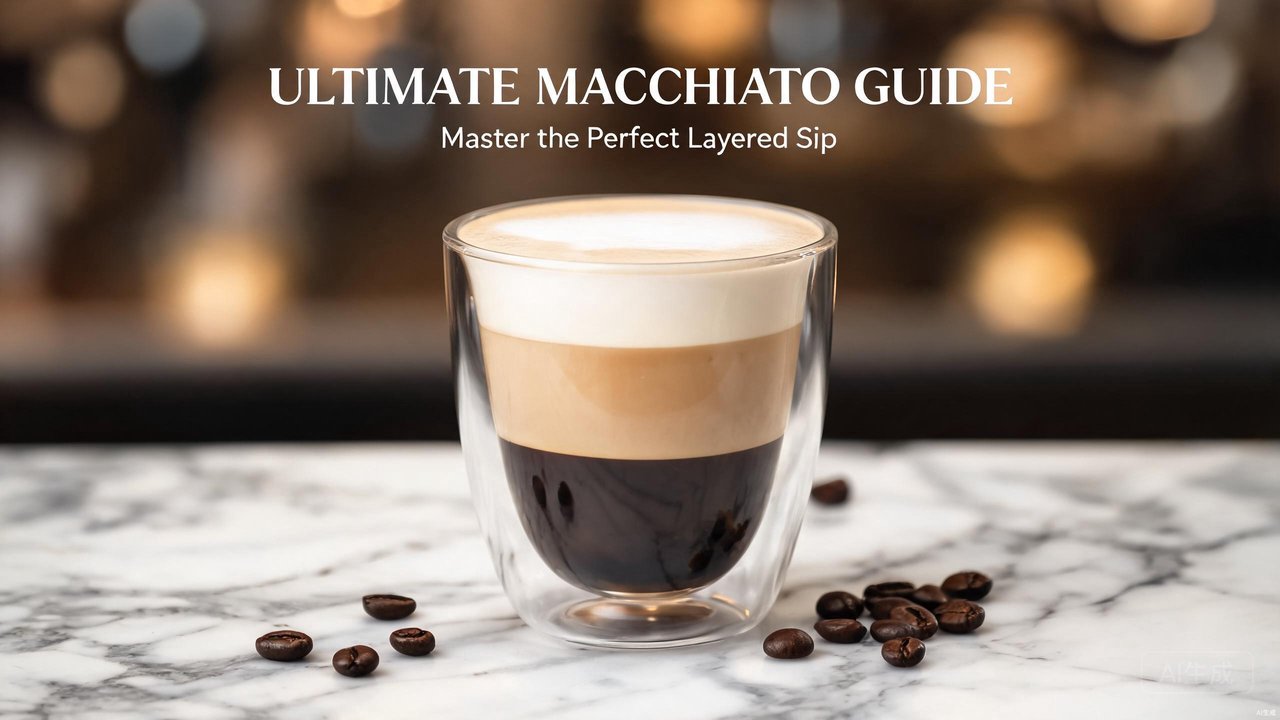
Few coffee drinks are as visually captivating as the macchiato. When crafted with care and served in the right glass coffee cups, a macchiato becomes a study in contrasts: dark espresso floating above creamy white milk, separated by a delicate band of foam. Making coffee at home has never been more rewarding, and understanding coffee layering techniques transforms a simple morning ritual into a café-quality experience. In this complete guide, we explore everything you need to know about the macchiato—from its history and the differences between espresso macchiato and latte macchiato, to choosing the best glass cup, mastering the pour, and caring for your favorite latte glasses.
“Macchiato” means “marked” or “stained” in Italian—a single word that captures the essence of a drink defined by the meeting of two layers.
Introduction: The Visual Appeal of the Macchiato
There is a reason the macchiato has become one of the most photographed drinks in the specialty coffee world. Unlike a flat, uniform cup of black coffee, the macchiato is built from distinct layers that tell a story the moment they are poured. Deep, glossy espresso sits atop or beneath a cloud of steamed milk, and the boundary between the two is where the magic happens. When you serve a macchiato in a transparent glass cup, every layer becomes visible—the crema, the milk, the foam—turning the beverage into a small work of art.
For home baristas, the macchiato represents an achievable goal. You do not need a commercial espresso machine or years of training to produce a drink that looks and tastes like it came from a specialty café. What you do need is an understanding of the drink itself, the right glass coffee cups to show off the layers, and a handful of coffee layering techniques that anyone can learn. This guide walks you through each of those pieces, step by step, so you can consistently craft macchiatos that are as beautiful as they are delicious.
What Is a Macchiato?
The word “macchiato” comes from the Italian macchiare, meaning “to mark” or “to stain.” The name describes how the drink is constructed: espresso is marked with a small amount of milk, or milk is marked with a shot of espresso. That simple definition, however, branches into two distinct drinks that are often confused with one another.
Espresso Macchiato
The espresso macchiato is the more traditional of the two. It begins with a single or double shot of espresso—rich, concentrated, and crowned with a layer of golden crema—that is then “marked” with a small dollop of steamed milk and foam. The milk is there to soften the espresso’s intensity, not to dominate it. In a glass cup, an espresso macchiato appears as a dark base with a single white spot of foam resting on the crema, which is exactly the image the name implies.
Latte Macchiato
The latte macchiato reverses the construction. Steamed milk is poured into a tall glass first, followed by a slow pour of espresso. Because espresso is denser than milk, it sinks through the milk and settles between the liquid milk and the foam, creating the three distinct layers that have made the latte macchiato an icon. Served in a clear glass cup, a latte macchiato displays a bottom layer of milk, a middle band of espresso, and a top layer of foam—the visual blueprint for coffee layering techniques everywhere.
The difference is simple: an espresso macchiato is espresso marked with milk, while a latte macchiato is milk marked with espresso. The cup you choose determines how clearly that story is told.
A Brief History of the Macchiato
The macchiato originated in Italy, where espresso culture has thrived for more than a century. Baristas created the espresso macchiato as a middle ground for customers who found a straight espresso too intense but a cappuccino too milky. The latte macchiato emerged later, popularized in European cafés as a way to serve a larger, milk-forward drink that still celebrated the espresso. Today, both versions are enjoyed worldwide, and the rise of home espresso equipment has made them accessible to anyone willing to learn the craft.
Why Glass Coffee Cups Are Essential for Macchiato
You can technically make a macchiato in any vessel, but glass coffee cups are the natural home for this drink. The reasons go beyond aesthetics and touch on temperature, texture, and the very nature of what a macchiato is supposed to be.
Layering Visibility
The defining feature of a macchiato is its layers. In an opaque ceramic mug, those layers are hidden, and the drink becomes just another coffee with milk. A clear glass cup makes the layers visible, which is not merely decorative—it is how the drink is meant to be experienced. Watching the espresso descend through the milk, or seeing the foam spot settle on the crema, connects you to the craft in a way that a solid cup cannot.
Temperature Control
Double wall glass cups offer exceptional temperature control. The double-walled construction creates an insulating layer of air between the beverage and your hand, keeping hot drinks hot longer while keeping the outside cool to the touch. For a macchiato, which is served in a small volume and can lose heat quickly, this insulation is particularly valuable. It keeps the espresso at the right temperature for tasting its full range of flavors without scalding your fingers.
Aesthetic and Presentation
A glass cup turns coffee into presentation. The play of light through clear glass, the gradient of color from dark to light, the way foam clings to the walls—these are details that elevate a daily routine into a ritual. For anyone who shares their coffee on social media or simply appreciates the visual dimension of food and drink, glass coffee cups are the obvious choice.
A macchiato in a glass cup is not just a drink; it is a demonstration of technique made visible. The cup is the window through which the craft is appreciated.
The Art of Coffee Layering Techniques
Creating clean, distinct layers in a glass cup is not magic—it is physics. Coffee layering techniques rely on three principles: density, temperature, and pouring technique. Once you understand how these factors interact, you can control the separation between espresso and milk with precision.
Density
Layering is possible because espresso and milk have different densities. Steamed milk, especially when aerated, is less dense than espresso. When espresso is poured gently onto milk, it tends to float briefly before gradually mixing. By controlling how forcefully the espresso enters the milk, you can encourage it to sink and form a middle layer rather than dispersing immediately. This is the core principle behind the latte macchiato’s three-layer structure.
Temperature
Temperature affects density. Hotter liquids are generally less dense than cooler ones, and a temperature difference between espresso and milk can reinforce or undermine layering. For the cleanest separation, your milk and espresso should be at complementary temperatures—warm enough to blend smoothly but different enough to create a visible boundary. Pouring espresso that is too hot into milk that is too cold can shock the milk and produce uneven layers.
Pouring Technique
The way you pour determines everything. A slow, gentle pour over the back of a spoon allows espresso to glide onto the surface of the milk and settle into its own layer. A fast, forceful pour drives the espresso straight to the bottom, where it mixes and destroys the layering. Practice pouring from a low height with a thin, controlled stream, and use a bar spoon or the back of a regular spoon to break the fall of the espresso if you want maximum separation.
Layering is not about luck. It is about density, temperature, and a steady hand. Master those three, and your glass cup will show the proof.
How to Make an Espresso Macchiato at Home
The espresso macchiato is the simpler of the two macchiatos, and it is an excellent place to begin practicing your technique. Because the milk is added in such a small quantity, precision matters more than volume.
What You Need
- A single or double shot of fresh espresso
- A small amount of cold milk (about 30 to 60 ml)
- A milk frother or steam wand
- A small glass cup or espresso cup
- A spoon
Step-by-Step
- Pull your espresso. Brew a single or double shot directly into your glass cup. Aim for a rich crema on top, as this is what the milk will rest upon.
- Steam and froth the milk. Heat a small amount of milk and froth it until it reaches a dense, microfoam consistency. You want more foam than liquid, since only the foam will be used to mark the espresso.
- Rest the milk briefly. Let the milk sit for a few seconds so that the foam and liquid separate slightly, giving you a thick layer of foam to work with.
- Mark the espresso. Using a spoon, gently place a single dollop of foam onto the center of the espresso’s crema. The foam should sit on top, creating the characteristic “spot” that gives the drink its name.
- Serve immediately. An espresso macchiato is best enjoyed right away, while the crema is intact and the foam is fresh.
Less is more with an espresso macchiato. The milk should mark the espresso, not bury it. A single spoonful of foam is all you need.
How to Make a Latte Macchiato at Home
The latte macchiato is where coffee layering techniques truly shine. Building those three clean layers in a tall glass cup is one of the most satisfying achievements for a home barista.
What You Need
- A single shot of espresso
- About 180 to 240 ml of cold milk
- A milk frother or steam wand
- A tall glass cup or latte glass
- A spoon
Step-by-Step
- Steam and froth the milk. Heat the milk and froth it until it has a velvety microfoam with a distinct layer of foam on top. The milk should be smooth, not bubbly.
- Pour the milk into the glass. Transfer the steamed milk into your tall glass cup, holding back the foam with a spoon so that the liquid milk fills the glass first. Then spoon the foam on top, creating a white layer.
- Rest the milk. Allow the milk to settle for several seconds. This helps the foam firm up and creates a stable surface for the espresso.
- Pull the espresso. Brew a single shot of espresso into a small pitcher or directly from the machine.
- Pour the espresso slowly. Pour the espresso gently over the back of a spoon held just above the foam. The spoon breaks the stream and lets the espresso slide onto the milk rather than plunging through it.
- Watch the layers form. The espresso will sink through the foam and settle between the liquid milk and the foam, creating the classic three-layer latte macchiato: milk at the bottom, espresso in the middle, foam on top.
- Serve and enjoy. Drink the latte macchiato without stirring to experience the layers as they were intended, or stir gently to combine them to your taste.
The latte macchiato is a drink to be admired before it is consumed. Pause, look through the glass, and appreciate the layers before you take your first sip.
Product Recommendations: Glass Coffee Cups for Macchiato
Choosing the right glass coffee cups can make the difference between a good macchiato and a great one. Below are three options that pair well with both espresso macchiato and latte macchiato, each suited to a different need and budget.

Espresso Cups Set of 2
Compact and elegant, this set of two espresso cups is ideal for serving espresso macchiato. The clear glass shows off the crema and the milk spot, and the small size keeps the drink concentrated and flavorful. Perfect for couples or anyone who enjoys a quick, intense coffee.
View on Amazon
Double Walled Mug 1pc
This single double wall glass cup is a versatile choice for everyday coffee at home. The double-walled insulation keeps your macchiato at the ideal temperature while staying comfortable to hold. An affordable option for anyone building their home coffee setup one piece at a time.
View on Amazon
Double Walled Mugs Set of 4
For families or hosts, this set of four double wall glass cups offers the best value. The taller profile is well suited to latte macchiato, giving the layers room to develop, and the insulation performs consistently across the set. A great choice for serving guests and showing off your layering skills.
View on AmazonThe right glass cup does not just hold your coffee—it frames it. Choose the size and style that matches the macchiato you make most often.
Creative Macchiato Variations
Once you have mastered the classic espresso macchiato and latte macchiato, there is a world of variations to explore. Each plays with flavor and temperature while preserving the layered spirit of the original.
Caramel Macchiato
The caramel macchiato is the most popular variation, and it is easy to recreate at home. Start with a latte macchiato, then drizzle caramel sauce over the top layer of foam in a crosshatch pattern. The caramel adds sweetness and a glossy finish that contrasts beautifully with the espresso beneath. For extra flavor, add a pump of vanilla syrup to the milk before layering.
Vanilla Macchiato
A vanilla macchiato is a subtler twist. Add vanilla syrup to the steamed milk before pouring it into the glass, then proceed with the standard latte macchiato method. The vanilla infuses the milk layer, complementing the espresso without overpowering it. This is an excellent option for those who find the classic version a little stark.
Iced Macchiato
The iced macchiato adapts the layering technique for warm weather. Fill a tall glass cup with ice and cold milk, leaving room at the top. Pour a shot of espresso slowly over the back of a spoon so that it sinks and forms a dark layer beneath the surface. Because cold liquids are denser, the layering can be even more pronounced than in the hot version. Add caramel or vanilla for an iced caramel macchiato that rivals any café offering.
Variations keep the macchiato interesting. Whether hot or iced, sweet or straight, the layering is what makes it a macchiato—never lose sight of that.
Tips for Perfect Coffee Layering Techniques
Even with the right glass coffee cups and fresh ingredients, clean layers take practice. These tips address the most common pitfalls and help you achieve consistent results.
- Use fresh espresso with good crema. Crema provides a natural boundary that helps define layers. Stale espresso or beans roasted too dark may produce thin crema, which makes layering less distinct.
- Pour slowly and from low. The closer your pitcher is to the surface of the milk, the gentler the pour. Height equals force, and force destroys layers.
- Use the back of a spoon. A spoon breaks the stream of espresso and lets it spread across the surface rather than plunging through. This is the single most effective technique for clean separation.
- Get your milk texture right. Microfoam—smooth, glossy foam with tiny bubbles—holds layers better than large, airy bubbles. Aim for texture that looks like wet paint.
- Let the milk rest. After steaming, a few seconds of rest lets the foam stabilize and the liquid settle, producing a cleaner surface for the espresso.
- Match the cup to the drink. Use a small glass cup for espresso macchiato and a taller latte glass for latte macchiato. The cup’s proportions affect how the layers form and how long they hold.
- Practice temperature balance. Avoid extremes. Espresso that is scalding or milk that is barely warm will produce uneven layers. Aim for harmony between the two.
Perfect layering is a habit, not a talent. Every clean glass cup you pour teaches your hands what to do next time.
Cleaning and Care for Glass Coffee Cups
Glass coffee cups are durable, but they reward gentle care. Proper cleaning keeps them clear, scratch-free, and ready to show off your next macchiato.
- Rinse promptly. Rinse your glass cup with warm water as soon as you finish drinking. Espresso and milk residue can etch glass over time if left to dry.
- Hand wash when possible. While many glass cups are dishwasher safe, hand washing with a soft sponge and mild detergent preserves clarity and prevents the clouding that high-heat cycles can cause.
- Avoid abrasive cleaners. Steel wool and harsh scouring powders scratch glass. Use a bottle brush for tall latte glasses and a soft cloth for everyday cups.
- Dry with a lint-free cloth. Air drying can leave water spots, especially in hard-water areas. A microfiber cloth leaves glass streak-free and crystal clear.
- Store carefully. Stack only cups designed for stacking, and place a soft separator between nested glasses to prevent chipping. Double wall glass cups are best stored upright and apart.
- Handle thermal shock. Sudden temperature changes can crack glass. Let a hot cup cool slightly before rinsing with cold water, and avoid placing a cold glass under a steaming espresso stream without warming it first.
A clear glass cup is only as good as its care. Treat your glass coffee cups well, and they will keep revealing your layers for years.
Conclusion
The macchiato is a celebration of contrast—espresso and milk, dark and light, intensity and softness—and glass coffee cups are the stage on which that contrast performs. Whether you prefer the concentrated punch of an espresso macchiato or the layered elegance of a latte macchiato, the right glass cup and a solid grasp of coffee layering techniques will elevate your coffee at home to something special. With fresh beans, a little patience, and the tips in this guide, you have everything you need to pour clean, beautiful layers every time. Brew, pour, admire, and enjoy.
Coffee at home is not about replicating the café; it is about understanding the craft well enough to make it your own. The macchiato, in a clear glass cup, is the perfect place to start.