Bubble tea, also called boba, is the drink that turned tea into a treat. Born in Taiwanese tea shops during the 1980s, it pairs a strong brewed tea with milk, sweetener, and chewy tapioca pearls you sip through a wide straw. A single cup at a boba shop can cost five dollars or more, but once you learn how to make bubble tea at home, you can brew a fresher, more customizable version for a fraction of the price, and you control every ingredient from the sweetness to the chew of the pearls.
This guide covers everything you need to know about bubble tea at home: what boba actually is, the four ingredients that define it, how to cook tapioca pearls so they stay chewy, how to brew the perfect tea base, a comparison of the best teas for boba, five variations to try, why the glass mug you serve it in matters, and the tips and mistakes that separate shop-quality boba from a disappointing cup.
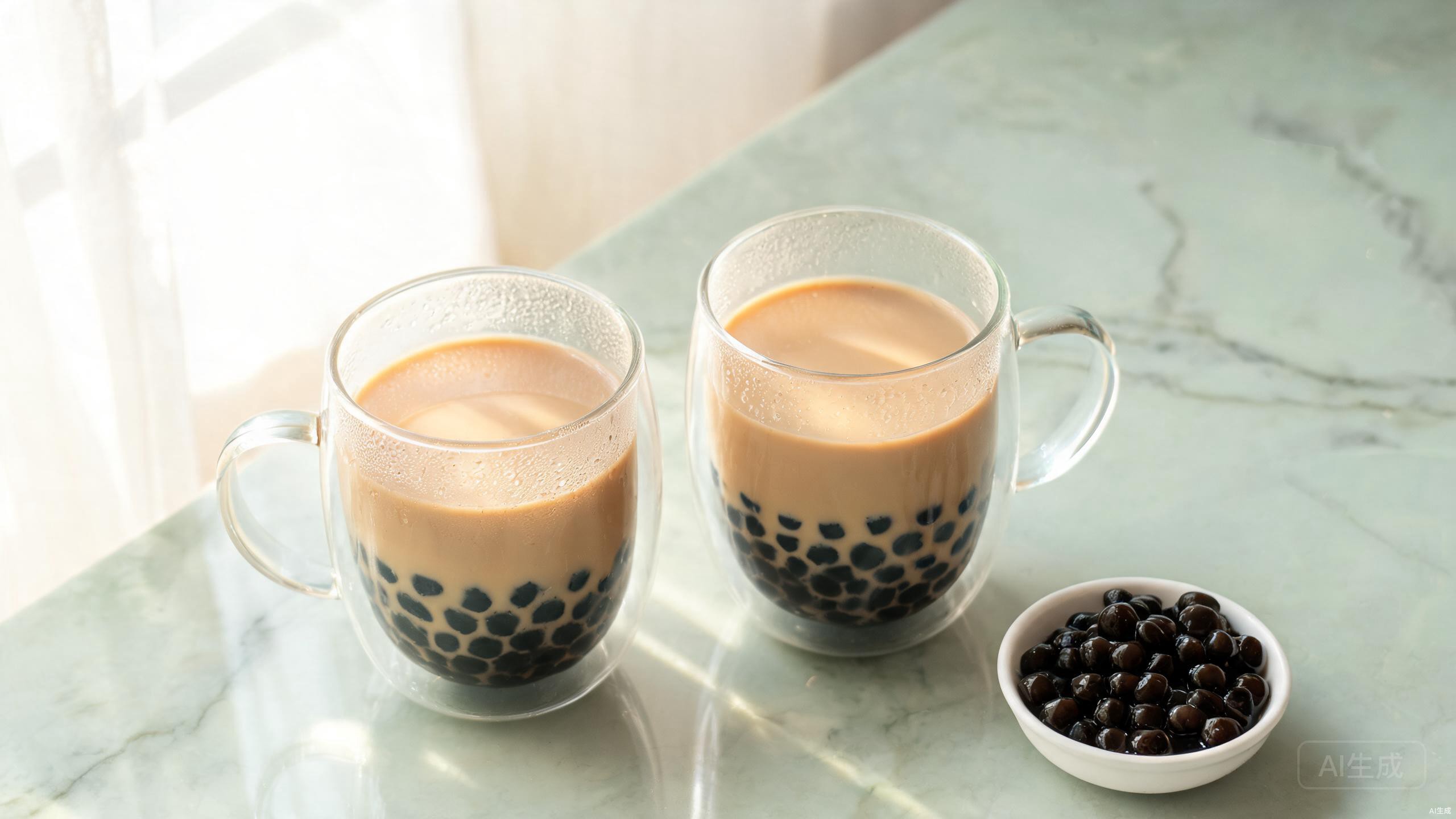
What Is Bubble Tea?
Bubble tea is a sweet, milky tea drink served cold over ice with chewy tapioca pearls at the bottom. The name has two origin stories. Some say the "bubbles" refer to the foam that forms when the tea is shaken. Others say "boba" is Taiwanese slang for the large pearls themselves. Either way, the drink has four parts: a tea base, a milk or creamer, a sweetener, and the chewy tapioca pearls that give it its signature texture.
The magic of bubble tea is the contrast. The drink itself is cold, smooth, and refreshing, while the pearls are warm, soft, and chewy. That textural play is what makes boba so addictive, and it is also why the cup you serve it in matters: the pearls need to be visible, and the layers of tea, milk, and syrup look striking against clear glass.
Bubble tea is half drink, half dessert. Master the pearls and the tea base, and your home boba will taste fresher than anything from a shop.
The Four Ingredients That Define Bubble Tea
Great bubble tea comes down to four ingredients. Get these right and the rest is improvisation.
- Tea. The base. Black tea is traditional, but green, jasmine, and oolong all work. The key is to brew it strong, stronger than you would drink it plain, because the milk and ice will dilute it.
- Milk. Whole milk gives the richest, most authentic flavor. Oat milk is the best plant-based option because it is naturally creamy and slightly sweet. Avoid skim milk, which makes the drink taste thin.
- Sweetener. Brown sugar syrup is the classic, giving the drink its caramel color and molasses depth. Simple syrup, honey, and maple syrup all work. Sweeten to taste.
- Tapioca pearls. The heart of boba. These are made from tapioca starch derived from cassava root. When cooked right they are soft on the outside and chewy at the center, a texture the Japanese call the "QQ" bite.
How to Cook Tapioca Pearls (The Make-or-Break Step)
The pearls are where most homemade boba fails. Undercooked pearls are hard and starchy. Overcooked pearls dissolve into mush. The goal is a pearl that is soft and yielding on the outside with a faint, pleasant chew at the center. Follow these rules and you will get it right every time.
What You Need
- Quick-cooking tapioca pearls (available at Asian markets and online)
- A large saucepan, at least 3 quarts
- Plenty of water, at least a 6-to-1 ratio of water to pearls
- Brown sugar for the finishing syrup
Step-by-Step
- Boil a large pot of water. Use at least six times as much water as pearls by volume. The pearls need room to move, and too little water drops the temperature when you add them, leading to uneven cooking.
- Add the pearls and stir. Drop the pearls in only when the water is at a rolling boil. Stir immediately so they do not stick to the bottom or to each other.
- Boil for the package time. Quick-cooking pearls usually need 5 minutes of boiling. Stir occasionally. The pearls will float to the top as they cook.
- Turn off the heat and cover. Remove the pot from the heat, cover it, and let the pearls sit for another 5 minutes. This resting period is what gives them their soft, translucent finish.
- Test for chew. Bite a pearl in half. It should be soft throughout with just a hint of resistance at the center. If the center is still white and hard, rest another 2 minutes.
- Rinse and sweeten. Drain the pearls and rinse them under warm water to remove the starchy film. Transfer them to a bowl and toss with two tablespoons of brown sugar and a splash of hot water to create a syrup that keeps them soft and sweet.
Cooked pearls are at their best within four hours. Do not refrigerate them, because cold makes tapioca turn hard and rubbery. Cook only as many as you plan to drink the same day, and keep the rest of them in syrup at room temperature.
Brewing the Tea Base
The tea base carries the flavor of the drink, so it needs to be strong. A glass teapot with an infuser is ideal because you can watch the leaves unfurl and pour a clean, sediment-free brew. Use about twice the amount of tea you would for a regular cup, and steep it a little longer than usual so the flavor punches through the milk and ice.
For a single serving, brew 1 cup of strong tea using 2 tablespoons of loose black tea leaves or 2 tea bags. Steep in water just off the boil for 5 minutes, then strain. Let the tea cool for a few minutes before assembling the drink, or it will melt the ice too fast. For a deeper look at steeping times for every tea type, see our complete tea steeping time guide.
Comparison: The Best Teas for Bubble Tea
The tea you choose changes the whole personality of the drink. The table below compares the four most popular tea bases for bubble tea so you can pick the one that matches your taste.
| Tea Base | Flavor Profile | Steep Time | Best Milk Pairing | Best For |
|---|---|---|---|---|
| Black Tea | Bold, malty, robust | 5 minutes | Whole milk, oat milk | Classic milk tea and brown sugar boba |
| Jasmine Green Tea | Floral, light, fragrant | 3 minutes | Whole milk, skim milk | Fruit-flavored boba and refreshing summer drinks |
| Oolong Tea | Toasted, complex, slightly sweet | 4 minutes | Whole milk, oat milk | Sophisticated sippers who want depth |
| Hojicha (Roasted Green) | Nutty, caramel, low caffeine | 4 minutes | Whole milk, oat milk | Evening boba and warm caramel flavors |
If you want the most authentic, shop-style boba, start with black tea. If you want something lighter and more refreshing, jasmine green tea is the way to go. To master the brewing technique for green teas specifically, read our guide on how to brew green tea with the right temperature and time.
Five Bubble Tea Variations to Try
Once you have the basic technique down, the variations are endless. Here are five to start with.
- Classic Milk Tea. Black tea, whole milk, and brown sugar syrup. The original, and still the best place to start.
- Brown Sugar Boba. Skip the tea entirely. Layer a generous amount of brown sugar syrup and warm pearls in the glass, add milk and ice, and stir. The tiger-stripe caramel pattern is one of the most photogenic drinks you can make.
- Taro Milk Tea. Add a tablespoon of taro powder to the tea base for a sweet, violet-colored drink with a creamy, vanilla-like flavor.
- Matcha Latte Boba. Substitute strong matcha for the black tea. The earthy green tea pairs beautifully with the chewy pearls. See our iced matcha latte guide for the whisking technique.
- Fruit Tea Boba. Brew jasmine green tea, sweeten lightly, and add a splash of passion fruit, mango, or strawberry puree. Skip the milk for a bright, fruity refresher.
Why Glass Mugs Make Bubble Tea Better
Bubble tea is as much a visual experience as a flavorful one, and the cup you serve it in changes the whole experience. A clear, double wall glass mug does three things a paper cup or opaque tumbler cannot.
Showcase the Layers
The signature look of bubble tea is the layering: dark syrup and pearls at the bottom, pale milk in the middle, amber tea on top. In an opaque cup those layers disappear. A transparent glass mug puts every layer on display, and the floating pearls create a visual that is half the fun of the drink.
Keep the Drink Cold Without Sweating
Bubble tea is served over ice, and a single-walled glass or cup will sweat condensation all over your table and your hands. Double wall borosilicate glass traps the cold inside with a sealed air gap, so the drink stays icy while the outside stays dry and comfortable to hold. To understand why this works, read about the benefits of double-walled glass mugs.
Pure Flavor
Borosilicate glass is chemically inert and non-porous, so it will never absorb the brown sugar syrup or milk residue the way plastic can. What you taste is nothing but the tea and the toppings.
Glassware for Your Bubble Tea Setup
The right glassware completes the boba experience, from brewing the tea base to serving the finished drink. These MESNEY pieces cover the full range and pair perfectly with any bubble tea recipe.

40oz Glass Teapot with Infuser
Brew a strong, clean tea base for your bubble tea in this heat-resistant borosilicate teapot. The removable stainless steel infuser holds loose leaves while keeping sediment out of your cup, and the transparent body lets you watch the tea steep to the perfect strength.
- 40oz / 1.2L capacity
- Removable stainless steel infuser
- Borosilicate glass, stovetop safe on low heat
- Dishwasher safe

17oz Double Walled Glass Mugs (Set of 2)
The ideal serving vessel for bubble tea. The 17oz capacity holds a generous portion of tea, milk, ice, and pearls, while the double wall insulation keeps the drink cold without condensation. The transparent glass shows off every layer and the pearls at the bottom.
- Set of 2 mugs, 17oz each
- Double wall insulation, no condensation
- Borosilicate glass
- Dishwasher safe
17oz Double Walled Glass Mugs (Set of 4)
Hosting a bubble tea party? This set of four 17oz double wall mugs gives everyone a matching glass for their custom boba creation. The insulation keeps each drink cold, and the clear glass makes the layered drinks a centerpiece on any table.
- Set of 4 mugs, 17oz each
- Double wall insulation
- Borosilicate glass
- Best value for entertaining
Pour your bubble tea into a clear double wall glass mug and the layers do the talking. Dark pearls at the bottom, tiger-stripe syrup climbing the walls, pale milk swirling through amber tea. The cup is the canvas.
Pro Tips for Shop-Quality Boba
- Brew the tea double-strength. The milk and ice will cut the intensity by half. If your tea tastes right on its own, it will taste weak in the finished drink.
- Keep the pearls warm. Warm pearls are soft and chewy. Cold pearls turn hard. Store them in their syrup at room temperature and add them to the glass last, right before serving.
- Use a wide straw. The pearls are too big for a normal straw. A boba straw, about 12mm wide, lets you sip the pearls and the drink together.
- Sweeten in layers. Sweeten the pearls with syrup, sweeten the tea separately, then assemble. This lets each guest adjust their own sweetness without watering down the drink.
- Shake the tea for foam. For an authentic touch, pour the tea and ice into a shaker and shake for 10 seconds before adding it to the glass. The foam on top is where the name "bubble" tea may have come from.
Common Mistakes to Avoid
- Cooking pearls in too little water. The starch released during cooking makes the water thick and gummy, which coats the pearls and prevents even cooking. Use plenty of water.
- Refrigerating cooked pearls. Cold turns tapioca hard and rubbery within an hour. Keep them at room temperature and eat them the same day.
- Brewing the tea too weak. A normal-strength cup of tea becomes tasteless once you add milk and ice. Double the leaves and steep a minute longer.
- Using boiling water for green tea. Boiling water scorches green tea leaves and makes the drink bitter. Use water around 175°F (80°C) for green and jasmine teas.
- Adding ice before the pearls. If you drop ice on top of warm pearls, the cold shock makes them tough. Layer the warm, syrupy pearls first, then the ice, then the tea and milk.
Conclusion: Better Boba at Home
Making bubble tea at home is simpler than it looks, and the result is fresher, cheaper, and more customizable than anything you can buy. Cook your pearls with patience, brew a strong tea base, sweeten to your taste, and pour it all into a clear double wall glass mug that shows off the layers and keeps the drink cold without sweating. Once you master the classic, the variations, from brown sugar to taro to fruit tea, are just a matter of swapping ingredients.
To round out your home tea setup, explore our guides on building a loose leaf tea setup and making iced tea at home, and browse our full range of glass teaware and drinkware to find the perfect vessels for your next batch of boba.
Build Your Bubble Tea Bar
Brew, sweeten, and serve cafe-quality bubble tea at home with MESNEY borosilicate glass teapots and double wall mugs. Heat-resistant, condensation-free, and designed to show off every layer. Available now on Amazon.
Shop on Amazon