Loose leaf tea is a world apart from the tea bags most of us grew up with. While tea bags are convenient, they are typically filled with fannings and dust, the smallest particles left over after higher grades of tea have been sorted. These tiny fragments lose their volatile aromatic oils quickly and brew into a cup that is flat, one-dimensional, and often bitter. Loose leaf tea, by contrast, consists of whole or largely intact leaves that retain their essential oils, complex flavor compounds, and natural sweetness. The result is a cup with depth, nuance, and character that no tea bag can match.
But to unlock this potential, you need the right equipment. A proper tea pot with infusers for loose tea is the foundation of any serious home brewing setup. It gives you control over leaf-to-water ratio, steeping time, and temperature, the three variables that determine the quality of every cup. In this complete brewing setup guide, we will walk you through everything you need to brew loose leaf tea at home, from choosing the right glass teapot to selecting serving glassware that keeps your tea at the perfect temperature.
Why Brew Loose Leaf Tea?
The most immediate difference you will notice when switching to loose leaf tea is the flavor. Whole leaves release their flavors slowly and evenly, producing a cup that is smooth, aromatic, and layered. Tea bags, packed with tiny fragments, extract too quickly and unevenly, often yielding a harsh, astringent brew. If you have ever wondered why the tea at a good cafe tastes better than what you make at home, the answer is almost always the quality of the leaf and the brewing method.
Beyond flavor, there are genuine health benefits to brewing whole leaf tea. Loose tea leaves retain more of their natural polyphenols, catechins, and antioxidants because they have less surface area exposed to air and moisture. These compounds, particularly the catechins in green tea, are associated with a range of wellness benefits, from supporting cardiovascular health to providing gentle, sustained energy without the jitters that coffee can cause. When you brew whole leaves in a glass teapot, you also avoid the microplastics that some studies have found in tea bag materials.
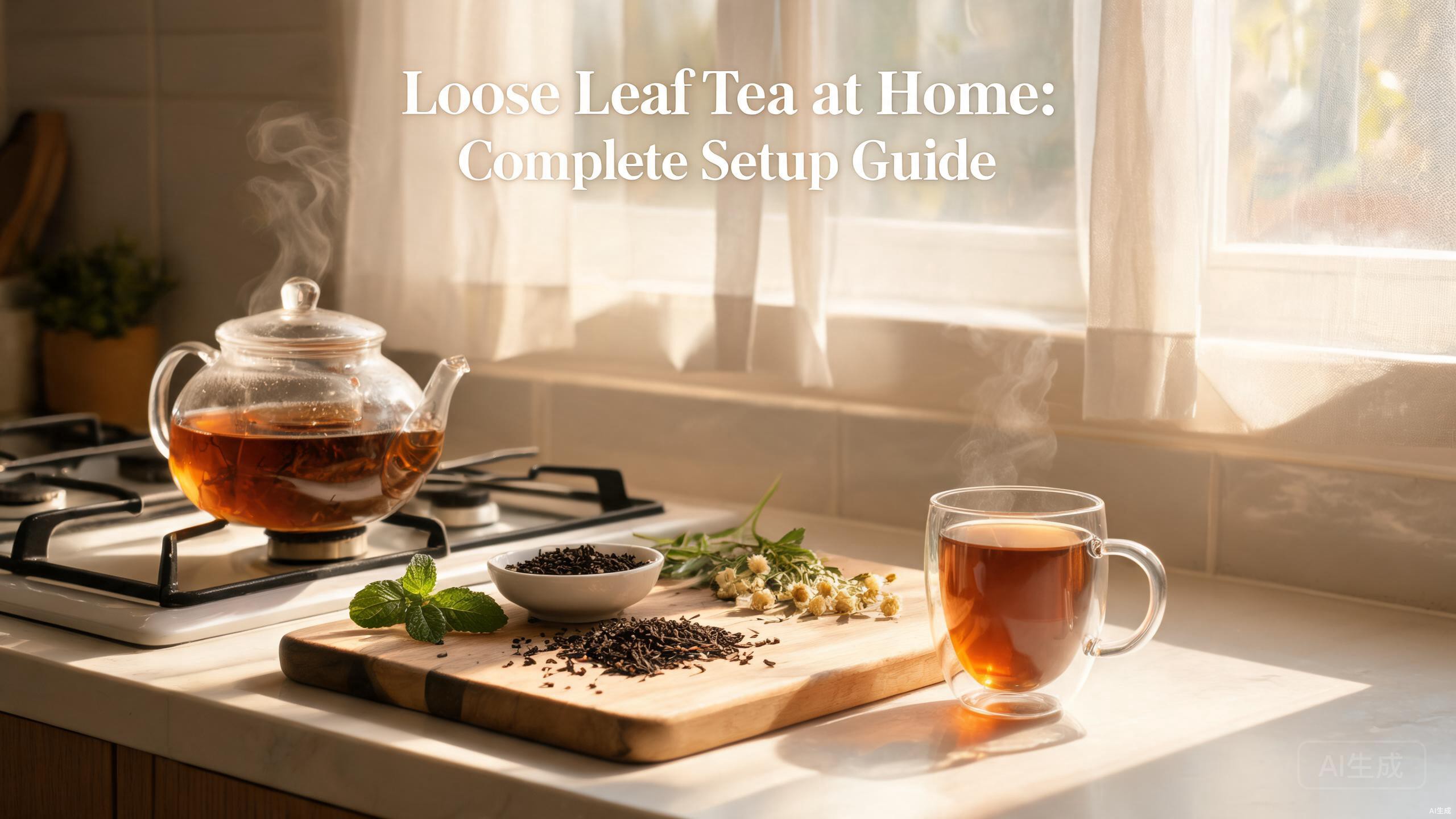
For the ritual tea drinker, the visual experience is just as important as the flavor. Watching loose leaf tea brew in a transparent glass teapot is a meditative process. You see the leaves unfurl, the color deepen, and the aromatics rise. A teapot for loose leaf tea turns a mundane daily habit into a moment of mindfulness. Blooming teas, which open into elaborate floral arrangements, are particularly stunning when brewed in glass. No other material offers this combination of function and visual poetry.
Choosing Your Teapot: What to Look For
Selecting the right teapot is the single most important decision in your loose leaf tea setup. The material, capacity, and infuser design all affect the quality of your brew. Here is what to look for.
Material: Why Borosilicate Glass Is Best
Borosilicate glass is the ideal material for a tea brewing vessel. It is chemically inert, meaning it will not absorb or impart flavors, so your green tea will never taste like yesterday's oolong. It is also thermally resistant, capable of withstanding the temperature changes involved in brewing and even stovetop heating. Ordinary soda-lime glass cannot handle these stresses. To learn more about why this material matters, read our guide on why borosilicate glass is the safest choice for your kitchen.
Capacity: 40oz for Sharing vs Smaller for Personal
Think about how you drink tea. A 40oz (1200ml) glass teapot is ideal for sharing, serving four to six cups, and is versatile enough for both personal use and entertaining. Smaller teapots, around 20oz, are fine for solo drinkers but require more frequent brewing if you have guests. For most households, a 40oz capacity hits the sweet spot between everyday practicality and entertaining readiness.
Infuser Quality: Stainless Steel Mesh
The infuser is the heart of any teapot with infuser. Look for a large stainless steel mesh basket that gives the leaves room to expand. Tea leaves can swell to three or four times their dry volume, and a cramped infuser restricts this expansion, resulting in a weak, under-extracted brew. Avoid small ball-style infusers, which are too restrictive. A tea infuser pot with a generously sized basket ensures proper extraction and a fuller-flavored cup.
For most tea drinkers, the MESNEY 40oz Glass Teapot with Infuser is the ideal choice. It earned Amazon's Choice recognition and combines all the features that matter: borosilicate glass construction, a large removable stainless steel mesh infuser, and stovetop-safe design.

40oz Glass Teapot with Infuser and Lid
A 40oz (1200ml) borosilicate glass teapot with a large removable stainless steel mesh infuser that gives leaves room to expand. Stovetop safe, microwave safe, and dishwasher safe, with a heat-resistant handle for comfortable pouring.
- 40oz / 1200ml capacity
- Removable stainless steel mesh infuser
- Stovetop, microwave, and dishwasher safe
- Borosilicate glass construction
- Heat-resistant handle
The large infuser basket is the standout feature. It allows even large-leaf oolongs and blooming teas to open fully, ensuring complete extraction. At $18.69, it offers exceptional value for a teapot of this quality. You can see it alongside our other glassware on the products page.
Stovetop Brewing: Safe and Convenient
One of the most convenient features of a borosilicate glass teapot is that it can go directly on the stovetop. This means you can heat water and brew tea in the same vessel, eliminating the need for a separate kettle. If you have ever wished for a tea kettle with infuser that handles both jobs, a stovetop-safe glass teapot is the answer. A teapot for stovetop use simplifies your workflow and means fewer dishes to wash.
Which Stovetops Are Compatible
- Gas stovetops: Fully compatible. Use a low to medium flame to prevent overheating the glass.
- Electric coil stovetops: Compatible. Use low to medium heat settings.
- Ceramic/glass-top stovetops: Compatible. Ensure the teapot base is clean and dry to prevent scratching the cooktop surface.
- Induction stovetops: Not directly compatible, as glass is not magnetic. You will need an induction interface disk placed between the burner and the teapot.
Step-by-Step Stovetop Brewing Guide
- Fill with water: Add cold, fresh water to the teapot, filling to at least one-third capacity. Never heat an empty glass teapot, as this can cause thermal stress.
- Place on the burner: Set the teapot on the stovetop over low to medium heat. Avoid high heat settings, which create uneven hot spots.
- Bring to temperature: For green and white teas, remove from heat just before boiling. For black and herbal teas, bring to a full boil.
- Add tea leaves: Remove from heat and add your loose leaf tea to the infuser.
- Steep: Cover and let steep for the recommended time based on your tea type.
- Remove infuser: Take out the infuser to stop the steeping process.
- Serve: Pour and enjoy your freshly brewed tea.
Safety Tips for Glass on the Stovetop
Always use low to medium heat. High heat creates uneven hot spots that can stress even borosilicate glass over time. Avoid sudden temperature changes, never move a hot teapot directly to a cold wet surface, and never add cold water to a hot teapot. If you have a gas stove with a large burner, use a flame tamer or heat diffuser to spread the heat evenly across the base. For a deeper dive into stovetop technique and safety, see our complete guide on using a stovetop safe glass teapot.
The golden rule of stovetop glass teapots: low and slow. Gentle, even heating produces better tea and protects your teapot for years of use.
The Perfect Cup: Choosing Your Serving Glassware
Brewing great tea is only half the equation. How you serve it matters too. The right glassware enhances both the experience and the temperature of your tea. For the aesthetic host, double-walled glass is the clear choice.
Why Double-Walled Glass Matters for Tea
A double wall glass mug consists of two layers of borosilicate glass with a narrow pocket of air trapped between them. This air gap acts as an insulating barrier, keeping hot tea hot significantly longer than a single-walled glass or even a standard ceramic mug. Cold beverages, meanwhile, stay chilled without the glass sweating on the outside. The outer surface remains at a comfortable temperature even when the tea inside is piping hot, so you can hold the mug bare-handed without reaching for a sleeve.
Temperature Retention Benefits
Temperature retention is transformative for tea drinkers who like to savor their cup slowly. Hot tea that would go lukewarm in ten minutes in a single-walled mug stays pleasantly warm for far longer in a double-walled vessel. This is especially valuable for delicate teas that are best enjoyed at a specific temperature range. For a deeper look at these advantages, see our article on the benefits of double-walled glass mugs.
Visual Appeal of Layered Drinks
The transparency of double-walled glass creates a floating beverage effect that is striking on any table. Layered drinks, like an iced latte with distinct tiers of milk and espresso, or a fruit tea with floating blossoms, look especially beautiful. The transparency also lets you appreciate the true color of your tea, from the pale jade of green tea to the deep amber of black tea.
Iced Tea and Iced Latte Options
Double-walled glass is not just for hot drinks. For iced tea and iced latte service, the insulation keeps drinks cold without condensation forming on the outside. No more soggy coasters or wet hands. An iced latte glass made from double-walled borosilicate is equally at home with hot tea in the morning and a cold brew in the afternoon, making it one of the most versatile pieces of drinkware you can own.
For serving, we recommend the MESNEY 17oz Double Walled Glass Coffee Mug lineup. The 17oz capacity is large enough for a generous pour of tea, an iced latte, or a hot chocolate, and the borosilicate construction means the mugs are safe for both hot and cold beverages.

17oz Double Walled Glass Coffee Mug (1pc)
The perfect entry point into double wall glass drinkware. A single 17oz borosilicate mug with superior insulation and a stackable design, ideal for solo tea and coffee drinkers.
Buy on Amazon
17oz Double Walled Glass Mugs (Set of 4)
A four-piece set that offers the best per-mug value. Ideal for families of tea lovers or for hosting guests without scrambling for matching cups. Each mug delivers the same temperature-retaining performance.
Buy on AmazonThe single mug is perfect for solo drinkers who want to try double-walled glass without a big commitment, while the set of four offers the best value for families and hosts. Both share the same insulation performance and elegant design. To explore more options, browse our 2026 guide to glass coffee mugs.
Step-by-Step: Brewing the Perfect Cup of Loose Leaf Tea
Now that you have your teapot and serving glassware, here is a complete method for brewing the perfect cup. Mastering three variables, water temperature, brewing time, and tea-to-water ratio, will elevate every cup you make.
Water Temperature Guide by Tea Type
Using water that is too hot will scorch delicate teas and produce bitterness. Using water that is too cool will under-extract robust teas and leave them flat. Here is a quick reference:
- White and green tea: 160–180°F (70–82°C)
- Oolong tea: 180–200°F (82–93°C)
- Black tea: 200–212°F (93–100°C)
- Herbal and fruit tea: 212°F (100°C)
If you do not have a variable-temperature kettle, let fully boiled water rest for two to three minutes for green and white teas, or one minute for oolong.
Tea-to-Water Ratio
The general rule is one teaspoon of loose leaf tea per 8 ounces of water. Adjust to taste from there. For lighter, fluffier teas like white tea or large-leaf oolong, use a slightly heaping teaspoon. For denser teas like rolled oolong or broken-leaf black tea, a level teaspoon may suffice. A 40oz teapot will typically need about five teaspoons of loose leaf tea for a full pot.
Brewing Times
- White tea: 2–3 minutes
- Green tea: 1–3 minutes
- Oolong tea: 1–3 minutes (can be re-steeped 4 to 7 times)
- Black tea: 3–5 minutes
- Herbal tea: 5–10 minutes
Step-by-Step Brewing
- Measure your tea and place it in the infuser basket.
- Pre-warm the teapot by swirling a small amount of hot water inside and discarding it. This prevents thermal shock and helps maintain brewing temperature.
- Insert the infuser and pour the heated water over the leaves.
- Steep for the recommended time, watching the color develop through the glass.
- Remove the infuser to stop steeping and prevent bitterness from over-extraction.
- Pour into your double-walled glass mug and enjoy.
Tips for Blooming Tea and Fruit Tea
Blooming teas are hand-tied bundles of tea leaves and edible flowers that open into elaborate shapes when steeped. They were practically designed for glass teapots. Use water at about 180°F and steep for 3 to 5 minutes so you can watch the bloom unfold. Fruit teas benefit from longer steeping times of 7 to 10 minutes and fully boiling water to extract their full flavor and vibrant color. For more on infuser types and technique, see our complete guide to teapots with infusers.
Tea Brewing Tips for Entertaining
When hosting, your tea setup becomes part of the experience. A well-organized tea station lets you serve guests effortlessly while creating a focal point for conversation.
Setting Up a Tea Station
Choose a flat surface with enough room for your teapot, mugs, a sugar and honey caddy, and a small plate of accompaniments. Keep your loose leaf teas in airtight tins within reach so guests can see and smell the options. A 40oz glass teapot is the centerpiece, large enough to serve several guests from a single brew. Arrange your double-walled mugs in a row so the floating beverage effect is visible as you pour.
Using a Tea Pitcher with Infuser for Serving
For larger gatherings, consider a tea pitcher with infuser. This style of vessel lets you brew a large batch of tea and serve it directly at the table. The infuser allows you to control steeping time, and the pitcher design makes pouring easy for multiple guests. Fruit teas and iced teas are particularly well suited to this format. The visual of a glass pitcher filled with ruby-red hibiscus or amber oolong is a conversation starter in itself, and the larger capacity means fewer trips to the kitchen for refills.
Pairing Tea with Food
- Green tea: Pairs well with light pastries, cucumber sandwiches, and seafood.
- Oolong tea: Complements roasted meats, dim sum, and nutty desserts.
- Black tea: Stands up to rich foods like scones with clotted cream, chocolate, and spiced dishes.
- Herbal tea: Caffeine-free options for evening gatherings, pairing well with fruit-based desserts.
A thoughtfully arranged tea station is more than a serving area. It is an invitation to slow down, share a cup, and savor the moment together.
Cleaning and Maintenance
A good glass teapot and mug set will last for years with proper care. Fortunately, borosilicate glass is one of the easiest materials to maintain.
Dishwasher Safety
MESNEY glass teapots and double-walled mugs are dishwasher safe. Place them on the top rack to avoid exposure to the heating element at the bottom of the machine. If you prefer to hand wash, use warm water and mild dish soap with a soft sponge or cloth. Avoid steel wool or abrasive scouring pads, which can scratch the glass surface.
Removing Tea Stains
Over time, tea can leave a faint film on the glass. To remove stains, fill the teapot or mug with warm water and add a teaspoon of baking soda. Let it sit for 30 minutes, then scrub gently with a soft brush and rinse thoroughly. For tougher stains, a solution of equal parts white vinegar and water works equally well. Our complete guide to cleaning borosilicate glassware covers these methods in detail.
Storage Tips
Store your teapot with the lid off or loosely placed to allow air circulation and prevent mustiness. The infuser should be completely dry before storage to prevent mold. Stack double-walled mugs with a soft cloth or felt pad between them to protect the rims from chipping, and keep them in a cabinet away from heavy items that could shift and knock them over.
Build Your Complete Tea Brewing Setup
Start with the MESNEY 40oz Glass Teapot with Infuser for brewing and pair it with MESNEY double-walled glass mugs for serving. Everything you need for the perfect cup of loose leaf tea at home.
Shop the Collection