Loose leaf tea is a world apart from the tea bags you find on supermarket shelves. The leaves are whole or largely intact, which means they retain more of their essential oils, aroma, and complexity than the fannings and dust used in bags. But brewing loose leaf tea requires a way to separate the leaves from the water once steeping is complete. That is where a teapot with infuser comes in. This guide covers everything you need to know about teapots with infusers, from the different types available to a step-by-step brewing method that will help you get the most out of every leaf.
What Is a Teapot with Infuser?
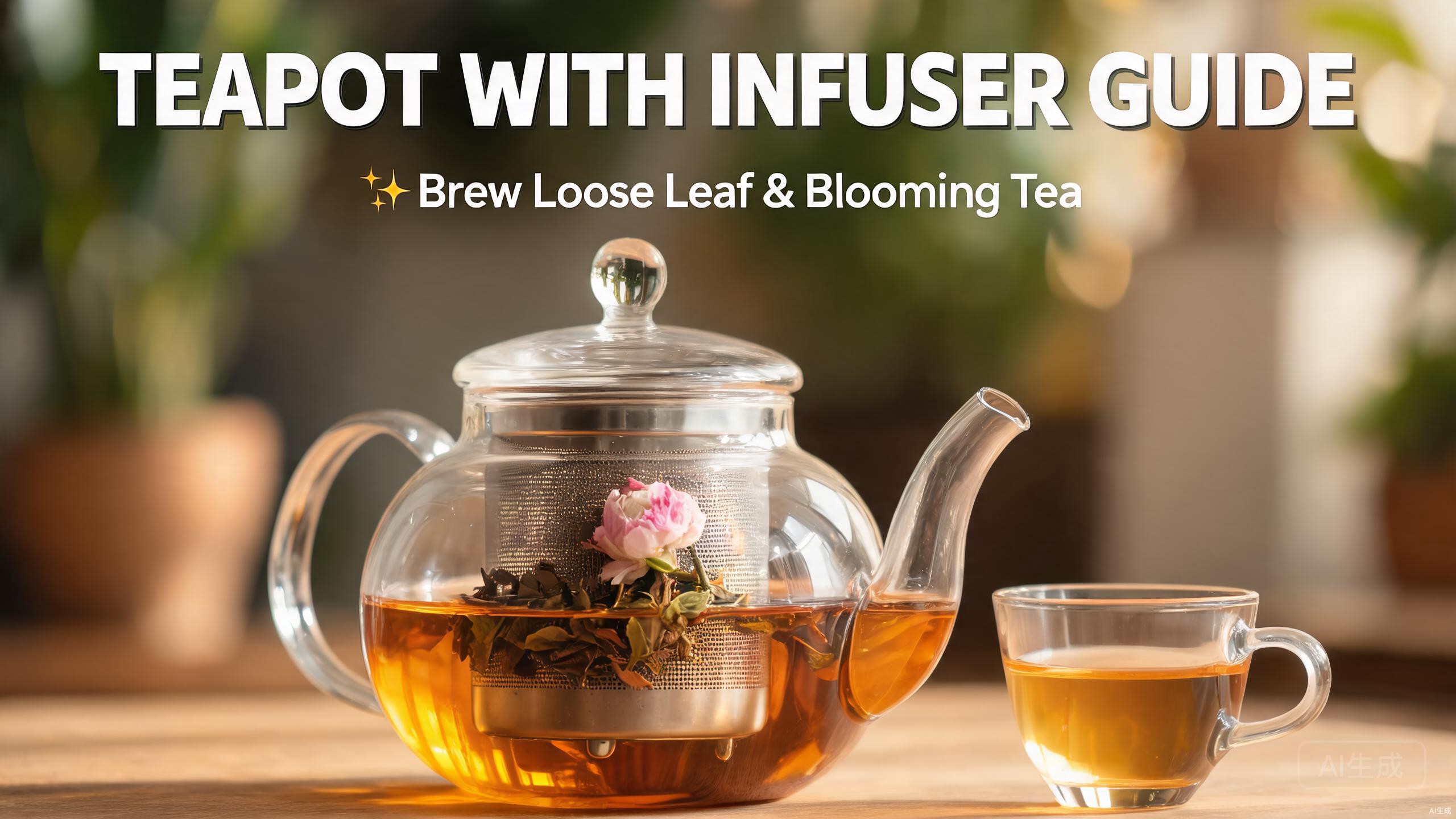
A teapot with infuser is a teapot that includes a built-in straining device designed to hold loose tea leaves while they steep. The infuser sits inside the teapot, submerged in the hot water, allowing the leaves to expand and release their flavor. Once the tea has reached the desired strength, you remove the infuser, and the teapot holds a clean, leaf-free brew that is ready to pour.
This design solves the fundamental challenge of loose leaf tea: how to stop the steeping process at exactly the right moment. With a teapot that has no infuser, the leaves remain in the water indefinitely, which leads to over-steeping and bitterness. An infuser gives you precise control over steeping time, which is the single most important variable in tea brewing after water temperature.
If you are new to glass teapots, our glass teapot buyer's guide is a great starting point for understanding the broader category.
Benefits of Using a Glass Teapot with Infuser
A glass teapot with infuser offers several advantages over other materials and brewing methods. Here are the most significant benefits.
Visual Brewing Experience
The transparency of glass is its most celebrated feature. When you brew tea in a glass teapot, you can watch the entire process unfold. Leaves unfurl, color develops, and blooming teas, if you use them, open into elaborate floral arrangements. This visual element turns tea brewing from a mechanical task into a mindful ritual. No other teapot material offers this experience.
Flavor Neutrality
Borosilicate glass is non-porous and chemically inert. It will not absorb or impart flavors, which means your green tea will never taste like yesterday's oolong. This is a significant advantage over unglazed clay teapots, which are intentionally porous and are meant to be dedicated to a single type of tea. With glass, you can brew any tea you like without cross-contamination of flavor.
Stovetop Compatibility
Borosilicate glass teapots are safe for use on gas, electric, and ceramic stovetops. This means you can heat water directly in the teapot, eliminating the need for a separate kettle. For more on this, see our guide on using a stovetop safe glass teapot.
Easy Cleaning
Glass teapots are dishwasher safe and easy to clean by hand. The smooth, non-porous surface resists staining, and any discoloration that does occur can be removed with simple household ingredients. Our complete guide to cleaning borosilicate glassware covers this topic in detail.
A glass teapot with infuser is the only brewing vessel that lets you see the tea, taste the tea, and control the tea with equal precision. It is the intersection of science, art, and flavor.
Types of Infusers
Not all infusers are created equal. The type of infuser your teapot uses has a significant impact on the quality of your brew. Here are the most common types.
Stainless Steel Mesh Basket
This is the gold standard for teapot infusers. A stainless steel mesh basket sits inside the teapot, suspended from the rim or lid. The fine mesh allows water to flow freely through the leaves while containing even the smallest particles. Stainless steel is durable, rust-proof, and flavor-neutral. The key advantage of a basket-style infuser is its size: a large basket gives the leaves room to expand fully, which is essential for proper extraction. This is the type of infuser used in the MESNEY 40oz Glass Teapot with Infuser.
Ball Infuser
A ball infuser is a spherical mesh container that opens on a hinge. These are common in standalone tea balls and in some lower-end teapots. The problem with ball infusers is that they are typically too small. Tea leaves need room to expand, sometimes to three or four times their dry volume, and a cramped ball restricts this expansion, resulting in a weak, under-extracted brew.
Silicone Infuser
Silicone infusers are colorful, fun, and dishwasher safe, but they share the same size limitation as ball infusers. They are also not ideal for very hot water, as some silicone can impart a faint taste at high temperatures. They are best suited for casual use with larger-leaf teas.
Paper Filter
Some teapots are designed to use disposable paper filters. While these produce a very clean cup with no sediment, they are less environmentally friendly and can absorb some of the tea's aromatic oils, slightly muting the flavor. They also add an ongoing cost.
Press-Style Infuser
Modeled after the French press, these teapots use a plunger mechanism to push the leaves to the bottom of the pot, separating them from the brewed tea. They work well but can be difficult to clean, and the plunger seal may wear out over time.
For most tea enthusiasts, a large stainless steel mesh basket is the best choice. It offers the optimal balance of leaf expansion, particle containment, durability, and ease of cleaning.
How to Brew Loose Leaf Tea Step by Step
Now that you understand the equipment, here is a step-by-step method for brewing the perfect cup of loose leaf tea using a glass teapot with infuser.
Step 1: Measure Your Tea
The general rule is one teaspoon of loose leaf tea per 8 ounces of water. Adjust to taste from there. For lighter, fluffier teas like white tea or large-leaf oolong, you may need a slightly heaping teaspoon. For denser teas like rolled oolong or broken-leaf black tea, a level teaspoon may suffice.
Step 2: Heat Your Water
Different teas require different water temperatures. Using water that is too hot will scorch delicate teas and produce bitterness. Using water that is too cool will under-extract robust teas and leave them flat. Here is a quick reference:
- White and green tea: 160–180°F (70–82°C)
- Oolong tea: 180–200°F (82–93°C)
- Black tea: 200–212°F (93–100°C)
- Herbal and fruit tea: 212°F (100°C)
If you do not have a variable-temperature kettle, let fully boiled water rest for two to three minutes for green and white teas, or one minute for oolong.
Step 3: Pre-Warm the Teapot
Pour a small amount of hot water into the empty glass teapot, swirl it gently, and discard. This warms the glass and prevents thermal shock when you add the full volume of hot water. It also helps maintain the brewing temperature throughout the steep.
Step 4: Add Leaves to the Infuser
Place your measured tea leaves into the infuser basket. Insert the infuser into the teapot. Make sure it sits securely and is positioned so that the water will fully submerge the leaves when poured.
Step 5: Pour and Steep
Pour the heated water over the leaves, filling the teapot to the desired level. Watch the color develop through the glass. Steep for the recommended time for your tea type:
- White tea: 2–3 minutes
- Green tea: 1–3 minutes
- Oolong tea: 1–3 minutes (can be re-steeped 4 to 7 times)
- Black tea: 3–5 minutes
- Herbal tea: 5–10 minutes
Step 6: Remove the Infuser
Once the tea has reached your desired strength, carefully lift the infuser out of the teapot and set it aside. This stops the steeping process and prevents bitterness from over-extraction.
Step 7: Pour and Enjoy
Pour your freshly brewed tea into cups. If you are using double wall glass mugs, you will enjoy superior temperature retention and a beautiful visual presentation. The MESNEY 17oz Double Walled Glass Coffee Mug works wonderfully for tea as well as coffee.

Best Teas for Glass Teapots
While you can brew any tea in a glass teapot, some varieties are particularly well suited to the visual experience that glass provides.
Blooming Tea
Blooming teas are hand-tied bundles of tea leaves and edible flowers that open into elaborate shapes when steeped. They were practically designed for glass teapots. Watching a blooming tea unfurl into a lotus, lily, or marigold shape is one of the most beautiful sights in the tea world. Use water at about 180°F and steep for 3 to 5 minutes.
Green Tea
The pale jade color of green tea is best appreciated through clear glass. High-quality green teas like Dragon Well or Gyokuro produce vibrant, luminous liquors that look stunning in a glass teapot. The visual cue also helps you judge when the tea is ready, since color and strength are closely correlated for green teas.
Herbal Tea
Herbal infusions like hibiscus, rooibos, and fruit blends produce vivid reds, oranges, and pinks that are a feast for the eyes. Dried fruits and flowers visible through the glass add to the appeal. These teas also benefit from the longer steeping times and higher temperatures that borosilicate glass can handle on the stovetop.
Oolong Tea
Oolong teas come in a wide range of oxidation levels, from green to dark, and their colors vary accordingly. The partially unfurled leaves are fascinating to watch as they steep. Oolongs are also ideal for multiple infusions, and a glass teapot lets you observe how the color deepens with each successive steep.
The right tea in a glass teapot is not just a drink. It is a conversation piece, a meditation, and a small daily luxury all at once.
Our Recommended Glass Teapot with Infuser
After testing numerous glass teapots, our top recommendation is the MESNEY 40oz Glass Teapot with Infuser. It earned Amazon's Choice recognition for good reason. Here is what makes it stand out.
40oz Glass Teapot with Infuser and Lid
A 40oz (1200ml) borosilicate glass teapot featuring a large removable stainless steel mesh infuser that gives leaves room to expand. Stovetop safe, microwave safe, and dishwasher safe, with a heat-resistant handle for comfortable pouring.
- 40oz / 1200ml capacity
- Removable stainless steel mesh infuser
- Stovetop, microwave, and dishwasher safe
- Borosilicate glass construction
- Heat-resistant handle
The large infuser basket is the standout feature. Many glass teapots include infusers that are too small, which restricts leaf expansion and produces a weak brew. The MESNEY infuser is generously sized, allowing even large-leaf oolongs and blooming teas to open fully. At $18.69, it offers exceptional value for a teapot of this quality. You can see it alongside our other glassware on the products page.
Tips for Perfect Tea Brewing
To elevate your tea brewing to the next level, keep these tips in mind.
- Use fresh, filtered water: The quality of your water directly affects the quality of your tea. Hard water or water with chlorine will mask delicate flavors. Filtered spring water is ideal.
- Do not overfill the infuser: Leaves need room to expand. Fill the infuser no more than half full to allow for three to four times expansion.
- Re-steep when appropriate: Oolong and pu-erh teas can be steeped multiple times, with each infusion revealing new flavor dimensions. Increase the steeping time by 30 seconds for each successive infusion.
- Store tea properly: Keep your loose leaf tea in an airtight, opaque container away from heat, light, and moisture. Tea absorbs odors readily, so store it away from spices and coffee.
- Clean the infuser promptly: After brewing, empty the infuser and rinse it immediately. Dried tea leaves are much harder to remove and can stain the mesh over time.
Conclusion
A teapot with infuser is the key to unlocking the full potential of loose leaf tea. The combination of a large stainless steel mesh infuser and a borosilicate glass body gives you the control, visibility, and flavor purity needed for a truly exceptional cup. Whether you are brewing a delicate green tea, a robust black tea, or a show-stopping blooming tea, the right glass teapot makes all the difference. For more on the broader world of glassware, explore our glass vs ceramic teapot comparison and our complete guide to brewing tea with a glass teapot. And if you also enjoy coffee, our 2026 guide to glass coffee mugs is worth a read.
Start Your Loose Leaf Tea Journey
Get the MESNEY 40oz Glass Teapot with Infuser, Amazon's Choice for glass teapots, and discover the difference that quality equipment makes.
Shop on Amazon