There is a quiet ritual to pour over coffee that no machine can replicate. You heat the water, grind the beans, wet the filter, and then watch as a thin, steady stream of water transforms ground coffee into something fragrant and alive. The bloom rises, the aroma fills the room, and for three or four minutes the rest of the world falls away. This is why pour over coffee has become the method of choice for home baristas who care about flavor above all else.
But the coffee itself is only half the experience. The vessel you brew into and drink from shapes everything from temperature stability to visual appeal. A glass carafe lets you watch the coffee develop a rich amber color as it drips through the filter, and double walled glass coffee mugs keep that carefully brewed coffee at the perfect temperature without burning your hands. This guide covers everything you need to make exceptional pour over coffee at home: the method, the equipment, why glass matters, a step-by-step brewing process, and how to choose the right glassware for the job.
What Is Pour Over Coffee?
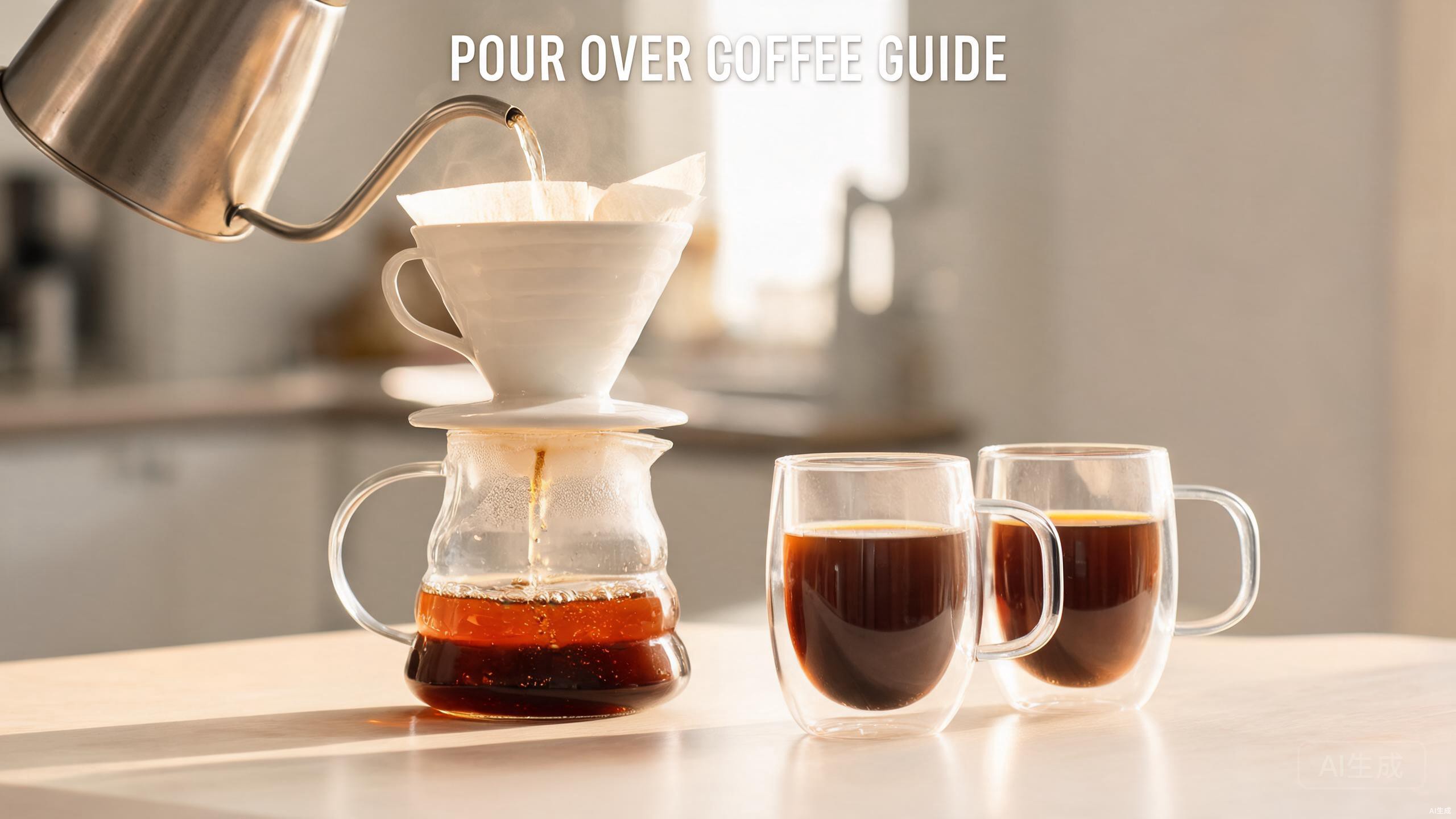
Pour over coffee is a manual brewing method in which hot water is poured in a controlled, steady stream over ground coffee resting in a filter. The water passes through the coffee bed by gravity alone, extracting flavors as it flows, and drips into a carafe or mug below. Unlike a drip coffee maker that automates the process, pour over puts every variable in your hands: water temperature, pour speed, grind size, and brew time. That control is what allows you to coax the fullest, most nuanced flavor from your beans.
The method traces its roots to early 20th-century Germany, where Melitta Bentz invented the paper coffee filter in 1908. Her simple concept of pouring hot water over ground coffee in a filtered cone revolutionized home brewing and gave birth to an entire category of coffee makers. Over the decades, the pour over technique was refined and popularized by brands like Chemex, Bodum, and Hario, each introducing their own drippers, carafes, and kettles. Today, pour over coffee is celebrated by specialty coffee shops and home enthusiasts alike for the clarity, brightness, and complexity it brings to the cup.
What sets pour over apart from other brewing methods is the clarity of the resulting coffee. Because the water flows through the coffee bed in a single pass and the paper filter removes most of the oils and fine particles, the cup is clean and transparent. You can taste individual notes: the berry brightness of an Ethiopian Yirgacheffe, the chocolate depth of a Brazilian roast, or the floral delicacy of a Geisha varietal. Espresso concentrates these flavors into an intense shot, French press leaves them murky and full-bodied, but pour over presents them with the precision of a tasting glass.
Pour over is the only brewing method where you can see, smell, and taste every stage of the extraction. Glass makes that visibility complete.
Why Glass Matters for Pour Over Coffee
If you have ever brewed pour over coffee into a thermal stainless steel carafe, you know the frustration of not being able to see the coffee as it collects. The color tells you everything: too pale and the brew is weak, too dark and it may be over-extracted, and a steady stream of golden-brown liquid is the sign of a well-executed pour. Only a clear glass carafe gives you that visual feedback in real time, letting you adjust your technique on the fly.
Borosilicate glass is the material of choice for pour over coffee equipment, and for good reason. It is the same heat-resistant glass used in laboratory beakers, engineered to withstand sudden temperature changes without cracking. When you pour water just off the boil at 200 degrees Fahrenheit into a room-temperature carafe, borosilicate glass handles the thermal shock effortlessly. Ordinary glass would shatter. This is why the finest pour over coffee makers, from Chemex to Bodum, are built from high-heat borosilicate glass.
The same logic applies to the mug you drink from. Double walled glass coffee mugs are constructed from two layers of borosilicate glass with a pocket of air trapped between them. This air gap acts as insulation, keeping your pour over coffee hot for longer while keeping the outer surface cool to the touch. You can hold the mug comfortably even when the coffee inside is at peak brewing temperature. The double-wall construction also creates a subtle floating effect, with the coffee appearing to hover inside the glass, which makes even a simple morning cup feel like a cafe presentation. To understand the full range of benefits, see our guide on the benefits of double-walled glass mugs.
Condensation is another factor. Single-wall glass and ceramic mugs collect condensation when filled with hot liquid in a cool room, leaving rings on your table and making the cup slippery. Double wall construction eliminates this problem entirely. The outer wall stays at room temperature, so no moisture collects. Your table stays dry, your grip stays secure, and the glass stays crystal clear from first sip to last. For more on why borosilicate is the safest choice for hot beverages, read our article on borosilicate glass safety.
Equipment You Need for Pour Over Coffee
One of the beauties of pour over coffee is that the equipment list is short. You do not need a thousand-dollar espresso machine or a counter full of gadgets. Here is what you need, and why each piece matters.
Pour Over Dripper
The dripper is the cone-shaped device that holds the filter and coffee grounds. Popular options include the Chemex, Hario V60, Bodum Pour Over, and Melitta. Each has a slightly different design that affects flow rate and extraction. Chemex uses proprietary thick filters that produce an exceptionally clean cup. The Hario V60 has spiral ribs that allow air to flow around the coffee bed. Bodum drippers typically come with a permanent stainless steel filter, eliminating the need for paper. All of these are made from borosilicate glass, and all benefit from being paired with a glass carafe or mug below.
Gooseneck Kettle
A gooseneck kettle is not strictly required, but it makes pour over coffee dramatically easier. The narrow, curved spout gives you precise control over the water flow, which is essential for an even extraction. A regular kettle pours in a wide, heavy stream that can flood the coffee bed and create channels where water bypasses the grounds entirely. A gooseneck kettle lets you pour in a slow, controlled spiral, ensuring that every gram of coffee is evenly saturated. Electric gooseneck kettles with temperature control are especially useful, as they let you heat water to the exact 195 to 205 degree Fahrenheit range that pour over demands.
Burr Grinder
A burr grinder is the single most important investment for pour over coffee. Unlike blade grinders that chop beans into uneven fragments, a burr grinder crushes beans between two abrasive surfaces to produce uniformly sized particles. Consistency matters because extraction is a function of surface area: fine particles extract quickly and can turn bitter, while coarse particles extract slowly and can taste sour. A medium-fine grind, somewhere between table salt and sand, is ideal for most pour over drippers. A good burr grinder lets you dial in the exact particle size for your preferred dripper and bean.
Scale
A digital kitchen scale that measures in grams is essential for repeatable results. Pour over coffee is all about ratios, and measuring by volume is too imprecise. The standard starting ratio is 1:16, meaning 1 gram of coffee for every 16 grams of water. For a single 17-ounce mug, that translates to roughly 30 grams of coffee and 480 grams of water. A scale lets you hit these targets exactly and reproduce your best cup every time.
Glass Carafe or Mug
This is where MESNEY glassware comes in. You need a vessel to catch the brewed coffee as it drips through the filter. A glass teapot or carafe lets you monitor the color and volume of the brew, and a double walled glass coffee mug keeps the finished coffee at the perfect drinking temperature. The 17-ounce capacity of our double walled mugs is ideal for a single large pour over, while the 40-ounce glass teapot can serve as a carafe for multiple cups.
Step-by-Step Pour Over Brewing Guide
Now that you have your equipment, here is a step-by-step method for brewing a perfect cup of pour over coffee. This recipe uses a 1:16 ratio and produces approximately 17 ounces of coffee, the exact capacity of a standard MESNEY double walled glass mug.
What You Need
- 30 grams of fresh coffee beans (medium-fine grind)
- 480 grams (about 17 oz) of filtered water at 200 degrees Fahrenheit
- A pour over dripper with a paper or metal filter
- A gooseneck kettle (recommended but not required)
- A digital scale
- A 17oz double walled glass coffee mug or glass carafe
Step 1: Heat the Water
Fill your kettle with filtered water and heat it to between 195 and 205 degrees Fahrenheit. If you do not have a temperature-controlled kettle, bring the water to a full boil and then let it sit for 30 seconds. Water that is too hot will scorch the coffee and produce bitter flavors, while water that is too cool will under-extract and taste flat. If you are using a glass teapot to hold the hot water, the borosilicate glass will handle the temperature with no risk of cracking. For more on safe heating, see our guide on using a stovetop safe glass teapot.
Step 2: Grind the Coffee
Grind 30 grams of coffee beans to a medium-fine consistency, similar to table salt. The grind size is the single most impactful variable in pour over coffee, so take the time to dial it in. If the coffee tastes sour or watery, the grind is too coarse. If it tastes bitter or astringent, the grind is too fine. Adjust in small increments until the flavor is balanced and full.
Step 3: Prepare the Filter
Place the paper filter in the dripper and rinse it thoroughly with hot water. This serves two purposes: it washes away the papery taste that can linger in the filter, and it pre-warms the dripper and the glass carafe or mug below. Discard the rinse water from the carafe before proceeding. A warm vessel keeps the coffee at a more stable temperature throughout the brew.
Step 4: Add the Coffee and Level the Bed
Add the ground coffee to the filter and give the dripper a gentle tap to level the bed. A flat, even coffee bed ensures that water flows through the grounds uniformly, preventing channels where water can short-circuit the extraction. Place the dripper on top of your glass carafe or mug, set it on the scale, and tare the scale to zero.
Step 5: The Bloom
Start a timer and pour just enough water, about 60 grams, to saturate all of the coffee grounds. Pour in a slow, circular motion starting from the center and working outward. The coffee will swell and bubble as trapped carbon dioxide is released. This is the bloom, and it is a critical stage that was discovered during the early days of specialty coffee. Freshly roasted beans bloom more vigorously because they contain more gas. Wait 30 to 45 seconds for the bloom to settle before continuing.
The bloom is the first sign that your beans are fresh. A vigorous, bubbling swell means the coffee was roasted recently and is full of volatile aromatics that will translate into flavor.
Step 6: The Main Pour
After the bloom settles, begin pouring in a steady, slow spiral from the center outward, then back inward. Maintain a consistent water level in the dripper, keeping it about halfway full. Avoid pouring directly onto the filter, as this bypasses the coffee and dilutes the brew. Continue pouring until you reach 480 grams on the scale. The entire pour, from bloom to finish, should take about 2.5 to 3 minutes.
Step 7: Let It Drip Through
Once you have added all the water, let the coffee drip through completely. The final drips should be slow and steady, and the total brew time from the first pour to the last drip should be between 3 and 4 minutes. If the brew finishes much faster, your grind is too coarse. If it takes much longer, the grind is too fine. Remove the dripper and give the carafe or mug a gentle swirl to mix the layers of extraction.
Step 8: Serve and Enjoy
Pour the finished coffee into a pre-warmed double walled glass coffee mug. The clear glass will showcase the rich color of the brew, and the double-wall insulation will keep it at the perfect drinking temperature for 30 to 45 minutes. Take a moment to appreciate the aroma before your first sip. Pour over coffee is best enjoyed without milk or sugar at first, so you can taste the full character of the beans, but add whatever you like to suit your preference.
Choosing the Right Glassware for Pour Over
The glassware you brew into and drink from plays a bigger role than you might expect. A good glass carafe or mug enhances the pour over experience by preserving temperature, showcasing the coffee's color, and presenting the cup with a clean, professional look. Here are the MESNEY glass products we recommend for pour over coffee.

17oz Double Walled Glass Coffee Mug (1pc)
The ideal single-cup pour over vessel. At 17 ounces, this double walled glass coffee mug holds a full pour over brew with room to spare. The borosilicate glass handles the heat of freshly brewed coffee, while the double-wall insulation keeps it at the perfect drinking temperature without burning your fingers. Crystal clear walls showcase the coffee's color and clarity.
Buy on Amazon
17oz Double Walled Glass Coffee Mugs (Set of 2)
Perfect for brewing two cups. These double wall insulated glass coffee mugs let you brew one pour over directly into each mug, or brew into a carafe and divide. The set of two is ideal for couples or for serving a friend. The stacking design saves cabinet space, and the dishwasher-safe borosilicate glass makes cleanup effortless.
Buy on Amazon
40oz Glass Teapot with Infuser and Lid
The perfect pour over carafe. This 40-ounce borosilicate glass teapot doubles as a coffee carafe, with enough capacity to brew two large mugs. Set your dripper on top and watch the coffee collect through the crystal-clear walls. The heat-resistant handle makes pouring comfortable, and the stovetop-safe construction means you can gently reheat if needed. The removable infuser also lets you switch between coffee and loose leaf tea effortlessly.
Buy on AmazonWhich Setup Is Right for You?
For solo morning brewing, the single 17oz double walled glass coffee mug is the simplest and most satisfying setup. Brew directly into the mug, and the double-wall insulation keeps the coffee hot while you sip. For couples or guests, the set of 2 mugs gives you matching vessels for a shared brew. And for those who prefer to brew a larger batch, the 40oz glass teapot serves as a beautiful carafe that lets you monitor the brew visually. For more mug options, see our 2026 glass coffee mug guide.
Common Pour Over Mistakes and How to Fix Them
Pour over coffee rewards attention to detail, and small mistakes can have a big impact on flavor. Here are the most common issues and how to correct them.
- Coffee tastes sour or watery: The grind is too coarse, or the water temperature is too low. Try a finer grind and make sure your water is between 195 and 205 degrees Fahrenheit. Sourness indicates under-extraction, where the water has not pulled enough flavor from the grounds.
- Coffee tastes bitter or astringent: The grind is too fine, or the brew took too long. Coarsen the grind slightly and aim for a total brew time of 3 to 4 minutes. Bitterness signals over-extraction, where too many compounds have been dissolved from the coffee.
- The brew drains too fast: Check that your pour is steady and that you are maintaining a consistent water level in the dripper. Pouring too aggressively can create channels in the coffee bed. Also check your grind size and make it slightly finer.
- The brew stalls or drains too slowly: The grind may be too fine, or the filter may be clogged with fine particles. Coarsen the grind, or try a different burr grinder that produces fewer fines.
- Inconsistent results between cups: Measure everything by weight, not volume. Use a scale for both coffee and water, and time your brew. Consistency comes from controlling every variable, not from guessing.
- Coffee cools too quickly in the mug: Switch to a double walled glass coffee mug. The air-gap insulation retains heat far longer than single-wall glass or ceramic, keeping your pour over at the ideal drinking temperature for up to 45 minutes.
Pour over coffee is a skill that improves with every cup. The first brew may not be perfect, but by the tenth you will taste the difference that control and attention make.
Pour Over Coffee Ratios and Recipes
The 1:16 ratio is a starting point, not a rule. Different beans, roasts, and personal preferences call for adjustments. Here are a few variations to explore once you have mastered the basic pour over.
Stronger Cup (1:14 Ratio)
Use 34 grams of coffee for 480 grams of water. This produces a richer, more concentrated cup that stands up well to milk. Ideal for darker roasts and morning coffee that needs to cut through cream.
Lighter Cup (1:18 Ratio)
Use 27 grams of coffee for 480 grams of water. This produces a more delicate, tea-like cup that highlights the floral and fruity notes of light roasts. Ideal for single-origin Ethiopian, Kenyan, and Colombian beans.
Cold Pour Over
Brew a concentrate at 1:8 ratio using 60 grams of coffee for 480 grams of water, then pour over ice in a double walled glass mug. The double-wall construction prevents condensation, keeping your hands and table dry. The result is a bright, refreshing cold coffee that retains the clarity of pour over. For more cold coffee methods, see our iced coffee and cold brew glassware guide.
Cleaning and Caring for Your Glass Coffee Equipment
Borosilicate glass is durable and easy to maintain, but a few habits will keep your carafes and mugs crystal clear for years.
Daily Cleaning
MESNEY double wall glass mugs and glass teapots are dishwasher safe. Place them on the top rack, away from the heating element. For hand washing, use warm water and mild dish soap with a soft sponge. Rinse promptly after use, before coffee oils have a chance to set and create a cloudy film.
Removing Coffee Stains
Over time, coffee oils can leave a brown tint on the inside of glass. To restore clarity, fill the vessel with warm water and a teaspoon of baking soda, let it sit for 30 minutes, then scrub gently with a soft brush. A 50/50 mix of white vinegar and water also works for stubborn buildup. Our complete cleaning guide covers these methods in detail.
Avoiding Thermal Shock
Borosilicate glass resists temperature changes far better than ordinary glass, but extreme swings should still be avoided. Let a hot carafe cool to room temperature before rinsing with cold water. Never place a hot glass vessel directly on a cold surface like a marble countertop. Gradual changes keep your glass safe and clear. Learn more in our borosilicate glass safety guide.
Final Thoughts
Pour over coffee is more than a brewing method. It is a daily ritual that turns a routine into a moment of mindfulness. The act of heating water, grinding beans, and pouring in a slow, steady spiral forces you to slow down and pay attention, and the reward is a cup of coffee that tastes cleaner, brighter, and more complex than anything a machine can produce.
The glassware you choose elevates that experience. A clear glass carafe lets you watch the coffee develop its color as it brews, and double walled glass coffee mugs keep that carefully crafted cup at the perfect temperature for longer. Borosilicate glass handles the heat of freshly boiled water without risk, and the crystal-clear walls showcase the rich amber hue of a well-extracted brew. Whether you are brewing a single cup for yourself or a full carafe for friends, the combination of pour over technique and quality glassware turns every morning into a small act of craft.
Brew Better Pour Over with MESNEY Glassware
Shop MESNEY's double walled borosilicate glass coffee mugs and glass teapots, designed to showcase every nuance of your pour over coffee. Find your perfect brewing vessel on Amazon.
Shop Glass Coffee Mugs